
News that Lloyds Banking Group has hired Charlie Nunn, head of wealth and personal banking (WPB) at HSBC, to be its next chief executive comes as a surprise.
With a new chairman, Robin Budenberg, also due to take over at Lloyds from Lord Blackwell at the start of January, the assumption among analysts and investors had been that an insider would fill the shoes of António Horta-Osório.

The famous Portuguese banker, who worked tirelessly to restore the UK bank after its government rescue in the great financial crisis, had given abundant notice of his intention to retire by the end of June.
Favourites to step up included William Chalmers, chief financial officer, who Horta-Osório recruited from Morgan Stanley at the start of 2019, and Vim Maru, head of retail banking, which dominates Lloyds.
Rigorous process
The bank claims that Budenberg, Blackwell and Alan Dickinson, deputy chairman and senior independent director, led a rigorous selection process for the new CEO.
They were certainly keen to get their man.
Nunn’s total annual pay may be 20% lower than Horta-Osório commanded, but he will be granted deferred cash and share awards to replace, like for like, unvested HSBC awards forfeited as a result of him joining Lloyds.
In addition, to acknowledge that Nunn will lose his expected bonus from HSBC for 2020, a “lost opportunity” bonus award will also be made. This will be calculated by reference to Nunn’s 2019 bonus.
There will be no repeat here of Santander’s miscalculations with Andrea Orcel.
Budenberg says of the new CEO he will be working with: “Given his career track record, he will bring world-class operational, technology and strategic expertise to build on the strengths of the existing management team.”
So, that sounds like an outsider chosen to be a continuity candidate, but the appointment still comes with two big uncertainties.
First, there is no clarity yet when Nunn might start at Lloyds. His contract at HSBC contains a six-month notice period and up to six months post-termination restrictions.
I have appreciated [Nunn’s] leadership and his support
Noel Quinn, HSBC
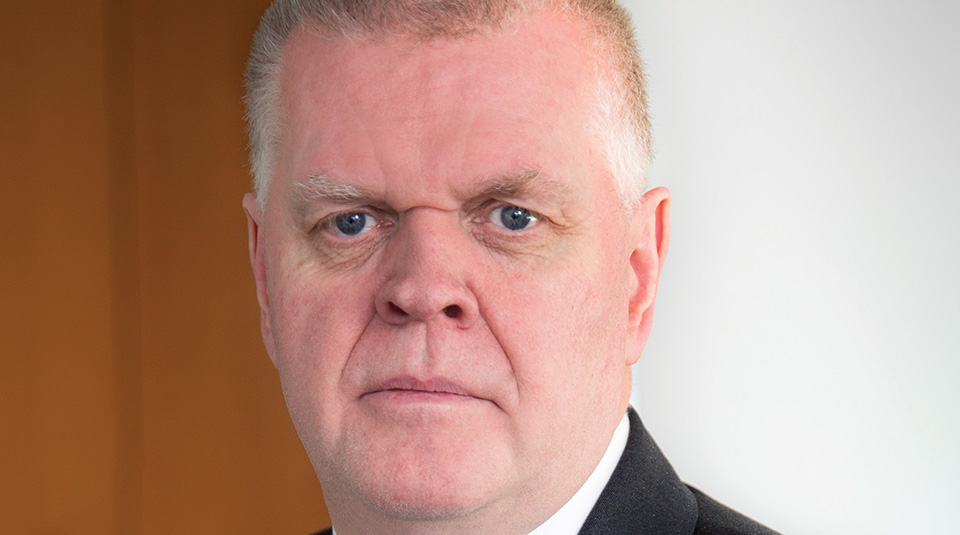
At least Noel Quinn, chief executive of HSBC, spoke warmly of Nunn when announcing Nuno Matos, chief executive of the group’s non-ring fenced UK bank and chief executive of HSBC Europe, as his successor at WPB.
The WPB division generates about 40% of HSBC revenues and 30% of group profits, and so Nunn, who has headed it since 2018, comes with substantial leadership experience.
Quinn says that Nunn leaves HSBC “with my good wishes”. He adds: “I have appreciated his leadership and his support. He has made a significant impact at HSBC during his time here.”
From that, analysts may hope that the two UK banks will swiftly come to an understanding on his start date at Lloyds. However, that is a live discussion and remains to be seen.
Lloyds says that if Horta-Osório leaves before Nunn arrives, then Chalmers will have a brief turn, after all, as temporary chief executive.
That sounds rather uncomfortable.
Perhaps more of a concern for Lloyds shareholders is what Nunn brings to their party.
Analysts at Citi describe him as a strong presenter able to outline a reasonable strategy for retail banking and wealth management at HSBC, focused on taking more share in its biggest markets of Hong Kong the UK and Mexico, increasing exposure to Asian wealth, reviewing loss-making businesses in France and the US, and shifting to digital.
However, HSBC has been slow to take a decision on US retail, with weekend reports suggesting it is finally set to quit.
Quinn explained in February that HSBC would keep going in US retail because it is an important source of dollar liquidity and funding for the entire group, adding: “We think it is important to have a stable balance sheet in the US to support our leadership in international transaction banking.”
Is it a coincidence that an overdue decision comes just as Nunn leaves?
Digital leader
Perhaps more to the point, Lloyds is already a leader in digital banking, while HSBC lags Lloyds on a number of metrics, such as incident reports, time to open accounts and customers’ views of the quality of mobile and online services – as surveyed by Ipsos Mori for the UK Competition and Markets Authority.
There will be questions about future strategy at Lloyds, suggest the Citi analysts, especially as a new three-year update has been expected, with 2020 results in February.
Lloyds simply says it is, indeed, coming to the end of its 2018-2020 plan, but previous strategic updates were announced at different times in previous years and not always with full-year results.
Preparatory work on the next strategic update is under way and will be announced in due course.
“We believe Mr Nunn’s skill-set suggests that he is likely to maintain Lloyds’ existing priorities (diversifying other income, shift to digital),” say the Citi analysts.


