In August, Itaú – along with the other two large private-sector banks Bradesco and Santander Brasil – established the Amazon Advisory Council, which has a 10-point plan on sustainability and is manned with credible academics and environmental experts.
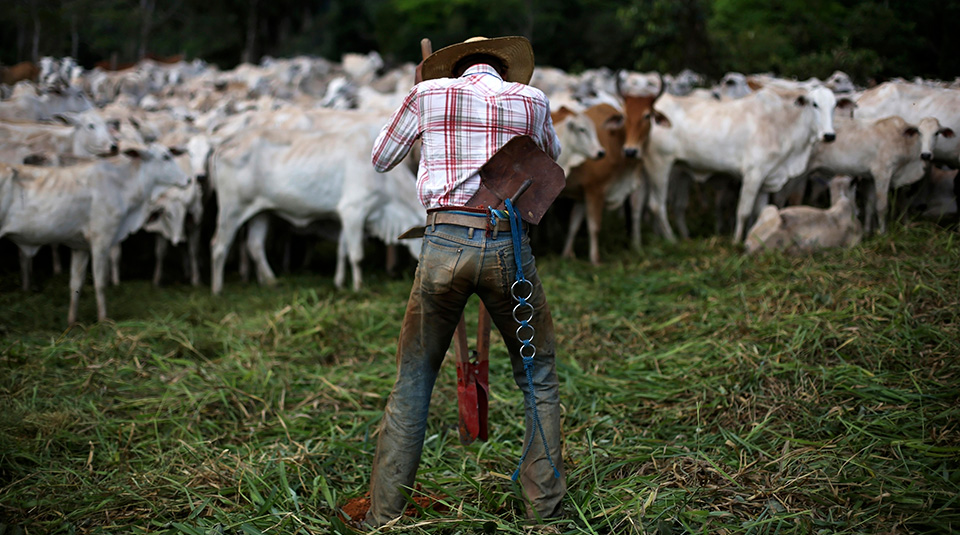
The leading issue is preventing meat producers illegally deforesting swathes of land to raise cattle, but there are other aspects of the plan that make broad sense if the Amazon’s resources are to be used sustainably.
Unfortunately, the impetus for this belated action came from abroad.
I am outraged I have to use this argument
Candido Bracher, Itaú

Candido Bracher, chief executive of Itaú, admits to feelings “close to humiliation” that it took foreign investors and companies pushing for greater effort on sustainability for local banks to take action.
Indeed, the fact that it has taken the banks until mid 2020 to react in any meaningful way – and to do so in such a coordinated fashion – gives the AAC the look of a defensive measure.
That it was also announced just before the height of this year’s fire season, yet doesn’t have established “clear and tangible goals and objectives” (that’s the next step, apparently), only adds to a sense that the Council is a green-washing exercise.
Bracher has clearly felt a hardening attitude among international investors and businesses to Brazil’s spectacular failure to protect the world’s most important eco-system.
In June, Reuters reported that a group of 29 global investment firms that manage a total of $3.7 trillion were so concerned about the issue that they were prepared to halt capital flows to Brazil – some even threatened disinvestment.
Boycott threat
Businesses are also joining this rising chorus: more than two dozen European companies, including large supermarket chains, have threatened to boycott Brazilian meat producers such as JBS.
“There is a growing concern among foreign investors, and that undermines our chance to attract investment,” Bracher told local media. “I am outraged I have to use this argument because we live here, this is our home, and we have to take care of it.”
All of which is to be welcomed. Even if it is somewhat late.
But the truth is that while it is good that the private sector in Brazil is beginning to adopt sustainable policies and platforms on the Amazon (XP just launched an environmental, social and governance investment product aimed – rather tellingly – at 18- to 24-year-olds), their impact will be marginal, at best.
When it comes to deforestation in the Amazon, it is the government that really matters.
Destruction of the rainforest has soared since 2018. Last year saw an 11-year high in illegal deforestation, while the first five months of 2020 saw a further 34% increase.
Poacher in chief
Environment minister Ricardo Salles isn’t so much ‘poacher turned gamekeeper’ as poacher in chief.
Under his tenure the government agency in charge of protecting the Amazon, Ibama, is being systematically dismantled; it has issued its lowest level of fines for more than two decades.
In May, a recording of a cabinet meeting showed Salles advocating for full deregulation while the press was focusing on the coronavirus pandemic.
So, while private banks can offer small carrots of ‘favourable financing terms’, the government has put away its stick.
Correction: it is actively using its stick, just against those tasked with protecting the rain forests.
In the meantime, the prize on offer to the illegal loggers – claims on land that might become valuable – trumps anything on offer from the banks
Of course Bracher knows this.
As he acknowledged: “The government has some responsibilities in which it is irreplaceable, such as the monopoly on the use of police coercion. Only the government can punish offenders in its various spheres. We can discourage, by not granting financing, but putting those who deforested in jail is the government’s job.
“I think protecting a forest is a cultural issue. Without police coercive measures, the task is practically impossible.”