It must be delightful to announce you are in merger talks and see your own share price shoot up, even when everyone knows you will be the acquirer.
Late on Thursday, CaixaBank and Bankia disclosed they were exchanging information to assess a potential all-share merger. The boards of the two Spanish banks are said to be meeting on Sunday to discuss next steps.
In the markets, the widespread expectation is that this deal will happen and that it may signal the start of renewed banking-sector consolidation not just in Spain but around Europe.
It won’t be a merger of equals. Caixa, by far the bigger of the two, will be the dominant partner in what would become, by some distance, Spain’s largest bank. On Friday, Bankia’s share price shot up by 32% in expectation of a control premium, but CaixaBank shares also rose 15% on the news.
It helps when your chief executive is an ex-M&A banker and the acquiring bank has a strong record in merger integration.
We paid 0.5 times book value for Barclays Bank SAU, closed the deal in January and had integrated its IT systems by May
Gonzalo Gortázar, CaixaBank
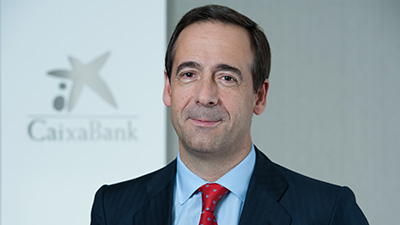
Before Gonzalo Gortázar, now chief executive officer, joined CaixaBank in 2009, he had spent 16 years as an FIG investment banker at Morgan Stanley, heading the team in Europe that advised banks on rescue deals, recapitalizations and restructurings in the darkest days of the great financial crisis.
CaixaBank is already marginally ahead of Santander as the biggest bank in Spain, thanks to the efficient absorption of Banca Civica and Banco de Valencia during the Spanish savings banks crisis and the subsequent acquisition of Barclays Bank SAU, the Spanish subsidiary of the retreating UK lender.
Its biggest non-Spanish deal was acquiring Banco BPI in Portugal. Back when that deal was being launched in 2015, Gortázar gave Euromoney some insights into Caixa the acquisition machine.
“We paid 0.5 times book value for Barclays Bank SAU, closed the deal on January 2, 2015, and had already integrated its IT systems by mid-May,” he told us.
It was a point of pride to Gortázar that the íbank had a track record of delivering cost synergies ahead of schedule through that first round of domestic consolidation.
He explained: “We have an integration committee that meets every week, but we do not have specialist or separate integration teams. Who is responsible for IT integration of acquired banks? The head of IT is responsible. Who is responsible for integration of their branches? The head of the branch network.”
This is a much bigger deal: the number-one bank in Spain potentially absorbing the number four. Citi calculates the combined bank would have a 26% share of loans in the Spanish banking system, ahead of second place Santander with 15%. It would have a 24% share of deposits, ahead of Santander with 18%.
Cost cutting
The reasons to do it are obvious: large-scale cost cutting to compensate for the dim earnings outlook, thanks to the pandemic-induced combination of rising loan losses, weak borrowing and collapsing net interest margin.
Blood-thirsty bank analysts are excitedly burnishing the sharp edges of their cost-cutting calculations.
Will CaixaBank be able to take out a full 40% of the target’s cost base, or might it have to settle for slightly less, given that Bankia already restructured after its 2012 collapse and has a cost-to-income ratio not far off CaixaBank’s own.
How many branches could the new bank cut, given the heavy overlap in markets such as Madrid and Valencia? Maybe a quarter of the total, perhaps losing 50% of staff from each branch closed. Could it push that up to losing 75% of staff from closed branches?
Despite the potential for cost savings … we would not see an immediately stronger institution
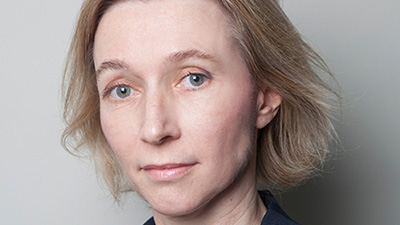
Maria Cabanyes, Moody’s Investors Service
The Spanish state, through FROB (the fund for orderly bank restructuring), is the largest shareholder in Bankia. It may want the deal to go through, rationalizing it as a first set to recouping some of the state-aid spent propping Bankia up by eventually selling out from a larger, more efficient and one-day more profitable bank. It could extract a premium to the prevailing Bankia price today for supporting the deal and become a minority owner of the new organization.
But political questions are going to come into play here if the whole deal is predicated on the brutal math of large-scale job losses into a shrinking economy.
And what about protecting consumers? There are certain geographic markets where the combined bank might have more than 30% market share and certain product areas, too, such as pension asset management.
Both sets of shareholders may like the deal for eventual earnings per share accretion. But given Bankia’s history, first the board of Caixa and then its equity owners will surely want greater clarity on potential loan loss exposures. Is that even possible, given the extreme uncertainties around the medium-term impact on the Spanish economy of the virus?
Trust the credit rating agencies to throw a dampener.
“Despite the potential for cost savings as a result of the possible CaixaBank-Bankia merger, given the two-notch difference in our baseline assessment of both banks and without a capital increase, we would not see an immediately stronger institution,” says Maria Cabanyes, senior vice president at Moody’s Investors Service.
“Efficiency gains could take some time to materialize, and would impose significant restructuring costs, slashing profitability at the outset.”
Equity owners are optimists. The initial stock price bounces came with a widespread hope that the new bank won’t need to tap shareholders for additional capital.
Much is being made of the European Central Bank’s (ECB) clarification in July over allowing accounting profit on badwill in deals struck at a discount to book value per share – as this will be – to fund restructuring costs and loan loss reserves.
The ECB has been encouraging consolidation to make European banks more capable of sustaining themselves through retained earnings. Investors will be watching closely the first big move in this next consolidation wave.