HSBC’s focus on delivering innovative solutions drawn from breakthroughs in artificial intelligence, big data, distributed-ledger technology (DLT) and mobile solutions has been more important than ever to its transaction banking clients this year.
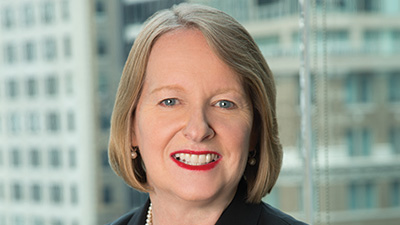
“The future is changing really rapidly and we can’t continue to think in the terms we used to,” says Diane Reyes, group general manager, global head of liquidity and cash management at HSBC.
In 2018, the bank outlined a three-year strategy for transaction banking and invested heavily in technology and cybersecurity. This left it well equipped to deal with the pandemic, not only in terms of being able to handle the acceleration in the shift to digital but also enabling it to use its technology to help clients who face a plethora of challenges.
“We haven’t seen any resilience challenges and our cybersecurity investments have really put us at the forefront,” says Reyes. “It helped us help clients that have been under attack during this period.”
HSBC processes roughly $455 trillion of wholesale payments for clients on an annual basis, but through the crisis it has seen a huge pickup in the adoption of its digital products.
It has been able to fully digitize key on-boarding and transaction processes, and within weeks of worldwide lockdowns enabled 30,000 new users of its remote mobile cheque deposit solution, providing people who could not get to its branches with a way to deposit cheques remotely from home, says Reyes.
Downloads of the HSBCnet Mobile app increased by 157% in the first six months of the year, while large corporate use of HSBC’s desktop online banking platform increased by 50,000 in the same period.
Many companies have been forced to adapt business models. HSBC helped a Canadian client that normally makes coffee filters switch to manufacturing protective masks and supported many other clients in delivering critical medical items through fast-track credit approvals.
Repurposing technology
As well as helping clients repurpose their businesses, HSBC has been able to repurpose its own technology to help clients.
“We were the first in the trade industry to automate financial crime checking on money laundering and sanctions,” says Natalie Blyth, group general manager, global head of trade and receivables finance.
“It was one of the last bastions to crack in financial services, given trade’s complexity. We repurposed this technology to help fight Covid and support healthcare providers sourcing suppliers in the scramble for medicines and PPE [personal protective equipment].”
Our cybsersecurity investments have really put us at the forefront. It helped us help clients that have been under attack
Diane Reyes
HSBC’s trade finance team processes around $740 billion of trade globally each year and as co-chair of the B20 Trade & Investment Taskforce, it played a role in ensuring markets remained open in the crisis to ensure the free flow of critical goods and services. It provided more than 50,000 trade finance extensions in the first half of 2020.
It continues to lead the pack in developing DLT for trade and aims to lead the end-to-end digitalization of the trade ecosystem.
“This pandemic has put an even greater spotlight on the whole supply chain and making sure you don’t have a single point of failure. We are trying to make a one-stop shop,” says Blyth.
“The vision is to build a digital and data thread that binds them together and connect billions of people and businesses in a single ecosystem,” she says. “At the click of a button, they will be able to arrange the logistics, invoicing, insurance, financing and everything else they need to do in a one-stop shop.”
Blockchain
The bank continues to commercialize its blockchain letter of credit platform, through which the first DLT trade was processed in 2018. Since then it has done 14 transactions, involving over $30 million worth of goods. The technology reduces settlement times for clients from five to 10 days down to just a few hours.
For retail conglomerate Landmark in the UAE, HSBC connected physical and financial supply chains by integrating across platforms, it also arranged the first cross-border renminbi-denominated letter of credit on a DLT platform and arranged the first DLT-enabled cross-border trade transactions in India, Dubai, Malaysia, Oman, Saudi Arabia, Singapore, South Korea and Vietnam.
More than ever, treasurers navigating the challenges posed by Covid-19 need access to data and simple solutions. In January 2020, the bank launched Liquidity Management Portal for mobile, a data visualization tool that gives treasurers a real-time view of their cash and cash-equivalents. HSBC also introduced Cash Flow Forecasting, which uses predictive analytics to increase the accuracy, consistency and quality of cash forecasts.
It is also backing the shift to a real-time treasury model through its support of the Swift global payment initiative (gpi), which seeks greater transparency in cross-border payments. In 2019, HSBC sent over 100 million gpi transactions, with a total value of over $40 trillion.
Sustainability and accountability also remain core to both the bank and its clients’ business models. To help clients transition to a low-carbon economy, in January 2020 it launched green deposits and in May 2019 the Green Trade Finance proposition, under which facilities are made available exclusively to fund environmentally sustainable trade activities in accordance with the Green Loan Principles.