Financial solutions that are both innovative and at scale are crucial if we are to swiftly transition economies and societies away from fossil fuel dependency and harmful environmental practices. A growing number of banks have committed to developing these solutions, but one bank, HSBC, stands out for its constant drive to bring higher standards and capital to transition a broad range of sectors globally.
While the environment has dominated sustainable finance over the last decade, 2020 has undoubtedly been about Covid-19. Social finance has come to the fore as financial institutions have sought to raise capital to support small businesses, as well as healthcare service and equipment providers. HSBC was joint lead manager on the first Covid-19 specific issuance from Bank of China, Macau in February and on the Nordic Investment Bank’s €1 billion response bond in March. Since then has been on a further nine Covid-related deals, collectively raising close to $20 billion.
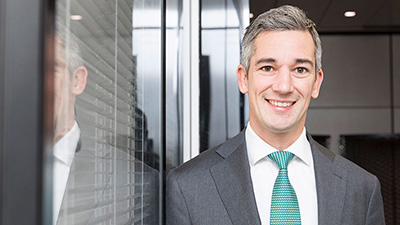
But even as the pandemic has dominated headlines, decarbonization efforts have continued at pace, and HSBC, under its global head of sustainable finance, Daniel Klier, has been pushing to develop new products and initiatives to support global environmental ambitions.

“We’ve been talking for years about the need for more investment to drive the low-carbon transition, and the experience of the pandemic appears to be accelerating the trend,” says Klier.
Around the world HSBC’s teams have advised on several market-leading transactions within renewable energy. For example, the bank was co-mandated lead arranger on National Grid’s $486 million green financing facility for the Viking Link high voltage electricity interconnector between the UK and Denmark. It was also joint global coordinator and green structuring adviser for the green bond and dual-currency green loan to finance $2.6 billion in projects across Belt and Road Initiative countries covering green energy, transport, energy efficiency and water treatment.
Green sukuk
In Taiwan, HSBC financed the largest offshore wind deal completed to date and in Saudi Arabia was sole green structuring adviser for the first ever green sukuk issuance for the Islamic Development Bank, raising $1.5 billion to be deployed in clean transportation and renewables.
Outside the energy sector, HSBC provided a green sustainability-linked loan to support the first food-grade ready plastics recycling facility in Hong Kong. It also acted as sole structuring adviser and lead manager on the first-ever corporate plastic-waste reduction bond and was joint mandated lead arranger on the $1.3 billion financing for Bangladesh Chemical Industries Corporation to deploy carbon capture and storage in fertilizer production.
We’ve been talking for years about the need for more investment to drive the low-carbon transition, and the experience of the pandemic appears to be accelerating the trend
Daniel Klier
In every sector HSBC can be found working to accelerate the transition. In infrastructure its efforts in particular could be game changing. This year the Finance to Accelerate the Sustainable Transition-Infrastructure (FAST-Infra) initiative was launched, led by HSBC alongside the International Finance Corporation (IFC), the OECD, the Global Infrastructure Facility (World Bank) and Climate Policy Initiative. Its ambitions are to develop a label qualifying sustainable infrastructure as a new asset class in emerging markets and to mobilize capital to fund sustainable projects, particularly through blended finance.
Similarly, in the fashion and steel sectors the bank has been leading in creating transparency in supply chains. In steel, for example, it helped develop the first sustainable certification for the sector.
HSBC’s large asset management arm also uses all its levers to support sustainability, including launching unique products such as sustainable equity exchange-traded funds, a fund linked to the UN’s sustainable development goals, and a Real Economy Green Investment Opportunity global emerging market fund (Regio). As a next step in the green impact framework developed with the IFC, the Regio fund invests in green projects under that framework in emerging markets.
Shareholder engagement
In addition to its leading research reports, HSBC Global Asset Management also influences change through shareholder engagement. It was named one of the top five global asset managers voting in favour of climate resolutions by ShareAction in November last year. The bank is also the founding member and current chair of the One Planet Asset Manager Initiative, representing 14 global asset managers and various large sovereign wealth funds, which seeks to integrate sustainability risks in investment processes.
In its domestic retail and commercial banks HSBC is also forging a new path in both social and environmental products. This year it launched green loan programmes for small and medium-sized businesses in the UK and Singapore, and a green lending programme in China partnering with a leading certification body. It also offers green deposits for corporate and retail customers in UK, Hong Kong and Singapore.
Finally, after successfully trialling providing victims of human trafficking and modern slavery in the UK with monitored bank accounts, the service was made more widely available last year. Over 300 people had been provided with accounts by December 2019. HSBC also offers a ‘no fixed address service’, enabling banking for the homeless and access to wage and benefit payments for vulnerable individuals.


