After the coronavirus outbreak, just as before it, Morgan Stanley has acted on an impressive array of the most pivotal financial institutions deals in the market. The $656 million IPO of US insurance comparison website Select Quote in May, for example, was vital in reopening the primary equity markets, especially for financial services, after the Covid-19 crash. Morgan Stanley was active bookrunner and stabilization agent.
While the Select Quote deal piggy-backed on investors’ rising interest in the acceleration of digital distribution during the coronavirus, it was also among the deals that reflect Morgan Stanley’s efforts to bolster its coverage of fintech and payments clients. Those moves had helped it advise Worldline on its €9.9 billion acquisition of Ingenico, announced just before the crisis. It was also global coordinator on the $2 billion IPO of Brazilian online stockbroker XP on Nasdaq in November.
As in other sectors, Covid-19 is creating winners and losers among financial institutions. XP’s shares, for example, rose by almost a quarter in the first half of 2020, even after the share price rallied strongly between its IPO and the end of 2019. Share prices of the big private-sector Brazilian banks, by contrast, fell by about a third in the first half of the year, roughly in line with the banking sector globally.
Morgan Stanley has helped financial institutions bolster their balance sheets at a time of rising risk and occasional opportunities. John Esposito, Morgan Stanley’s global head of financial institutions, says stronger firms, including some more traditional banks, may find ways to add value to shareholders in the coming months and years by taking advantage of rivals’ lower market capitalizations.
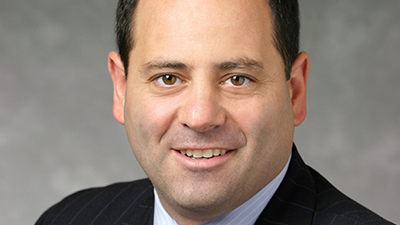
“In a world where rates are stuck close to zero and firms need to invest more in technology, size and scale are more important than ever in the financial institutions space,” says Esposito. “Covid-19 will accelerate consolidation, especially domestically and intra-regionally. More firms could seek to exit non-core geographies if they stand no chance of reaching the top tier in those countries.”
The bifurcation trend is evident in the firm’s work as adviser to PNC on its €13.3 billion secondary follow-on offering of its stake in BlackRock, ending a 25-year partnership. Morgan Stanley was lead-left bookrunner and stabilization agent. The capital boost should make PNC, already one of the US’s stronger banks, even better placed to cope with the coronavirus crisis and a leader in the resultant domestic financial sector consolidation.
Morgan Stanley has also been at the forefront of capital raisings in the insurance sector that will allow firms to build up their businesses in this new era. In June, it was lead-left bookrunner and stabilization agent in RenaissanceRe’s $1 billion follow-on offering. The same month, it was sole global coordinator in Lancashire Holding’s £277 million primary accelerated bookbuild offering.
A new advisory mandate for Fannie Mae in June – helping to develop and implement a plan to recapitalize the federal mortgage company and end its conservatorship – speaks to Morgan Stanley’s prominent standing in the world’s biggest financial market. Yet the bank continues to be at the centre of events way beyond its US home.
Size and scale are more important than ever in the financial institutions space. Covid-19 will accelerate consolidation, especially domestically and intra-regionally
John Esposito
In Asia, a $1 billion qualified institutions placement in May gave Kotak Mahindra Bank a buffer for tougher times and positioned it to be a leader in Covid-driven M&A in India. Morgan Stanley was joint global coordinator. It is also advising Samba on a $16 billion merger with fellow Saudi lender National Commercial Bank in a deal that could bolster the local banking sector after the oil-price crash and as consolidation advances across the Gulf.
In Europe, Morgan Stanley was one of the advisers to Intesa Sanpaolo on its €3.3 billion takeover of domestic rival UBI Banca. Announced on the eve of the outbreak in Europe, the deal nevertheless went on and arguably gained more rationale afterwards. The success of the offering, which more than 90% of UBI’s shareholders took up, has fuelled hopes for post-Covid consolation in Europe, especially in Italy.
Finally, although it was agreed long before coronavirus struck, any description of Morgan Stanley’s franchise, or indeed financial institutions globally over the past year, would be incomplete without mentioning London Stock Exchange Group’s $27 billion acquisition of financial data provider Refinitiv. Morgan Stanley advised the acquirer, provided underwritten financing of $13.5 billion and helped it stave off a move on the LSE by HKEx, its rival in Hong Kong.
One deal on which Morgan Stanley didn’t advise – nor indeed did any of the big US investment banks – was the $26 billion acquisition of TD Ameritrade by Charles Schwab. Credit Suisse, which was shortlisted for this award, advised Charles Schwab on this transaction, creating a firm with 24 million client accounts and more than $5 trillion of client assets, at a time when retail brokerage has become even more of a scale game.
The Charles Schwab deal is one indicator of the global sway of Credit Suisse’s financial institutions practice. It came only a few weeks before Morgan Stanley announced a similar transaction of its own, the $13 billion acquisition of E*Trade.