Awards for Excellence 2020
|
|

While it was hard before, the Covid-19 pandemic will make it almost impossible for most European banks to earn their cost of equity any time soon.
Banks must rethink their business models even more urgently than before. At the very least, this will mean more sales of non-core businesses – particularly small-scale product-manufacturing units by mid-tier lenders.
Philippe Brassac, chief executive of the listed arm of western Europe’s best bank, Crédit Agricole, puts it this way: “Cross-border consolidation won’t be easy in Europe. There may be some domestic consolidation. But many banks have to increase their profitability and decrease their cost-to-income ratios, and often their only solution will be to cooperate much more with other banks than in the past.”
Under Brassac – and more than any other bank – Crédit Agricole and its subsidiaries have already proved attractive partners for other European banks with capital problems or product inefficiencies.
|
|
|
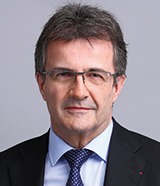
Philippe Brassac |
This partnership approach has advanced strongly over the last year, allowing the group to further strengthen its product factories and to boost income at a time when negative rates are crippling net interest margins in Europe.
In Italy, for example, Crédit Agricole’s majority-owned consumer finance joint venture completed the acquisition of rival Profamily in July last year, strengthening a distribution partnership with Banco BPM, Italy’s third largest bank.
Months before, its insurance arm – one of the biggest in Europe – acquired the insurance business of CreVal, another Italian mid-tier lender, while maintaining a distribution agreement.
A similar distribution arrangement was central to the 2016 acquisition of UniCredit’s asset management arm by Crédit Agricole’s majority-owned subsidiary, Amundi.
Now Europe’s biggest asset manager, Amundi announced the acquisition of the asset management arm of Banco Sabadell in Spain in January, again with a long-term distribution agreement attached.
The strategy has worked especially well in Spain, where, unlike Italy, Crédit Agricole has no retail bank of its own. In 2020 Crédit Agricole launched a majority-owned consumer finance venture with Bankia, the country’s fourth largest bank, again taking advantage of its scale elsewhere in consumer finance.
Consolidation
Meanwhile, CACEIS, the French bank’s custody business, merged with the equivalent unit of Santander in Spain in late 2019, with Crédit Agricole maintaining a majority shareholding.
The deals have allowed Crédit Agricole to grow revenues in Europe outside France without the often insurmountable practical barriers and risks of all-out bank mergers. The bank is therefore playing its part in European consolidation by taking advantage of the unusually concentrated domestic French banking sector, of which Crédit Agricole is the biggest part.
According to Brassac, this looser method of consolidation in Europe comes naturally to Crédit Agricole because of its own decentralized structure. The unlisted regional mutual banks, which are the biggest part of the group, distribute products manufactured by the central entity and its subsidiaries, but the regional banks remain independent and manage client relationships themselves.
Although Crédit Agricole is not the only cooperative group organized like this in Europe, the size and competitiveness of its product units are unique. Moreover, this set up is well-suited to a Europe that is still made up not just of nations but of regions that are often unwilling to cede decision-making powers.
“This is not an unusual strategy for us, it is a direct consequence of our organization and it is more relevant than ever today,” says Brassac, describing the post-Covid-19 environment. “Partnerships are an attractive alternative to bank mergers. They’re easier, less risky, and you protect your brand.”
Brassac spent much of the 2010s, pushing for the group to concentrate on the basic task of providing core clients with as many products as possible, in the most efficient manner possible. Expanding the manufacture of these products, at home and internationally, is merely a consequence of this first priority.
“We are a universal bank, and each of the business lines that we have decided to keep are open to cooperation,” he says.