Awards for Excellence 2019
|
|
| View full 2019 results |

The expansion of Chinese infrastructure through the Belt and Road Initiative; the internationalization of the renminbi; the growth of China-based multilaterals on the world stage: these are key themes that are shaping global finance – and will continue to do so.
Of all the mainland enterprises, Bank of China is the best positioned to benefit and assist.
More than a century old on the mainland, Bank of China also has the greatest international reach of all the Chinese banks. It is present in 57 countries, and its overseas operations contribute more than a quarter of group profits.
This global scale has its most obvious benefit as an intermediary for the BRI, since it is present in 24 BRI countries. It would be wrong, though, to consider it as an institution blindly funding frontier market projects regardless of their long-term sustainability: that’s more a role for policy banks such as Export-Import Bank of China and China Development Bank.
|
|
|
Sun Yu |
Instead, Bank of China picks its opportunities to be involved, apparently charting a careful course between state expectation and commercial prudence.
Much of its business involves foreign exchange for BRI countries and clients, implementing hedging and debt-preservation plans. It has conducted FX forward, options and non-deliverable forwards in roubles, rand, rupiah, Indian rupee and Turkish lira, among others. It has hedged exchange-rate and interest-rate risk for syndicated loans in Romania, Turkey and Hungary, among other places.
That said, it does participate directly in projects, whether through syndicated lending, project financing, cross-border M&A advisory, export credit, cash management or letter-of-guarantee services.
One way or another, the bank says it has been involved in over 600 overseas projects and completed $136 billion of credit support for BRI countries and projects, an example being the signing of a €2 billion bilateral loan agreement with Gazprom.
But perhaps the bigger prize is being the go-to bank for international use of the Chinese currency.
Although the currency is still not fully convertible, the level of cross-border settlement using renminbi is only going to grow; the entry of the Chinese currency into the special drawing rights basket of the World Bank in 2016 was a sign of its increasing importance on the world stage; and the scale of the domestic capital markets cannot be ignored.
At the same time, foreign institutional participation in China’s domestic markets is growing. This is the market in which to be the best name in cross-border renminbi.
Bank of China has a clear edge here: of the 25 offshore clearing banks for RMB designated by the People’s Bank of China, Bank of China accounts for 12 of them.
In the interbank market, it makes markets for 23 currencies against the RMB, it offers counter exchange services for 39, and forex quotes on 63, while offering NDF products in 30 from the Indian rupee to the Argentine peso.
For all China-related business, we want to be a market maker, not a market taker – Sun Yu
It has established offshore trading centres in Hong Kong, London and New York, and is the number-one name in offshore RMB. It has built quantitative and electronic trading platforms to improve the efficiency of the market.
Though the two are quite separate entities, it is appropriate to mention Bank of China International since some of its deal flow feeds from the mothership.
BOCI ranks third over the last five years in Hong Kong IPO underwriting, and ranked first for offshore China bonds in 2018. While obviously dominated by the Hong Kong/China nexus, it was a bookrunner on G3 currency transactions in Korea, Indonesia, Singapore and Sri Lanka last year; while it doesn’t have the US distribution capacity to compete with a Goldman Sachs or Morgan Stanley, it does have a global sales network covering over 1,000 institutional accounts across Asia, Europe and the Middle East.
With every passing year it becomes more of an international force, and not just a Hong Kong one.
BOCI’s global commodities business, launched at the end of 2010, is also important and extremely well placed: it was the first Chinese institution to obtain clearing membership of the Chicago Mercantile Exchange, London Metal Exchange and Intercontinental Exchange. It has the largest LME market share for Chinese metal corporates, a potentially huge market to be a leader in.
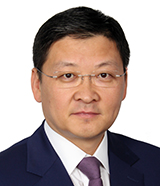
In May, Euromoney profiled Sun Yu, executive vice-president, who used to run the London operations of Bank of China and has also served as the chief overseas business officer. He describes the ambition under chairman Chen Siqing to become a world-class bank, with globalization and technology the key methods through which to achieve it.
“Globalization is a comparative advantage for us,” Yu says. “We have to take advantage of that and build up our infrastructure to a world-class level. For all China-related business, we want to be a market maker, not a market taker.”
It is easy to imagine a future in which overseas business represents a still greater proportion of Bank of China’s profits, with its domestic strength underwriting an increasingly sophisticated global operation. Emerging markets, Belt and Road or otherwise, will be the clear competitive advantage as it does so.
Bank of China is in the right place at the right time.