Awards for Excellence 2019
|
|
| View full 2019 results |
It might not have the biggest balance sheet, or a huge flow debt capital markets franchise, but year after year Goldman Sachs finds itself at the centre of the most important transactions in the world. It defines the key fundraising trends, and this year it is our choice as the world’s best bank for financing.
For the period under review for the global awards categories, the bank ranked first in public equity and equity-linked tables. But it also wrapped up 13 equity private placements and six PIPE (private investment in public equity) transactions, raising a total of $9 billion in private capital.
If we are now in the midst of an IPO super cycle, as some bankers like to say, then Goldman is firmly at the centre of it. It led nine of the 10 biggest deals globally, more than any other firm. It was the sole international bank to be a sponsor for the $7.5 billion IPO of China Tower, at the time the biggest in the world since 2015.
Goldman thrives in tricky markets – another theme of the last 12 months. Examples don’t come much more striking than the bank’s joint global coordinator role for a £2.7 billion primary accelerated bookbuild for AstraZeneca earlier this year right in the teeth of a Brexit vote in the UK Parliament.
In any circumstances, pricing at a 1.5% discount would be creditable: in these circumstances it was remarkable.
|
|
|
Susie Scher |
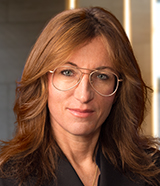
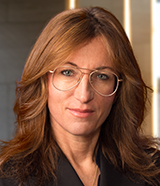
“We have great muscle memory of previous periods of stress,” says Susie Scher, co-head of the global financing group. “We are constantly reminded of other periods of volatility and we know how to get deals done in those conditions.”
Elsewhere, broadening the firm’s debt offering has been a priority in recent years – and the focus is paying off.
“The business is much bigger globally than it was three or four years ago,” says Scher. “ECM has always been at the heart of what we do, but increasingly it is also leveraged finance and debt capital markets, where we have grown faster than the market rate.”
There have been periods when the firm has actually led leveraged finance rankings.
Building up its acquisition finance capabilities has gone hand in glove with the bank’s desire to develop its buy-side advisory franchise, and 2018 saw this continue apace (see North America’s Best Bank for Advisory for more).
The firm committed more than $32 billion to acquisition-related investment-grade bridge loans in the period under review, including acting as lead arranger for the bridges backing FIS’s acquisition of Worldpay, Aqua America’s acquisition of Peoples Natural Gas and Wabtec’s acquisition of GE Transportation.
Goldman had not previously been a relationship lender to any of them.
We have great muscle memory of previous periods of stress. We are constantly reminded of other periods of volatility and we know how to get deals done in those conditions – Susie Scher
It is commonplace for big lending banks to get credited with advisory mandates only after the event. Not for the first time, Goldman does things the other way around, leading with advice that can be supported by financing.
Public-market prowess is all very well, but it’s clear that where Goldman differentiates itself is in the smarts on display in its more bespoke private work, on both the equity and debt sides of the fence. Part of that has been driven through its alternative capital solutions group, which it set up two years ago.
“The global financing business is changing – last year more capital was raised privately than publicly for the first time,” says Denis Coleman, co-head of the global financing group. “Public-market expertise is necessary but no longer sufficient – you have to be translating that into the private markets.”
Goldman has been nimble enough to ensure it is not just catching that train but driving it.
Its private-placement roster is substantial. It led the biggest of the year, including a $1.15 billion deal for GM Cruise, a $1 billion Series-A funding round for NewTV and a $1 billion deal for Verily.
Occasionally such deals combine with public trades. The bank led a $1.15 billion follow-on offer for MercadoLibre that came alongside an $850 million private placement that Goldman sole-led and that comprised a $750 million strategic investment from PayPal and a $100 million convertible investment from Dragoneer.
“It’s about really leveraging and integrating our investment banking relationships,” says Coleman. “A very vanilla investment-grade bond can be sold to the usual list of names, but for other situations we can bring sovereign wealth funds or family offices – we are an adviser to many of these entities around the world and they have the appetite to get involved.”
When Aqua America was financing its acquisition of Peoples Natural Gas, Goldman advised on a $750 million private placement of stock with the Canada Pension Plan Investment Board (CPPIB), as well as then left-leading a $1.7 billion follow-on of common stock and tangible equity units (TEU).
The anchor investment provided by the CPPIB PIPE led to many new investors coming into the follow-on, and the TEU priced at the best end of terms for the issuer as convertible outright investors piled in.
And the bank has done notable transactions in the structured finance field, including a $1.47 billion privately placed loan and equity class for Vanderbilt University that was secured by a royalty licence payment from Vanderbilt University Medical Center. Proceeds increased the size of the university’s endowment by 30%.