Awards for Excellence 2019
|
|
| View full 2019 results |
When Lazard reported first-quarter 2019 results, a trawl through public disclosures of other investment banks ranked the firm fifth by overall advisory revenues for the last 12 months, behind the large universal banks led by Goldman Sachs, JPMorgan, Morgan Stanley and Citi.
JPMorgan had a balance sheet of $2.623 trillion at the end of 2018. Goldman Sachs had a balance sheet of $932 billion. Lazard’s was just $5 billion.
How does it attain such a prominent position in advisory, while operating off such a tiny balance sheet?
Chief executive Ken Jacobs says: “Reputations are earned over time. We’ve earned ours over many decades of doing one thing well: serving clients with the highest quality advice. This focus nurtures a culture of innovation: Lazard pioneered modern-day M&A, as well as restructuring and shareholder advisory, and we continue to innovate.
|
|
|
Ken Jacobs |
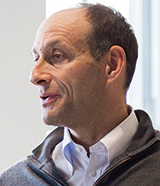
“With all of our bankers focused on advisory across a global platform, we have an enormous amount of intellectual capital to put to work for clients. This is why we tend to be hired for the most challenging and complex strategic matters.”
Lazard advised clients on five of the 10 largest completed M&A deals in 2018, among them Aetna on its $78 billion sale to CVS Health: the third largest health insurer merging with the largest retail pharmacy in the US, including one of the largest pharmacy benefit managers.
Another standout assignment was advising Tokyo-based Takata, a leading manufacturer of car safety products, on a global settlement arising from the largest product recall in US history over defective airbags. This had crippled the company.
Andrew Yearley, a managing director at Lazard, led a team that took Takata through Chapter 11 bankruptcy in the US, civil rehabilitation in Japan and out-of-court settlements in Europe and Asia.
Lazard also worked with the world’s leading car makers, which had to pay for a recall that overwhelmed Takata’s resources, and it led the negotiations for a sale of Takata’s assets not associated with the global product recall to a smaller player, Chinese owned KSS.
“Takata had operations in China, the rest of Asia, the US, Latin America, Canada, Europe. You had every major jurisdiction in the world trying to achieve a settlement,” says Yearley. “And it was too big to fail. There are only three global manufacturers of these critical safety systems. The car makers still needed to take its products, such as seat belts, where it is the number one or two supplier in most major markets, while also paying around $100 per recall of around 15 million cars.”
He continues: “If all that weren’t enough, the process was further complicated by the fact that while Takata is publicly quoted in Japan, it is still controlled by the founding family.”
The company was not easy for public shareholders to understand. This was a company with complicated ownership structures and long-term development – Matthew Lustig
Lazard won its role thanks to its expertise in restructuring, its industry knowledge in automotives and its Japan office, which understood the thinking of the company’s directors.
“One of the hardest things was to convince directors that the company had to file for bankruptcy,” Yearley says. “But it was essential, and we applied for US Chapter 11 and Japanese insolvency on the same day and also agreed on a crucial $1 billion settlement with the US Department of Justice. It was the most complicated series of settlements I have ever worked on.”
In conventional M&A, Lazard advised Forest City Realty Trust on a $11.4 billion sale to Brookfield Asset Management.
Again, its client was a public company still strongly influenced by a founding family. Lazard first worked for an independent committee of the board on the elimination of a dual-class share structure through a premium exchange offer to the Ratner family, who had held shares with a supermajority of voting rights. That went through in 2016, when activists were blaming the dual-class structure for the shares’ underperformance relative to the net asset value of properties in the portfolio.
“We continued to advise the company on the new shareholder dynamics it might now face, and for which we helped them proactively prepare, in the midst of a simplification plan focused on mixed-use, multi-family and office,” says Matthew Lustig, chairman of investment banking, North America, and head of real estate and lodging at Lazard. “The company had been unusual in that it converted from a C-Corp with multiple property types, including development, unlike most real estate investment trusts, which specialize.
“The company was not easy for public shareholders to understand,” says Lustig. “This was a company with complicated ownership structures and long-term development.”
A consensus among its new owners emerged that this was not a company designed to trade well in the public market and that it was more likely to achieve full value, closer to net asset value, in private ownership.
Lazard approached over 50 potential buyers.
“The question facing the refreshed board was: given where the shares were trading, and where they might trade in the interim, would the shareholders be better off taking the cash today or waiting for tax impediments to expire several years in the future, then reassessing alternatives.”
Directors of the company quite legitimately held opposing views on that question. Eventually the board decided it would be better to achieve private market value while it could and accept the offer.