|
| © 2019 Euromoney |
| Regional awards |
| View full 2019 results |


 |
AlgeriaBest bank: Société Générale Algérie |
Banking in Algeria is dominated by state-owned players, who take much of the profitable oil and gas-related business. But there is an increasing number of international banks carving out a business, and the one that stands out again is Société Générale Algérie, which wins the award for Algeria’s best bank for the second year in a row.
For SocGen, its Algerian branch is the second biggest earner in the group in Africa. Net business income for the bank reached €179 million at the end of 2018 and earnings before tax were €104 million over the same period.
As testament to its growing status in the country, SocGen was able to tap into the lucrative oil and gas sector, when it advised national oil company Sonatrach in May 2018 on the acquisition of the Augusta refinery in Sicily from ExxonMobil. The deal will help satisfy rising demand for petrol and diesel in Algeria.
 |
AngolaBest bank: Banco Angolano de Investimentos
|
Two years ago, José Eduardo Dos Santos, who had governed Angola for nearly 40 years, handed over power to João Lourenço. Since becoming president, Lourenço and his government have introduced a range of reforms aimed at strengthening and diversifying the economy, stemming inflation and combating corruption.
A clean up of the banking sector is part of these reforms, and one bank that has embraced these changes is Banco Angolano de Investimentos (BAI), which is Angola’s best bank this year.
Over the last year, the bank raised its capital adequacy ratio from 17.6% to 22%. Return on equity was 27%, up from 14.5% a year earlier. Net income was NKz50 billion ($147 million).
The bank is also becoming increasingly digital, with the introduction of BAI Digital – an online platform allowing customers to carry out anything they might do in branch on their mobile device or laptop. In 2018, the bank invested in the safety, quality and efficiency of the platform, while also launching new savings products.
Standard Bank Angola is Angola’s best investment bank due to the depth and breadth of its work in the country.
Last year, the investment banking team structured a notes programme that allows the bank to issue a variety of notes through public or private placement in the Angolan market. The deal marked the first notes programme arranged in Angola and Standard Bank became the first private issuer on the Luanda Stock Exchange in 2018.
In 2018, the bank acted as joint lead arranger for a $169 million export credit agency-backed facility to the ministry of finance. Standard Bank Group provided $69 million towards the total, which helped the government secure funding to acquire 10 trains for Luanda’s airport. This was an important deal for the government, which is investing in upgrading the rail system in the country.
The bank has one of the widest presences of any corporate and investment bank in the country, with offices in Luanda, Talatona and 18 other key provinces. The bank also invests in local talent: three-quarters of the investment banking team are Angolans.
 |
BotswanaBest bank: First National Bank of Botswana |
First National Bank of Botswana (FNBB) goes from strength to strength and wins the award for Botswana’s best bank again this year.
It has the largest balance sheet in the country, totalling P24.9 billion ($2.3 billion) and the largest advances book at P16 billion. In 2018, profit before tax for the bank rose by 23% to P838 million and the bank’s balance sheet improved by 5% year on year to reach P25 billion.
Return on equity for the bank increased to 22.1% up from 18.9% the previous year.
FNBB offers a personal experience to its customers. For instance, for those that do not have the time to visit a bank branch, it deploys employees to workplaces around the country to help new customers open accounts. The bank has 28 branches, 160 ATMs and 7,200 point-of-sale systems across the country.
It has also streamlined its rewards programme. Through its new Cashback rewards programme, customers using the bank’s app have cashback credited directly to their account each month.
 |
CameroonBest bank: Afriland First Bank |
The economic and financial situation in Cameroon remains fragile as a result of growing external debt and continued volatility in oil prices.
But the country has potential: the African Development Bank predicts that it will grow by 4.4% in 2019 and 4.7% in 2020 – substantially higher than the average growth rate in West Africa, which remains around 3%.
The financial and economic landscape requires a strong local player, and the leader in Cameroon is Afriland First Bank.
Under the leadership of Alphonse Nafack, the bank is the largest financial institution in Cameroon. It had a balance sheet of CFAFr1 trillion ($1.73 billion) as of June 30, 2018. The bank is one of the biggest providers of credit in the country; in 2018, Afriland First Bank issued CFAFr151 billion in loans to the local economy.
Afriland currently operates 43 branches and 117 ATMs nationwide. It also offers Shariah-compliant banking products to Muslim customers.
The bank has a growing regional presence, with subsidiaries in the Democratic Republic of the Congo, Equatorial Guinea, Guinea, Liberia, South Sudan, São Tomé and Príncipe and Zambia.
 |
Côte d’IvoireBest bank: Société Générale de Banques en Côte d’Ivoire |
In Côte d’Ivoire, Société Générale de Banques en Côte d’Ivoire is once again the country’s best bank.
It provides a wide range of products in the country, including current and saving accounts, insurance policies, consumer loans, credit facilities, credit cards and electronic banking solutions.
It has launched mobile money solution, Yup, which allows customers to withdraw, deposit and transfer money, pay bills, buy phone credit and make payments to merchants. The bank also plans to add other financial services, such as payday advances, credit, savings products and international transfers, to Yup in the future.
It is also doing its part to support small and medium-sized enterprise development in Côte d’Ivoire. Working with the ministry of trade and industry, the bank agreed to $594.3 million of lending to the SME sector this year.
In 2018, the bank continued to make money, recording a net profit of CFEFr42 billion ($72.9 million), up 5% from CFEFr40 billion in 2017.
 |
Democratic Republic of CongoBest bank: Rawbank |
This is the first time Euromoney has recognized the Democratic Republic of Congo in its awards for excellence. DRC is Africa’s second largest country by area and has vast natural wealth from oil to diamonds, but unfortunately these resources have exacerbated conflict in the country and at its borders.
|
|
|
Thierry Taeymans |

Controversial general election results in February this year highlight the country’s political instability.
As a result, DRC’s banks need to be prepared for political as well as economic disruption. And as is the case with many other African countries, a large local institution is often best placed to weather the storm. That is why this year Rawbank is the DRC’s best bank.
Under managing director Thierry Taeymans’ leadership, Rawbank’s profit after tax between 2017 and 2018 grew at an extraordinary rate from $5.9 million to $26.6 million. The banks’ increase in return on equity was equally as impressive, reaching 14.9% in 2018, up from 4.7% a year earlier.
The bank is a pioneer in mobile and digital banking too. In 2018 it launched its Diaspora Pack, which allows those living outside of the country to access their accounts at any time. It also launched Facturis, a programme designed to support small and medium-sized enterprises with their cash-flow through advances on invoices.
 |
EthiopiaBest bank: Dashen Bank |
Ethiopia is beginning to show signs of opening up, which in turn is benefitting the economy. In 2018, the government allowed private investment in some of its state-owned enterprises for the first time; and an historic peace deal with Eritrea helped push foreign currency dealing back through formal banking channels.
Local banks, rather than their international counterparts, have reaped the benefit of extra liquidity in the market because, despite reforms, the banking sector remains closed off to international investment. Policymakers and analysts believe this will remain the case for the foreseeable future.
For the second year in a row, Euromoney’s award for Ethiopia’s best bank goes to Dashen Bank. As a strong local player, net profit for the bank rose from Br815 million ($28.2 million) to Br929 million in June 2018 (when the last financial results are available) and total assets grew from Br36 billion to Br45 billion. Despite local competition for customers, deposits grew by Br8.1 billion, or 29.2%, over the year.
The bank is also focusing on its digital offering. Last summer, it launched new digital wallet, Amole, which gives mobile subscribers digital payment capability and access to aggregated digital products and services from retailers, the entertainment industry, airlines, social media platforms and third-party service providers.
 |
GhanaBest bank: Ghana Commercial Bank |
Consolidation and reform in Ghana’s banking sector prevented a crisis that could have ended in a run on the banks and damaged the wider economy. One of the biggest changes was the increase in the minimum capital requirement from C120 million ($22.1 million) to C400 million. The central bank of Ghana required that banks comply by the end of December 2018.
One bank that met and exceeded those terms was Ghana Commercial Bank (GCB), Ghana’s best bank this year, which raised its capital to C500 million before the deadline. Indeed, the bank’s financial statement for 2018 showed a solid overall performance, despite the challenges faced by the banking sector.
Profit before tax increased by 35.6% to C450 million in 2018 from C332 million in 2017, driven by solid revenue growth. Net interest income grew by 8%, from C895 million to C967 million in 2018 and net trading income more than doubled to C90 million from C41 million in the previous year.
The bank’s cost-to-income ratio remained higher than the sector average, however, at 60.5%, but the digitalization of the bank should help to alleviate this.
Consolidated Bank Ghana Limited, which was formed after the merger of five Ghanaian banks to create the second biggest bank in the country, may pose a threat to GCB in the future, however.
 |
KenyaBest bank: Kenya Commercial Bank
|
This year, Kenya Commercial Bank (KCB) is Kenya’s best bank, taking the title from Equity Bank, thanks to its strong financials.
Profit before tax at KCB rose to KSh33.9 billion ($331 million), up from KSh29.1 billion the year before. The bank’s total assets grew steadily from KSh647 billion in 2017 to KSh714 billion in 2018. Return on equity rose slightly from 26.5% in 2017 to 26.9% in 2018.
KCB continues to invest in its digital offerings. In 2018 the bank overhauled its digital platform, Vooma, which drove online transactions up to 100,000 a day from 20,000. This rapid growth also increased average monthly loan volumes from KSh2 billion to over KSh10 billion.
KCB has the largest branch network in the country, with 200 branches, 367 ATMs and 16,000 banking agents, to offer banking services 24 hours a day.
Towards the end of the awards period, KCB shareholders agreed to the bank’s plans to acquire the National Bank of Kenya, which should be completed by October this year. The deal could translate into a lower cost of funding for the bank, as well as increased lending capacity.
Indeed, consolidation in Kenya’s banking sector is long overdue, according to some analysts, and could dramatically change the line-up for next year’s awards for excellence.
In investment banking, Stanbic Bank Kenya stands out once again as the country’s best firm. This is largely due to the bank’s ability to leverage the country’s – and the region’s – burgeoning relationship with China through its connection with ICBC, established by the bank’s parent Standard Bank 10 years ago.
ICBC was instrumental in Standard Bank’s engagement with Chinese state oil company China National Petroleum Corporation (CNPC). Through ICBC, Standard Bank helped CNPC fulfil its offshore account requirements in Africa through SBK. SBK also hopes that this connection will allow the bank to capture additional flow and generate transaction banking revenue and foreign exchange business.
Cementing its relationship with some of China’s biggest companies, the bank also issued a guarantee for the Agricultural Bank of China of approximately $73 million for the execution of the Thwake multipurpose water development programme, which will supply dam water for domestic consumption, livestock, irrigation, hydropower and industrial purposes in Kenya.
SBK also supported 500 Uber ‘Chap Chap’ drivers, in a collaboration with Uber, Suzuki Japan and CMC Motors in Nairobi, to help them purchase their own fuel-efficient 800cc Suzuki Altos vehicles. Loans were advanced to drivers with high driver ratings, supporting entrepreneurship and safer mobility.
 |
MalawiBest bank: NBS Bank
|
Malawi may not be one of Africa’s most dynamic financial hubs, but thanks to the country’s competent central bank and regulators, the banking sector is one of the continent’s most stable.
One bank that stands out in the country is NBS Bank, and because of the transformation it has made in the last 12 months, it is Malawi’s best bank this year.
|
|
|
Kwanele Ngwenya |
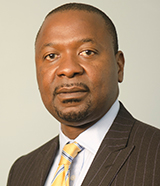
In 2018, under the leadership of chief executive Kwanele Ngwenya, NBS Bank re-capitalized through a rights issue – one of the most successful in Malawi to date – raising MK11.8 billion ($15.5 million). By the end of December 2018, the bank’s tier-1 and tier-2 capital ratios were at 15.53% and 15.45% respectively, against the required minimum of 10% and 15%. This marked impressive progress from the previous year, when tier-1 capital was only 10.79%.
With support from its partner Rabobank in the Netherlands, NBS Bank was able to clean up its balance sheet, update systems and become a profitable firm. It made a profit after tax in 2018 of MK1.7 billion, after a loss of MK1.0 billion in 2017.
In 2018, net interest income for the bank grew by 35% and non-interest income increased by 52%. Total assets grew by 11% to MK11 billion.
In investment banking, Standard Bank Malawi has worked on a number of landmark deals, making it the country’s best investment bank.
Most notably, SBM was the sole adviser for a $20 million dual-currency revolving credit facility for the country’s largest mobile operator, TNM – the largest bilateral loan in the country’s history. The transaction has a two-year availability period and is available in tranches that are repayable in two years. Proceeds of the deal will be used to finance capital expenditure and refinance existing loans.
SBM was also appointed lead transaction adviser and receiving bank for Icon Properties’ IPO. Icon is the largest property holding company in Malawi and this was the first IPO in the country in 10 years. The IPO was concluded faster than any other listed on the exchange.
In 2018, the bank’s corporate and investment banking assets grew 41% to MK69 billion.
 |
MauritiusBest bank: Mauritius Commercial Bank |
In Mauritius, the fight for the award for the country’s best bank is always a close call between Mauritius Commercial Bank and State Bank of Mauritius. This year, MCB has outperformed its rival.
|
|
|
Alain Law Min |

Not only is the bank the biggest in the country, but its performance in the period under question is remarkable. Net profit for the bank rose by 8.4% to $199 million in 2018. At the same time, total deposits grew by 8.2%, hitting $8.4 billion, while gross loans grew by a substantial 20% to reach $5.9 billion. It is a testament to the leadership of chief executive Alain Law Min.
In investment banking, MCB recently closed a dual-tranche syndicated term loan facility, which attracted commitments of more than $1 billion.
The bank continues to bring in technology to underpin its operations. For example, it introduced Temenos banking software to help manage customer accounts, and Calypso Treasury, to centralize all of its treasury systems.
 |
MoroccoBest bank: Attijariwafa Bank |
Attijariwafa Bank’s diversified banking model continues to support its growth, making it Morocco’s best bank once again.
Led by chief executive Mohamed El Kettani, net banking income grew by 3.4% to reach Dh22.4 billion ($2.34 billion), mainly driven by loan growth. Net interest and fee income rose by 8.4% to Dh14 billion and 5.2% to Dh5.03 billion respectively, while operating income grew by 4.6% to Dh9.9 billion.
The bank’s non-performing loan ratio fell slightly in 2018 to 6.8% from 7% in 2017 and return on equity improved, reaching 15.4% in 2018, up from 14.9% the year before. The bank remains well capitalized; its tier-1 capital ratio is 10.2%, higher than the minimum 9% required by regulators.
It had the largest market capitalization in the banking sector in Morocco, and the second in the country overall, at Dh95.1 billion as of December 31, 2018.
 |
MozambiqueBest bank: Banco Comercial e de Investimentos |
Even before Mozambique was hit by floods and a cyclone that devastated many parts of the country this year, the economy was reeling from the discovery of up to $2 billion in debt, hidden from the IMF and from the Mozambican attorney general’s office.
The crisis has encouraged some economic and financial reform in a country that has seen limited GDP growth in the last couple of years.
Despite the internal and external pressures on Mozambique, one bank has weathered the storm impressively. This year, Banco Comercial e de Investimentos (BCI) is Mozambique’s best bank.
No bank was immune to the economic problems in the country – most banks saw a drop in their loan portfolios – and BCI suffered a fall in turnover of Mt970 million ($15.6 million) to Mt187.90 billion. Nevertheless, it maintained its top position in the system by credit, deposits and assets, with market shares of 29.3%, 27.76% and 25.54% respectively.
In 2018, it added 160,000 customers and the bank now has 1.77 million customers on its books. Chief executive Paulo Sousa can take much of the credit for its stability over the last year.
BCI also redesigned its online platform to improve its functionality and accessibility for customers.
 |
NamibiaBest bank: Standard Bank Namibia |
Namibia is another country to appear in Euromoney’s awards for excellence for the first time this year. The country has close economic ties to neighbouring South Africa and many of its most successful banks are South African firms, such as FNB, Absa and Standard Bank.
It is little surprise that the country’s best bank is Standard Bank Namibia, largely due to the strength it has shown in investment banking.
During the awards period, SBN financed the first-ever utility-scale solar power plant in Namibia. It acted as mandated lead arranger, agent and account bank for the N$700 million ($48.9 million) project finance deal. With an installed capacity of 44 megawatts, this is the largest solar plant in the country; it will contribute 3% of the country’s energy needs, while reducing its dependency on South African power and will help Namibia reduce its carbon footprint by 33,000 tonnes of CO2 per year.
SBN acted as the sole commercial lender for the completion of the National Strategic Oil Storage Facility for the Development Bank of Namibia, providing N$1.5 billion of a total N$5.4 billion borrowed. The African Development Bank provided the rest of the funding. This investment will increase Namibia’s fuel reserves by an additional 30 days.
 |
NigeriaBest bank: Guaranty Trust Bank
|
Last year, Nigeria’s banking sector was characterized by consolidation and withdrawal. The Diamond and Access Bank merger created Nigeria’s largest bank by number of customers, while two international banks, HSBC and UBS, closed their representative offices in Nigeria.
Away from that noise, one bank continued to go from strength to strength in the country: Guaranty Trust Bank (GTB).
There are several reasons for GTB’s success this year. One is the bank’s strong financial performance: gross earnings rose 3.7% to N434.7 billion ($1.21 billion) in 2018, from N419.2 billion in the previous year; profit before tax rose by 9.1% to N215 billion from N197 billion in 2017; and customer deposits increased by 10.3% to N2.274 trillion in 2018 from N2.062 trillion a year earlier.
Customer experience is also a factor in the bank’s success. GTB became one of the first in sub-Saharan Africa to offer a WhatsApp business solution as a service, allowing customers to make enquiries, post complaints and access banking services via the application.
The bank also has a ‘Call the MD’ programme, where customers are able to pose questions on any issue directly to the managing director during regular public phone-ins.
The bank has also expanded its product offering. Last year, GTB launched Quick Credit, which allows customers to apply for loans of up to N5 million at an interest rate of 1.75% monthly, with the option to pay back within six months or a year. The process takes less than two minutes and is one of Nigeria’s most popular consumer loan products.
The investment banking sector in Nigeria remains competitive, despite economic headwinds. Banks that combine local knowledge and international expertise excel in the country, and this year, Chapel Hill Denham wins the award for its ability to do exactly that.
In 2018, Chapel Hill advised on deals with total value of $7.3 billion.
For example, Coronation Merchant Bank, another Nigerian investment bank, mandated Chapel Hill Denham as lead manager and bookrunner on its debut N100 billion debt-issuance programme in January of this year.
The fast-food business in Nigeria is growing rapidly with the expansion of the middle class, so companies in this sector are turning to the capital markets for growth. Again, Chapel Hill Denham is a leader, acting as joint manager and bookrunner for Eat’N’Go – Nigeria’s fastest growing company in the quick-service restaurant sector – on its debut N15 billion bond issuance programme.
Chapel Hill Denham is also leading the listing of MTN Nigeria on the local stock exchange. The bank’s relationship with the telecoms company helped secure it the award for Africa’s best bank for advisory.
 |
RwandaBest bank: Bank of Kigali |
Rwanda’s impressive growth and relative political stability compared with many of its neighbours has created a strong banking sector. Bank of Kigali consistently performs well and remains one of the country’s largest and most profitable banks, making it Rwanda’s best bank once again this year.
|
|
|
Diane Karusisi |
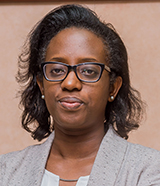
Under chief executive Diane Karusisi, Bank of Kigali’s profit before tax was RF42.6 billion ($46.8 million) in 2018, up 17.2% from RF34.1 billion the previous year. The bank’s balance sheet grew by 20.7% to RF877 billion from RF727 in 2017, while net loans and advances for the bank grew by 20.4% – ahead of the country’s strong GDP growth rate of 8.6% in 2018.
The bank is the largest in Rwanda by total assets, with a 28.4% market share. In 2018, it also increased its tier-1 capital to 32.1%, up from 18.91% a year earlier.
The bank has a strong corporate responsibility component and dedicates 1% of operating income to education, environmental and innovation projects.
In December 2018, it completed a rights issue that led to a cross listing on the Nairobi Stock Exchange.
 |
SenegalBest bank: Ecobank Senegal |
Ecobank’s regional and growing presence in Africa, especially in West Africa, makes it a leader in the banking sector. The bank’s focus on small and medium-sized enterprise development in Senegal in particular makes Ecobank Senegal the country’s best bank for a second year in a row.
The bank has shown strong financial performance again this year. At the end of 2018, it recorded total deposits and profits before tax of $1.8 billion and $32.1 million, respectively, compared with $0.9 billion and $21.3 million the year before.
The bank focuses on SMEs across the region; in 2018 it trialled its Emerald Business Club in Senegal, which holds networking seminars, business forums, gives access to market insights and explains some of the bank’s digital solutions for SME customers.
After the successful launch in Senegal, the bank plans to roll out the initiative across all of its subsidiaries this year.
Ecobank’s broad regional network helps support its efforts in Senegal. Ecobank is present in 33 African countries in sub-Saharan Africa and provides commercial, corporate and investment banking, securities, wealth and asset management to over 19 million customers.
The bank has 888 branches and offices, and 16,386 employees across the continent.
 |
South AfricaBest bank: FirstRand
|
In South Africa, the rising number of digital banks has transformed the banking landscape. These new, nimble players, such as Bank Zero, TymeBank and Discovery Bank are growing fast, due in large part to low or no fees and the speed with which new customers can open accounts.
One of these new players could easily become the best in South Africa in the next few years.
|
|
|
Jonas Malebye |
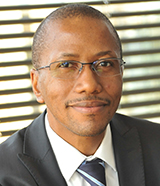
In the meantime, it is among the big four that we must look for a winner, one that has coped well with 10 years of slow economic growth. This year, FirstRand, under Jonas Malebye, head of investment banking South Africa, stands out as the country’s best bank.
In the awards period, FirstRand’s financials were strong. Normalized earnings increased 8% to R26.4 billion ($1.86 billion) and net interest income rose from R46.6 billion in 2017 to R51.2 billion in 2018, driven by lending and deposits. The bank’s return on equity remained stable at 23%, down just 0.4% on 2017.
FirstRand continues to have a strong liquidity position: at 115%, up from 97% in 2017, the bank exceeds the 90% minimum liquidity coverage ratio requirement of the South African Reserve Bank. The group continues to invest in upgrading its digital platforms, which will help FirstRand stay ahead of the game.
In South Africa, Standard Bank, under Kenny Fihla, head of corporate and investment banking, continues to be one of the most trusted investment banks in the country, working with many of the country’s largest corporates and government institutions.
The bank was joint bookrunner on Vivo Energy’s IPO on the London and Johannesburg stock exchanges, marking the largest Africa-focused IPO to list in the UK in 13 years. That deal also helped the bank clinch the award for Africa’s best regional investment bank this year.
Standard Bank acted as sole mandated lead arranger and underwriter for the construction and operation of power company Scatec’s solar power project. The bank also provided long-dated interest rate and currency hedges for the company.
Standard Bank acted as financial adviser to Sanlam Limited on its issuance of a 5% stake to its strategic partners and black empowerment participants last October.
In oil and gas, ExxonMobil selected Standard Bank to provide guarantees worth $204 million over four years, allowing the oil and gas company to explore and produce petroleum in the Zambezi basin.
 |
TanzaniaBest bank: NMB Bank |
Despite the drive for financial inclusion across most of Africa, in Tanzania around 35% of the population remains unbanked. Therefore it is important for banks in the country to play a role in bringing more people into the financial fold. NMB Bank has financial inclusion as a core part of its strategy and is Tanzania’s best bank this year.
During the awards period, NMB under the leadership of Sunil KC, has made a concerted effort to make bank branches and banking much more accessible to the masses – through digital channels in particular.
KLiK is the bank’s latest mobile app for Android, iOS and USSD phones. It is also the first in the country with a Swahili language option – a surprising thing in a country where 70% of the population read and write in Swahili and only 27% can do so in English.
Through KLiK, NMB customers have access to services that enable them to make payments and money transfers, pay bills and taxes, and request loans. The bank’s 6,000 banking agents also support customers around the country that still use cash for transactions.
The bank also has strong financials. NMB grew total operating income by 12% in 2018, from TSh493 billion ($214 million) in 2017 to TSh550 billion in 2018. Profit after tax for the bank reached TSh97.6 billion in 2018, from TSh93.4 billion in 2017.
 |
TunisiaBest bank: Banque Internationale Arabe de Tunisie |
Banque Internationale Arabe de Tunisie is Tunisia’s best bank for the second year running.
Net income for the bank in 2018 reached TD261 million ($91 million), up from TD209 million the year before. The bank’s total assets hit TD16.5 billion in 2018, up from TD14.1 billion in 2017.
It has also been developing its partnership with BMCE Bank of Africa to support customers’ expansion in the wider sub-Saharan African region.
 |
UgandaBest bank: Stanbic Bank Uganda |
In Uganda, Stanbic Bank Uganda is the largest and most profitable bank. This year it is also our choice as the country’s best bank.
Profit after tax for the bank rose to USh215 billion ($58.2 million) in 2018 from USh200 billion in 2017, despite a challenging market environment. Deposits grew 7% to USh3.9 trillion in 2018, the bank processed over USh144 trillion worth of transactions and it arranged USh405 billion of new credit and capital during the year, giving it a 30% market share of all new lending in the year.
SBU worked on a number of key investment banking deals during the awards period.
It acted as mandated lead arranger, lender, facility agent and security agent for Kinyara Sugar’s $35 million dual-currency debt issue, which will help the company fund its sugar plant expansion.
The bank also acted as mandated lead arranger, facility agent, hedging bank and lender for MTN Uganda’s debt issue of $25 million, which will be used for capital expenditure.
The bank committed USh2.5 billion to corporate responsibility. Some 66% was directed to education. Uganda has one of the youngest populations in the world, so investing in youth is essential to the country’s development.
 |
ZambiaBest bank: Stanbic Bank Zambia |
GDP growth in Zambia slowed in 2018 to 4%, down from 10% at the country’s peak in 2010.
Yet despite the slowdown, Stanbic Bank Zambia stands out as country’s best bank due to its continued stellar financial performance, as well as the breadth of its investment banking deals.
Profit after tax grew 29% in 2018 to ZK359 million ($27.8 million) from ZK277 million in 2017. Total assets grew to ZK14.9 billion in 2018 from ZK11.8 billion the year before.
SBZ acted as co-arranger and co-book runner for Bayport Financial’s debt issue last year. Bayport Financial is Zambia’s largest microfinance institution by assets; the debt issue will support its loan book.
SBZ was the sole arranger and lender for a development finance loan for Vertigo Properties in March this year.
The bank continued to innovate with its personal and business banking offering. In particular, it extended its roll out of Remote Sensing, which aims to enhance agri-business in Zambia by monitoring farms via satellite, allowing farmers to better manage their crops and expenditure.
 |
ZimbabweBest bank: CBZ Bank |
In Zimbabwe, economic growth was boosted by reform in the agricultural, manufacturing and mining sectors. However, limited access to foreign exchange has restricted development.
Nevertheless, CBZ Bank managed risk through its diversified offering to outperform its competitors. Led by Blessing Mudavanhu, who became chief executive in June 2018, CBZ is Zimbabwe’s best bank this year.
The bank reported 159.7% growth in profit after tax in 2018 at $72.17 million, up from $27.84 million in 2017. Total deposits grew from $1.85 billion to $2.08 billion, 12.2% growth since 2017, and total assets grew 11.7% from $2.19 billion to $2.45 billion in 2018. Return on equity was equally impressive, rising from 9% in 2017 to 23.1% last year.
The bank takes its corporate responsibilities seriously, especially when it comes to investing in the country’s youth and education.
In 2018, CBZ partnered with the National Association of Primary Heads and the Institute of African Knowledge to create the CBZ Schools Debate Championships, with the aim to empower schools and communities and nurture talent.
Through the CBZ Youth and Entrepreneurship Programme, the bank trained 845 young entrepreneurs across the country. Twenty of the entrepreneurs that showed particular promise were later funded by the bank to help build their own businesses.