|
|

External events in 2018 did not give Jean Pierre Mustier, chief executive of UniCredit, much to celebrate by the year end.
Earlier in the year the bank had looked like it was getting ready for a party: capital was raised, transformation in train and governance reformed. Then its home country and key market set itself up for a sovereign debt scare and a bust-up with the EU.
The formation of a populist coalition between the Five Star Movement and Northern League in May and Italy’s subsequent pursuit of a more expansionary budget course in the autumn was by far the biggest short-term challenge UniCredit encountered in 2018.
This will continue to be a concern for investors in the bank in early 2019, thanks to its impact on capital, funding costs and the economy.
Unfortunately, Italy is not the only political and sovereign headache Mustier faces. The lira crisis in summer 2018 weighed heavily on Turkish banks, forcing UniCredit to revaluate its commitment to Yapi Kredi (Turkey’s sixth biggest bank, which it jointly controls with the local Koc Group).
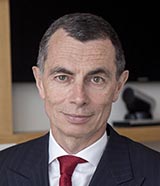 |
| Jean Pierre Mustier |
There is no doubt that UniCredit continues to set itself up for a better future. Revenues and costs consistently beat market expectations in the first nine months of 2018, with underlying profitability of the core bank rising into double digits and operating profit in the third quarter up 22% on the same period in 2017. At the end of 2018, it achieved more than 90% of the cuts to branches and employees it mapped out after Mustier joined in 2016. After the completion of the €17.7 billion Project Fino securitization in February, further non-performing loan transactions in July and September helped keep the bank on track to reach its NPL goals, with the non-core portfolio reduced by €32 billion in two years and now scheduled to empty by 2021.
Nevertheless, Italian bond values took a toll on UniCredit’s common equity tier-1 – 30 basis points in the second quarter and 9bp in the third quarter – pushing it towards a potential 50bp reduction in its end-2019 capital target; although it will go back to a target of more than 12.5%, as and when the environment improves.
A coupon of 7.83% on its senior non-preferred issue in late November, compared with 1% in January 2018, further shows the Italian sovereign’s effect on its cost of funding, even if Mustier says the issuance is part of its defensive actions to deal with the situation.
“It was important to pass the message that investors are positive on the country and that UniCredit can access the market,” he says.
Mustier says the bank could not issue between April and November due to its possession of privileged information about legal costs for alleged US sanctions violations in Iran. It increased provisions for these sanctions in third-quarter results and expects to communicate an in-principle agreement in the first quarter.
A €846 million impairment on Yapi Kredi also contributed to pressure on its shares around third-quarter results, which by then were down a third in 2018. Mustier could argue this is not so bad, considering European banks’ performance (the Stoxx600 banks index was down 20% as year-end approached) and its Italian context.
UniCredit is standing by Yapi Kredi, despite the risk of a capital call.
“This is not the first cycle that we’ve seen in Turkey,” Mustier says. “It’s clear that the only alternative that makes sense is to keep Turkey.”
Such difficulties seem to embolden naysayers who point to previous capital calls, continued doubts over Italian asset values and confusion around the Europe-wide regulatory flux.
“When people act aggressively against UniCredit, we take action to aggressively defend the interests of the bank,” counters Mustier.
Aggressively is just how it acted when hedge fund Caius Capital took highly publicized aim at its convertible and subordinated hybrid equity-linked securities (Cashes). Caius argued Cashes invalidated up to two thirds of the bank’s CET1, but the European Banking Authority disagreed and UniCredit sued Caius in Milan for €90 million in damages, reaching a settlement in December.
On the business side, loan growth has given Mustier encouragement lately, with net new loans of more than €10 billion in the third quarter of 2018, compared with €9 billion for the whole of 2017.
“The bank’s transformation is ahead of schedule and the commercial dynamics are working well,” he says.
UniCredit also boasts market share gains in Germany (its second biggest market) in areas like trade finance, partly thanks to investing more outside its Bavarian base. But with global trade policy shifts threatening German exports, the outlook there is also not as good as it was.
With this background music, it is hardly surprising that Mustier betrays no enthusiasm for a merger, like the one rumoured with Société Générale.