
Awards for Excellence 2018
|
|

Some banks make a virtue of being able to coordinate big balance sheet commitments quickly while also offering a broad product suite. Others have, by necessity, a more selective approach to capital commitment but excel in the advisory work that fosters a strategic partnership with a client, as well as leading to key roles in capital markets transactions. Morgan Stanley is an example of the latter and is North America’s best bank for advisory.
Advice is at the heart of everything Morgan Stanley does for its investment banking and capital markets clients. And it is an engine driven by Susie Huang that fired well in the period under review, underpinning our selection of the firm as North America’s best investment bank.
Where Morgan Stanley prefers to play is in those situations where it can advise on transformational deals. The acquisition of Lightower by Crown Castle might not be the largest the firm worked on, at around $7 billion, but it was the largest M&A deal for Crown Castle and it showcased Morgan Stanley’s expertise in telecoms infrastructure advisory.
The firm was left lead on an $11.3 billion financing package, an accompanying equity offering and a mandatory convertible bond. The final structure was a neat way to avoid pushing a BBB- company into high-yield territory.
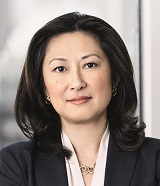 |
| Susie Huang |
Particularly impressive is when Morgan Stanley is able to coordinate all points of a large and complex deal to ensure confidentiality for the client. Its sole advisory mandate for Cigna’s $30 billion financing package backing its pending acquisition of Express Scripts was one example. The first media reporting of the plans came after both boards had announced the deal. Teaming up with joint venture partner MUFG meant the firm could also offer a bridge commitment of $26.7 billion without the client having to look further afield.
Activism defence is by its nature frequently below the radar and is often about carefully steering parties away from a transaction or simply envisaging scenarios and preparing ways to avoid or mitigate them. Morgan Stanley boasts a dedicated and well-regarded activism advisory team, with practitioners who used to be on the other side, advising activists.
Part of it is about crunching numbers. A team of data scientists and engineers provides reams of data and feedback. The kind of predictive analysis that this allows is what clients value, and Morgan Stanley sees value in the way in which such discussions cement its role as a trusted adviser.
The conversations might be a little different to those in the rest of the firm’s advisory franchise, but whether it is for General Motors, P&G, Bristol-Myers Squibb, ADP or any of the dozen or so big names that the firm advised on activism over the period, the goal and the results are much the same – putting the firm at the heart of the strategic dialogue with clients.



