
Awards for Excellence 2017
|
|
|
Also shortlisted |
KEB Hana Bank |
Lloyds Banking Group |
UniCredit |

If you were planning to write a case study on how a bank that was once close to collapse was able, relatively quickly, to turn itself into one of the developed world’s best performers, then you would struggle to find a better subject than KBC.
Remember that KBC was also a poster-child for what went wrong with the global banking system before the financial crisis of 2008.
Here was a bank that had forgotten its strong roots in northern and eastern Europe and embarked on a strategy to become a global bank. One that had a host of assets in Asia, including in curious areas such as Japanese equities and a Chinese mutual fund; sprawling assets from Latvia to Romania; and most ruinously of all, a US structured products business that eventually wiped billions from the bank’s bottom line.
Although KBC had been profitable up to 2007, insiders say the group had become far too diversified and paid too little attention to its risk profile.
Within a decade of those dark days, which culminated in a €7 billion bailout from the Belgian and Flemish governments, KBC is now arguably the best-performing European bank, throwing off returns on equity that many of its peers in the developed world can only dream of: a heady 22% in 2015, and a still impressive 18% last year. How?
|
|
|
Johan Thijs, KBC |
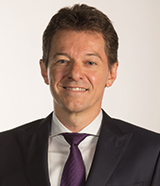
KBC’s ebullient CEO Johan Thijs is quick to give credit to his predecessor in the role, Jan Vanhevel, who was appointed in September 2009. Vanhevel appointed Thijs to run the core Belgian business shortly afterwards.
Since then, KBC has followed the same rigorous approach to its turnaround. Thijs describes it simply: “We’ve brought about a technical transformation – which cost me some sleepless nights. And we’ve also created a cultural transformation of our group. Those two, combined, have made us the most profitable financial group in Europe today.”
What Thijs brought about was a complete redesign of how KBC does business. The first thing he, Vanhevel and the rest of the executive committee did was to commit to KBC’s bancassurance model. At the time, the bancassurance model, which had once been prevalent in Europe, had fallen out of favour. People close to KBC at the time of the bailout say that regulators at the ECB actively encouraged the bank to reconsider whether a bancassurance model was appropriate or not.
But Thijs, who became CEO in 2012, was having none of this. Instead, he pursued a model that saw its business focus on retail, SME and corporate clients, based on bancassurance – and in six countries. That meant exiting all the others. KBC sold more than 30 companies.
“We were flawless in our execution – we sold businesses, even if they were profitable, if they did not fit our model,” he says. “We said: ‘Let’s be big in smaller countries, rather than small in big countries.’”
The cultural transformation would be worth a study in its own right. But at its heart it is about getting the balance between integration, localization and specialization right. Thijs thinks he has.
“We bring everything together, except the products,” he says. “Products need to be made by the bankers and insurers that understand them. Everything other than products – IT, sales and so on – is integrated. That means we can have a full focus on our customers.”
Use of data is also becoming integral to KBC’s offerings, but within limits. “Data helps us understand our customers’ needs, but we must remember our aim is not simply to sell products,” says Thijs. “We want to be a one-stop-shop for them, and that has huge cost benefits if you are properly integrated.”
Those benefits have quickly translated to KBC’s bottom line, generating those high ROEs – although Thijs has not, and insists he will never, set an ROE target. They allowed KBC to pay back its state aid in 2015, five years ahead of schedule.
The performance has also allowed KBC to build up a handy amount of excess capital (around €3 billion and rising fast) to allow Thijs to look at how a restored bank can continue to grow.
Its strongest-returning businesses have been Belgium and the Czech Republic. It is now looking to build scale elsewhere, notably in Bulgaria, where it bought United Bulgarian Bank from National Bank of Greece in December 2016 for €610 million. Thijs admits more acquisitions could happen, if the price is right, in other core markets such as Hungary, Slovakia and especially Ireland, where it does not have an insurance operation.
Just don’t expect another transformation.
“We have 43,000 employees all aligned to the same goals and with only one target: the fulfilment of our customers’ needs,” says Thijs.



