
Awards for Excellence 2017
|
|
|
Also shortlisted |
BAML |
Morgan Stanley |
Citi |
It may seem counterintuitive to award this year’s global financing house to a bank without the traditional balance sheet heft and lending history that might be expected in this category. Goldman Sachs has a balance sheet that is $40 billion smaller than its largest competitors, but has had a stellar run in a year where anything plain vanilla can get done and what matters is who can come up with the next-generation solution. Creativity is the differentiator when the VIX is at 10 and the S&P is at 2400.
However, you cannot be the world’s best financing house without putting your hand in your pocket. The bank’s financing franchise has been transformed over the last nine years to see it commit over $40 billion as lead arranger to acquisition-related bridge loans in 2016. This included an $11.4 billion commitment to Bayer’s $57 billion bridge loan for its acquisition of Monsanto – the largest bridge loan commitment since 2015 and the third largest of all time.
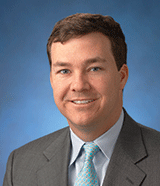
“Bayer is the case study for the evolution of our franchise,” says Denis Coleman, head of the firm’s EMEA financing group. “We have the ability to commit capital.”
Indeed, Goldman is one of just two arrangers (the other being Bank of America Merrill Lynch) of Amazon’s $13 billion bridge loan for its recently announced purchase of Whole Foods.
But what Goldman did better than the competition this year is commit that capital and come up with advice in imaginative ways.
|
|
|
Denis Coleman |
When the US high yield market was very choppy in the third quarter of last year, Goldman turned to the corporate securitization market to find a solution for communications giant Sprint. The resultant $3.5 billion Spectrum-backed notes transaction was the first securitization of 2.5GHz and 1.9GHz spectrum assets by a telecom carrier. The deal enabled the firm to diversify its funding sources, expand its investor base and reduce its financing costs. It also achieved a 5 to 7 notch rating uplift from Sprint’s corporate family ratings, which gave investment grade investors access to an attractive return.
“We came up with a way of disaggregating asset value,” says Coleman. “This is what our franchise is about.” Goldman was sole global syndication coordinator, lead structuring agent and lead left bookrunner.
“Our franchise is about investor diversification,” says Susie Scher, most recently head of the Americas investment-grade/risk-management group in New York – additionally pointing to the euro franchise that the bank has built for a number of dollar issuers, including Pfizer, MacDonalds, Sysco, KraftHeinz and Johnson & Johnson. Since June last year, Goldman has also been lead bookrunner on each of Apple’s deals, including currency IPOs in euros, sterling, Swiss francs, Japanese yen and Australian dollars.
In May this year, Goldman, together with Barclays and Jeffries, underwrote a $7.75 billion equivalent debt financing for US life sciences company Avantor’s acquisition of lab supplies firm VWR Corp. In addition to a $5 billion term loan, this includes a $2.25 billion unsecured bridge facility and a $500 million revolving credit.
“This started as an advisory relationship,” says Pete Lyon, “but we then came in on the financing side and were able to integrate multiple layers of the capital structure. This was an advice-driven financing solution.”
Scher and Lyon, formerly co-head of Americas equity capital markets, now head up the firm’s financing franchise in the US and Latin America, while Coleman took up his role in February last year after a 20-year career at Goldman.
German utility RWE turned to Goldman as joint global coordinator with Deutsche Bank for its €5 billion IPO of innogy in October last year. The firm plans €6.5 billion capex over the next three years in Germany and Europe so needed to unlock capital. By aggregating its renewable, power grid and retail businesses into a new company, innogy, it was able to raise €5 billion and push its market capitalization to €20 billion from a pre-transaction €6 billion. The deal was the largest European IPO since Glencore in 2011.
“By rearticulating the story and creating a clean energy entity, we were able to unlock enormous value for the enterprise. It was not obvious that you could do this,” says Coleman.
“The size and unique nature of the innogy deal show an understanding of where the world is going,” he adds. “It is a clear, demonstrable example of creativity.”
Goldman is always up against lending and reciprocity when it competes for financing mandates. Ideas and speed of execution were often the trump cards in a year of political shocks and market uncertainty.
“It is very easy for a corporate treasurer to ring the arranger of their revolver,” says Coleman. “They call Goldman Sachs because of our creativity. Advice-driven financing mattered over the last year – volatility may have been low in terms of the VIX, but I can’t think of a riskier market.”
As the debt markets become more institutionalized, Goldman’s relationships with these investors stand it in good stead. And as the world moves from active to passive investment, buyers searching for alpha increasingly look for the kind of bespoke transactions in which the US bank excels.
“We have moved beyond driving the integration of M&A with financing,” says Coleman. “We have evolved into an advice-driven financing house.”



