
Awards for Excellence 2017
|
|

It has been a year of catharsis for western Europe’s banking sector. Long-term problems in two of the continent’s biggest and most-fragmented banking markets – Germany and Italy – came to a head.
But towards the end of the year, some of the most dangerous sores in those markets appeared to be healing, with immediate crisis points passed and signs that Europe’s banks and regulators were beginning to address their industry’s fundamental shortcomings. As summer 2017 approached there was even hope that the ECB’s Bank Recovery and Resolution Directive could work, after the bail-in of Banco Popular’s subordinated debt and equity and its rescue by Santander.
|
|
|
Antonio Horta-Osório |
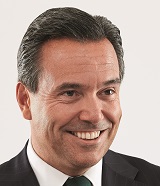
These issues must sometimes have seemed quite remote to a bank like Lloyds Banking Group, western Europe’s best bank – even if one of the firm’s biggest macroeconomic risks for the coming years is entirely European in character. Italian bank stocks, indeed, suffered more than UK banks in the days following the Brexit vote.
Lloyds has the UK’s economy to thank – at least in part – for its success, although the UK economy can also thank Lloyds. Good prospects for its profitability, and the consequent high value of its shares, have enabled the UK government to make a profit on the £20.3 billion ($25.9 billion) injected into the group after the 2008 crash.
The state was able to further reduce its holding in Lloyds during the awards period – and eventually exit completely in May. The crucial factor was the rapid refocus of its activities back to what it does best: retail and commercial banking in the UK. With CEO António Horta-Osório ramping up investment in digital banking and overseeing growth in areas such as small and medium-sized enterprise banking, that core franchise is healthier than ever.
Lloyds’ statutory profit before tax more than doubled to £4.2 billion in 2016; profit numbers again doubled in the first quarter of 2017. Its underlying return on tangible equity increased to 14.1% in 2016, better than its largest peers, both in the UK and Europe. Meanwhile, further disposals in the run-off unit helped Lloyds reduce risk-weighted assets by 3% or £7 billion, despite growth in RWAs in commercial banking. Its pre-dividend common equity tier-1 ratio increased from 13% to 14.9%, also exceptionally high for a bank of its size.
While Lloyds’ net interest margin grew during the period (despite a post-Brexit Bank of England cut), a cornerstone of its outperformance is a shrinking cost base, with a cost-to-income ratio that fell to 48.7% in 2016, again far lower than its peers. It is redeploying £1 billion to digital banking, using technology to cut account application times dramatically. It now counts more than 12.5 million online users and 8 million mobile users.
Lloyds boasts that it has deployed £1.2 billion of new funding for manufacturing in 2016, supported 121,000 startups and helped 10,000 clients to start exporting. It grew net lending to SMEs by 3% and has achieved 30% net SME loan growth in the last six years. This is alongside £10 billion in support for infrastructure projects.
Finally, it has increased the percentage of senior roles held by women, now around a third, while lesbian, gay, bisexual and transgender charity Stonewall ranked Lloyds top for inclusiveness in its 2017 Workplace Equality Index.



