 |
|
|

Global turnover has contracted. Low interest rates, coupled with political and economic uncertainty, are stripping profit opportunities from speculative investors. And as the damaging benchmark-rigging scandal recedes into history, a new set of conduct principles is about to be unveiled to keep everyone’s behaviour under much tighter control and scrutiny.
At face value, there seems to be little incentive to work in the foreign exchange industry in 2017. Indeed many of the industry veterans that previously ran highly successful FX businesses of one type or another – including James Bindler, Kevin Rodgers, Phil Weisberg and Gil Mandelzis – have now stepped aside, leaving the future in the hands of a new generation.
Their future looks set to be very different. Trading practices will be rigorously scrutinized by all market participants; liquidity will be increasingly fragmented, with volume split across many more liquidity pools; and the latest technology will be used to delve ever-deeper into the true costs of execution. Despite the challenges, however, it is a future about which the industry’s new leaders appear to be excited.
“I am deeply optimistic about where we’re going as an industry,” says Itay Tuchman, Citi’s new global head of FX trading. “This is a period of rapid change and innovation, and the next few years will be very exciting as we unlock new opportunities, particularly around data and analytics.”
Currently, however, the FX Global Code of Conduct (released on May 25) is at the top of almost everyone’s agenda. A little over two years ago in response to the failings highlighted by the fixing scandal, the Markets Committee of the Bank for International Settlements convened the FX Working Group (FXWG) of central bankers, mandating it to develop a single set of principles of good practice that could be applied globally. After two years of intensive discussion and drafting, the advent of the code marks a decisive moment for the industry.
|
|
|
Guy Debelle, FXWG |

“In the past, there was never a common understanding of what constituted good market practice, and in some areas there has been a reasonable diversity of opinion. Now we have a single set of ground rules that can be used as a competitive tool to enforce high standards,” says Guy Debelle, deputy governor of the Reserve Bank of Australia and chairman of the FXWG.
The success of the code, which is a voluntary set of principles without the force of law, will depend on how seriously it is taken by market participants in future years. If it works, the code could restore trust and confidence in an industry whose reputation has taken a heavy pounding in recent years. But if it is allowed to be flouted, even at the fringes of the market, its credibility will be undermined.
The stakes are clearly high. Despite the collaboration between the public and private sectors in drafting the code, officials recognize that it will never prevent misconduct altogether. Their hope is that it will put in place clearer guidelines on what constitutes accepted market practice, removing the opportunity for the kind of systemic market abuse that has damaged the industry’s reputation recently.
 |
| David Puth, CLS |
“No code, no regulation, no law or threat of penalty is strong enough to deter those who might choose to take advantage of others through dishonourable or illegal practices,” explains David Puth, chief executive of CLS and chairman of the private-sector Market Participants Group that has supported the development of the code.
“We have police forces, jails and speeding tickets, and yet people still deliberately do the wrong thing. The FX Global Code is not designed on the premise of total prevention, but rather to keep everyone focused on a common set of strong principles, practices and processes.”
For many of the practices covered by the code’s 55 principles, there was little dissension over what constitutes right and wrong, but the objective was to set clear boundaries that practitioners can easily implement. In some areas, however, including accepted conventions surrounding last-look and pre-hedging, consensus was more difficult to reach.
On these issues, discussion both within and beyond the FXWG centred on the problems that arise when liquidity providers are given the opportunity to act on information they receive during the last-look window. In a hypothetical scenario in which a market maker is given 100 milliseconds to accept or reject an order, it can scrutinize price updates from primary trading platforms many times during that window. With recent advances in technology, EBS, for example, distributes price updates every five milliseconds to those that pay for its premium market-data feed.
On the basis of those updates, a firm can clearly determine if the market is moving in its favour and then decide whether to accept or reject a trade, effectively using the privilege of last-look to secure a risk-free profit. Some participants believe this practice grants liquidity providers an unfair advantage and is misleading for liquidity consumers, but the code will only introduce safeguards around such practices rather than eliminating them altogether.
“We have tried to take a sensible position on potentially controversial practices by putting in place principles for ethical behaviour and increased transparency rather than outlawing practices altogether,” says Puth. “Pre-hedging, for example, can be beneficial in facilitating market liquidity and getting orders executed at better levels. The code provides guidance on the effective use of pre-hedging, on the need for transparency and on the importance of doing so in a manner designed to benefit the client.”
Despite controversy in certain areas, market participants have generally been very supportive of the code and say it will help to enforce consistent principles across the industry. The MPG has expanded over the last two years to include more than 40 practitioners spanning the buy side, sell side, technology providers and market infrastructures, giving the private sector a big stake in the project.
|
|
|
Zar Amrolia, XTX Markets |
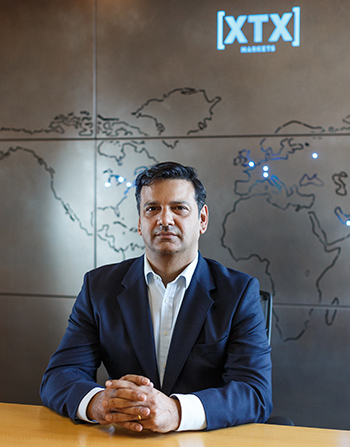
“The code is likely to evolve in the future, and there will certainly be areas where it can be improved, but it is a giant leap forward in the right direction and will hopefully restore trust and increase transparency in the FX markets,” says Zar Amrolia, co-chief executive of electronic market maker XTX Markets. “With these standards in place, banks should now be able to put the past behind them and their focus can turn back towards clients.”
Given the remedial action that has already taken place at many banks to implement strict controls and surveillance on trading floors, it is not expected that the code will impose any surprise requirements or necessitate sudden changes. Most banks believe they are already well-positioned to meet its requirements and say they will signal their full commitment as soon as possible.
“The industry has changed significantly, with much stronger internal controls around trading and a greater awareness among traders and salespeople of their obligations,” says Chris Purves, global co-head of FX, rates and credit trading at UBS. “For the most part, clients now benefit from better disclosure than they did in the past, there are clearer processes for managing complaints, and the pursuit of best execution has improved dramatically.”
Richard Bibbey, head of FX in Europe, the Middle East and Africa at HSBC, adds: “The principles in the code are symptomatic of where the FX business wants to take itself so that we operate in a more transparent environment and everyone understands what constitutes fair and reasonable conduct. That is very positive for the industry.”
In addition to the creation of clearer guidelines on good conduct, the code also stands to boost confidence in an industry that has suffered badly following the benchmark scandal. Just a few years ago during the investigations, as traders were being dismissed and fines were beginning to be imposed, an atmosphere of fear stalked the industry, with trading floors dominated by compliance and surveillance concerns. Many buy-side firms found that dialogue with their counterparties petered out altogether, as traders refrained from sharing market colour of any kind for fear of violating accepted practices.
As the code of conduct now sets clear boundaries on what kind of information can be exchanged on a pre-trade basis and what channels can be used, there should be much less ambiguity, so that traders and sales teams can have the confidence to support their clients without fear of recrimination.
“Having these principles clearly articulated should not only improve trust in the market, but it should also restore confidence among participants so that they have a clear understanding of what constitutes appropriate market practice,” says Debelle.
Taking control
To some extent the code may ultimately drive greater changes on the buy side than the sell side, as it requires investment firms to take control over their orders and make sure they fully understand the products and services they are buying. The success of the code also depends on buy-side firms taking it seriously and making sure that their counterparties are complying with the principles as a condition of doing business with them.
“The obligations of the code upon the buy side are probably smaller than for the sell side, but they’re no less important,” says Puth. “It is incumbent upon all market participants to truly understand what it is they are buying and to ask questions about practices that might not be fully transparent.”
As the code is unveiled and implemented, other challenges also occupy the FX market. A perfect storm of continuing low interest rates, political uncertainty in Europe and the US and range-bound currency pairs has taken its toll on market turnover and impacted the profits that can be made from FX.
For the first time in a generation, global turnover contracted in 2016, with the BIS triennial survey reporting overall average daily volume at $5.1 trillion last year, down from $5.4 trillion in 2013. Meanwhile spot volume fell from $2.0 trillion to $1.7 trillion during the same period, while modest gains were reported in swaps and forwards.
“The political environment has been very uncertain and there has been a lack of direction in currencies that makes it difficult to rationally forecast market trends,” says Fabio Madar, global head of FX coverage at Deutsche Bank. “This has deterred hedge funds and other traders, which has driven the drop in volume.”
Deutsche’s currency volatility index (CVIX), which provides an indicator of the general levels of price movement in the FX market, reached a record high of 24.24% at the height of the financial crisis in October 2008, but fell to a low of 4.93% in July 2014. While it subsequently rebounded to 12.28% in June 2016, it had fallen back to 6.92% by May this year, indicating a dearth of volatility.
 |
In quieter markets, Madar believes clients should take the time to restructure the composition of their portfolios and position them for expected medium-term trends: “Quiet markets are an opportunity that needs to be seized.
 |
|
Fabio Madar, Deutsche Bank |
“They allow clients and their bankers to take the time to think deeply about their risks and their portfolios, where and how markets will evolve, and to take stock of products and strategies being used.”
But FX in 2017 is not only about political uncertainty, low volatility and new rules of engagement. Deeper changes are also afoot in the way in which liquidity is provided, distributed and consumed.
Primary trading platforms have continued to see a fall in turnover during the last year. Average daily volume on EBS fell from $94.8 billion in 2015 to $85.8 billion in 2016, while average daily spot volume on Thomson Reuters platforms dropped from $110.9 billion in 2015 to $99.8 billion last year.
The economic environment plays some part in these falling numbers, but participants also report a decline in the use of large trading platforms in certain market conditions, largely due to concerns over market impact.
“Primary market venues now account for a far smaller proportion of overall volume,” says Mauricio Sada-Paz, head of e-FICC sales in EMEA and global head of e-FX sales at Bank of America Merrill Lynch. “It is much less typical for orders to be placed in the primary market, unless they are very close to the top of book, because there is too much signalling risk and the depth of the market is not what it used to be.”
Banks’ declining risk appetite also plays its part in that trend. With the mounting constraints of prudential regulation, banks are having to hold much more capital, and therefore often have less balance-sheet capacity to support the holding of risk. Meanwhile the reverberations of the sudden decision by the Swiss National Bank to remove its currency floor in 2015 are still being felt.
“The SNB event was a wakeup call, because market makers realized they were providing too much liquidity,” says Sada-Paz. “They had lots of prices posted on different platforms and when the market moved in one direction, they were suddenly hit on those and it became very difficult to risk manage.”
Much of the FX market remains very liquid, particularly in calm conditions, but at times of stress there have been instances when prices suddenly tend to widen and liquidity becomes much thinner. Top-tier banks and non-banks claim to be providing as much liquidity as ever, but they acknowledge overall depth is not what it was.
 |
| Itay Tuchman, Citi |
“We have plenty of risk capacity to offer our clients, and it is very rare that our balance sheet prevents us from delivering tight prices,” says Citi’s Tuchman. “But the number of primary market-makers has certainly decreased, and that has influenced the depth of liquidity in some currencies.”
XTX’s Amrolia adds: “As bank balance sheets have come under pressure and their technology spend has fallen, client needs have remained the same, and that has provided an opportunity for new entrants like XTX. But at least on the client side, the debate has now moved away from bank versus non-bank to the quality of liquidity provision, service and innovation that is offered by individual firms.”
Two particular risk events have tested the industry’s resilience over the last year – the volatility following the UK vote to leave the European Union in June 2016 and the flash crash in sterling in October 2016.
In the case of Brexit, many institutions had expected volatility and were determined not to be caught out as they were after the SNB decision. Trading floors were heavily staffed during the night after the vote and multiple scenarios had been rehearsed and risk-managed in advance.
Both banks and non-banks reported big surges in volume as the results became clear and the value of sterling plummeted. Deutsche Bank traded more than double its normal volume, while Citadel Securities traded roughly 4.5 times its normal average daily volume in FX.
“It is at moments of stress such as Brexit that the real difference between liquidity providers becomes clear,” says Madar. “Many banks no longer run principal desks and so cannot quote continuously in stressed markets, while non-bank liquidity providers often do not hold onto large orders in the same way that banks are able to.”
Kevin Kimmel, head of e-FX at Citadel Securities, believes what is important to a liquidity consumer can vary depending on the type of firm, and that recent events show there is a role for both bank and non-bank providers: “Along with some banks, there are non-banks that have performed well in key performance areas such as reliability and risk warehousing.”
“As liquidity has become more constrained in FX, clients are beginning to implement transaction-cost analysis in order to determine which liquidity providers have risk-taking capacity and provide quality execution,” adds Kimmel.
While the volatility following Brexit certainly appears to have been a more positive story for the industry than the SNB shock a year earlier, there are still concerns, both within the industry and at an official level, about the market’s resilience following sudden currency moves.
More vulnerable
When sterling plunged by roughly 9% against the dollar in early Asian trading on October 7, it prompted the BIS Markets Committee to investigate what led to the crash. The committee’s report, published in January, explored a number of contributing factors, including the time of day and lack of experienced staff available to manage the move, but concluded such spikes and crashes are becoming increasingly commonplace. For practitioners, the concern is that the market has become more vulnerable at times of stress.
“On aggregate, the liquidity we now see during big moves has diminished, because many market makers now have less risk appetite and have repositioned their businesses to become liquidity recyclers. What we call ‘phantom liquidity’ was evident during the sterling flash crash, when the depth of liquidity did not allow trades to be executed in large size,” says Sada-Paz of BAML.
Other challenges lie ahead as the market structure evolves and the share of liquidity provision continues to be divided up between banks and non-banks. As shown by the sterling flash crash, one of the key issues is likely to be the depth of liquidity in important currencies outside core US and European trading hours – a challenge that is exacerbated by the fact that not all liquidity providers are active in those non-core hours.
 |
| Chris Purves, UBS |
“Many of the non-bank liquidity providers are only making prices for a certain proportion of the day rather than the full 24 hours that we provide liquidity,” warns Purves. “There is clearly an advantage in not making prices at difficult times, but if banks go that way too, then there will be no price-maker of last resort, which could introduce systemic risk.”
For buy-side firms and corporate treasuries, these deep-rooted changes in market structure, coupled with the provisions of the code of conduct and the imminent arrival of the recast Markets in Financial Instruments Directive, all underline the importance of much more rigorous monitoring and benchmarking of their FX trading.
When it comes into effect in Europe in January 2018, Mifid II will set higher standards on the pursuit of best execution, requiring that “all sufficient steps” must be taken to obtain the best possible result for clients. This has driven an industry-wide focus on transaction-cost analysis (TCA) technology as banks have developed their own in-house offerings and a number of independent providers have gained increasing traction.
“As we move towards Mifid II, our clients are looking for tools to assess the quality of their execution on multiple channels,” says HSBC’s Bibbey. “We have seen clients looking more to single-dealer platforms as they start to understand the impact of liquidity recycling and internalization on the multi-dealer platforms.”
In a survey of 2,395 clients conducted by Euromoney, 38% said they would look to review their panel of FX providers over the next 18 months, but only 10% expected Mifid II to change their consumption of FX research. Meanwhile, the use of FX execution algorithms remains modest, with 81% estimating that algos account for only up to 20% of their flow.
Just 18% expect to increase their use of algorithmic execution tools over the coming year.
These expectations may change, however, as sophisticated TCA should shine a light on the true costs and benefits of the various execution options available.
“ If there is a more wholesale adoption of independent TCA on the buy side, it becomes much easier to compare execution venues and styles,” says Purves. “Depending on how algo execution performs under that analysis, TCA could certainly drive increased use of certain algos.”
FX global code: key points
The final form of the FX global code came as little surprise, given the large number of practitioners involved in the drafting and consultation process, and the publication of the 55 principles on May 25 marked the formal launch of the code and the start of the adherence process.The principles are broadly split into six categories: ethics; governance; execution; information sharing; risk management and compliance; and confirmation and settlement.
A separate report on adherence details mechanisms intended to promote and incentivize adoption of the code – for example, central banks intend to lead by example by implementing the principles for their FX trading activities.
The code kicks off with ethics, requiring that market participants strive for the highest ethical and professional standards, acting honestly, fairly and with integrity, and making sure to identify and address any conflicts of interest that might arise.
The code requires firms to put in place effective governance frameworks for their FX activities, which deliver appropriate oversight, supervision and controls. Meanwhile, internal remuneration and promotion structures must be consistent with ethical and professional conduct expectations.
Execution represents one of the meatiest sections of the code, with 11 separate principles that set clear expectations on the minimum disclosures that should be made to clients and the practices that should be employed to ensure orders are handled fairly and transparently.
Pre-hedging is permitted only when the counterparty acts as a principal rather than an agent, and market makers are forbidden from providing prices with the intention of hindering the price discovery process. Mark-up – the charge made to compensate the dealer for its own risks and costs – must be reasonable, and clients should be made aware of its inclusion.
On the hotly debated issue of last look, principle 17 requires that market participants using the privilege must ensure the client is made aware of it, disclosing how price movements in either direction could impact on the decision to accept or reject a trade. Last look should be used as a risk control mechanism rather than for the purposes of information gathering, the code states.
The five principles grouped under information sharing set out to control the use of confidential information and communication between traders and sales staff. Clear guidance must be provided on approved channels of communication, and market colour must be communicated appropriately, without compromising confidential information.
While risk and compliance might not have been at the forefront of the failings exposed by the scandal, the code covers the management of a wide range of risk types, including counterparty credit risk, market risk, operational risk, technology risk and settlement risk. Management of compliance, business continuity plans, know-your-customer and legal risk are also tackled in this section.
Finally the code sets out 14 principles on trade confirmation and settlement to promote the smooth and timely settlement of FX trades. This last section deals with a number of critical post-trade practices, including affirmations, confirmations, standard settlement instructions and account reconciliation.



