| 2009 Awards for Excellence | ||
JPMORGAN: The US bank has led big, headline-grabbing deals in all the emerging regions
|
Also shortlisted in this category: |
Before the financial crisis struck hardly a day went by without an IPO in the emerging markets, especially in Brazil and China. Those deals came to a shuddering halt last summer as the financial crisis intensified. However, with emerging equity markets outperforming their developed market counterparts this year, the appetite for IPOs is returning. Most activity will probably take place in China and Brazil, although issuance will be selective rather than constant.
 |
|
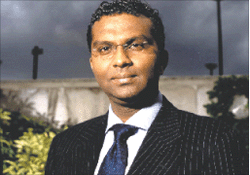
Viswas Raghavan, JPMorgan: deals define the market |
Any deal flow will be welcomed after a turbulent 2008 that began brightly for the emerging equity markets but ended with next to no activity. Last year, JPMorgan worked on deals totalling $10.6 billion, according to Dealogic. That compares with $31.3 billion in 2007. The story was similar for UBS, Morgan Stanley and Credit Suisse which all trailed JPMorgan in the league tables in both years. With IPOs drying up, the banks had to prove their talents in other areas. Two trends in particular came to the fore over the past year: rights issues and block trades.
Both types of transaction were most evident in Asia – DBS, for example, did a $2.7 billion rights issue in January, as did Korea’s Shinhan Bank in March for $928 million. Indian real estate company DLF, meanwhile, did a $780 million block trade in May. Korea’s DC Chemical, China Construction Bank and China Shenhua Energy undertook similar transactions in our review period. The speed and flexibility of these procedures make them particularly appropriate in volatile equity markets.
Of the three shortlisted firms – JPMorgan, Morgan Stanley and UBS – the latter has the most dominant position in Asia’s equity markets. But the Swiss bank’s troubles in Latin America mean that it falls short for the global award this year.
The decision by UBS management to sell Pactual, the Brazilian investment bank that it bought in 2005, has left it with a big hole in, arguably, the most important emerging equity market after China. Although UBS retains Pactual’s equity sales, trading and research capabilities there are still plenty of questions about its operations in Brazil and Latin America generally.
Morgan Stanley remains strong in key markets such as China and had a good year in emerging Europe and the Middle East but is relatively weak in Latin America.
Indeed, the only firm to have a consistent record throughout all emerging regions over the past 12 months is JPMorgan. Its portfolio before, during and after the hiatus in the IPO market is by far the most impressive of any bank. From Latin America it acted on the $11.6 billion follow-on offering for Vale and Fresnillo’s $1.8 billion IPO on the London Stock Exchange, the first main listing by a Mexican company in that market.
In central and eastern Europe, the US firm was one of the bookrunners on New World Resources’ $2.5 billion IPO on the London, Warsaw and Prague exchanges, timed before the credit crunch closed the market. It also did deals for Turkcell, Russia’s Fesco, CEDC of Poland and Russia’s Razgulay Group. The Turkcell transaction, in which JPMorgan acted as sole bookrunner, was at $673million, the biggest accelerated bookbuild in central and eastern Europe in our review period.
In Asia, JPMorgan was one of the advisers on the DBS rights issue; was sole bookrunner for China’s Zhongwang Holdings’ IPO in April 2009, a deal that opened that particular market; and one of the banks on DLF’s transaction, an issue that opened the Indian equity market. The sale of Cazenove Asia from JPMorgan Cazenove to Standard Chartered in November hasn’t had too detrimental an impact so far.
In the Middle East, JPMorgan was the sole bookrunner on Ma’aden’s $2.5 billion IPO in July, the last big emerging markets deal before the markets shut.
In Africa, the bank was a joint bookrunner on a $574 million deal for Sappi, the second biggest ever rights issue in South Africa. The transaction was executed in November when barely any other emerging markets deal was possible. JPMorgan has dominated the equity-linked market too in the past year. Last month, it sole led a $1.25 billion convertible bond for India’s Vedanta Resources.
“The large liquid benchmark deals which define these markets all involved JPMorgan,” says Viswas Raghavan, head of international capital markets at the firm.
The bank has benefited from avoiding many of the pitfalls that tripped up the other big investment banks. While other firms have had to cut their market-making activities because of strains in their balance sheets, JPMorgan has continued to support its deals and provide liquidity in the secondary markets.


