STANDARD CHARTERED: The bank posted impressive results and is aggressively
|
Also shortlisted in this category: |
It is one of the bigger ironies of the financial crisis: the bank that specializes in the world’s riskiest markets has so far emerged with its reputation and its balance sheet intact. Of course, luck plays its part. Standard Chartered has been helped by the fact that, for once, this financial crisis did not originate in the emerging markets. Moreover, the developing region that has been hit hardest, central and eastern Europe, is one that is not core to the bank’s strategy.
Still, Standard Chartered’s management deserves great praise for navigating the bank through such a challenging 12 months, especially with economic growth slowing significantly in the regions in which it operates – the Middle East, Africa and Asia.
 |
|
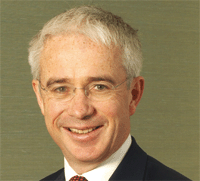
Peter Sands, Standard Chartered: glad he did rights issue |
“We’ve adjusted pretty well. We anticipated the broad direction of what may have lain ahead,” says Peter Sands, chief executive. In 2008, the bank’s operating profit increased 13% to $4.57 billion, its operating income jumped 26% to just under $14 billion and its total assets grew 32% to $435 billion. Although Standard Chartered’s financial performance exceeded management’s expectations, Sands says that what really made the bank stand out was the quality of its balance sheet. “When things get really tough, people look more to the balance sheet than the P&L,” he says.
One of the things that Standard Chartered did last year was to undertake a rights issue. But unlike many of its banking rivals it did so from a position of strength rather than weakness. “We were capital appreciative in the second half of the year irrespective of the rights issue,” says Sands.
The rights issue simply reaffirmed the confidence that investors had in the bank. “We did it because investors wanted us to do it,” he says. “Investors had been rattled by balance sheet issues at other banks. It was difficult for them to know who to believe.”
Undertaken in the last week before Christmas and priced at a 49% discount, the issue raised £1.8 billion. It was taken up by 97% of shareholders. “It was about making a strong balance sheet stronger,” says Sands, who adds that the bank’s core equity increased by 20 basis points in the second half of last year even before the issue took place.
“We didn’t want to be seen as a bank doing a rights issue because we were in trouble,” he says.
He adds: “It gave us a degree of flexibility. I’m glad we did it.”
The bank has continued to bolster its capital position. Last month it raised $1.5 billion via a perpetual tier 1, the first of its kind to be sold to retail investors since Lehman Brothers’ bankruptcy. Attracting strong demand, the bond was increased in size by $500 million from its original target amount. The coupon of 9.5% was lower than that paid on recent tier 1 bond sales by Barclays and Rabobank.
The bank has a strong liquidity profile too. Deposits grew 30% last year to $274.6 billion, with Standard Chartered’s loans to deposits ratio improving to 74.8%. Its income is broad-based and not just dependent on one or two business lines. Seven of the bank’s nine geographical segments each delivered more than $1 billion of operating income.
The fastest area of growth is the wholesale banking division. Last year, its income jumped 43% to $7.49 billion while its operating profit before tax increased 28% to $3 billion. “We can invest on the back of the strong revenue growth,” says Mike Rees, chief executive of the wholesale bank.
That is something it is doing aggressively through big hires, especially in its global markets and corporate finance units. Recent joiners include Mohammed Grimeh from Lehman Brothers to run trading for the Americas; David Douglas, also from Lehman, to be global head of equity capital markets; and Brent Eastburg, as the new global head of credit trading from Ravenscourt Capital Partners.
“The competitive environment in wholesale banking has changed much more dramatically than in consumer banking,” says Sands. “There is no shortage of room for growth.”
The bank cites opportunities in equities and commodities, as well as in local-currency debt, especially in Asia. “We’re in a world where volatility is different from what it used to be. Volatility will continue so the opportunities around providing clients with hedging products are enormous,” adds Sands.
One cloud on the horizon might be its activities in the Asia syndicated loans business where rivals believe it might have to write down debt that it has been unable to sell if economic conditions deteriorate further. The bank’s management is confident, however, that it can weather any storm. “I’m not going to talk about individual exposures,” says Rees, “but you don’t see me sitting on the edge of my seat. We’re comfortable with the relationships we’re in.” Sands says that one of the reasons for the bank’s success is its focus on the basics: “We don’t take anything for granted. We remain obsessively focused on the granular details of running a bank.”


