Hedge funds: Green trimmings
Impax Asset Management: Shorting the non-environmentalists
Clean Energy Asset Management: Focusing on renewable energy
BioFinancial Corp: Creating new markets to trade in
 |
|
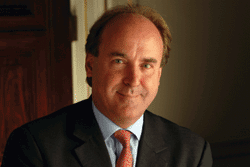
“The space is starting to get more cluttered” |
Climate Change Capital launched a €800 million private equity fund in 2006 to invest in the carbon markets. Gareth Hughes, head of corporate development at Climate Change Capital, says that with more opportunities and greater liquidity in the markets a hedge fund structure will eventually become more plausible for a carbon financing investment vehicle, particularly through the use of side-pockets for less liquid investments requiring longer-dated securities. “We look for enterprises and projects that will make a meaningful and sustainable contribution to reducing the world’s carbon emissions and, as a consequence, generate quality emission reduction credits to trade,” says Hughes. “In addition to vanilla off-take agreements we look to add value to the project owner or developer by making, for example, advance payments to these entities or to equipment manufacturers directly to facilitate the purchase of the equipment required to generate the reductions. Or we can make an equity investment in a project that, as part of that commitment, allows us to purchase the emission reduction rights at mutually beneficial terms and then to trade. We can also structure carbon finance/technology packages to provide a turnkey solution to the project developer.”
Although the risks are potentially greater, Climate Change Capital believes it can add most value by investing early in the project development cycle. By going upstream it can assess and manage the risks better, and purchase credits at a price that reflects the risk profile while, if things go well, optimizing the volume of credits that will be delivered.
Part of the risk results from the uncertainty of where the carbon market will go after the Kyoto Protocol ends in 2012, and that uncertainty is keeping some investors on the sidelines, says Hughes. Climate Change Capital, however, has the benefit of being heavily involved in developments in the carbon markets. Its market development team, led by Anthony White, is active in the global policy dialogue and debate, and co-founder James Cameron has been intimately involved in the development of the policy and regulatory frameworks, including the international negotiations that created the Kyoto Protocol.
The fund focuses principally on developing countries, such as China, India, and others in southeast Asia, Latin America, and certain African countries. However, it is also looking at opportunities in Russia and central and eastern Europe. In terms of projects to invest in, Hughes says that many of the relatively high carbon intensity projects such as industrial gas abatement projects that generate high volumes of credits, the low-hanging fruit, were picked in the first phase of the investment cycle, but there are many other interesting opportunities to invest in. “We’ve looked at and are investing in a wide range of projects including wind, landfill gas, coal mine methane, heat recovery in the cement and heavy industry sectors as well as forestry sequestration projects,” he says.
The increasing opportunities for investment and the broadening geography mean that capacity for the fund has already grown since last year. So too has competition. “The space is starting to get more cluttered,” says Hughes. “In addition to a growing number of dedicated funds and carbon asset development entities, the investment banks are starting to get involved directly or indirectly through some strategic investments in carbon asset developers. Governments are purchasing credits through various agencies and facilities including the World Bank. Corporates are buying for their own compliance requirements but this means more buyers and more financial players looking to trade, which makes the market deeper and more liquid. And the opportunities will increase. The Kyoto Phase One is only targeting a 5.2% reduction from all sectors. That is a very small part of the 75%+ reduction in carbon emissions that is required by 2050 according to experts.”



