Sovereign wealth funds: The new rulers of finance
Financial institutions weigh up the opportunities
Fight on for Aussie’s future prizes
 |
“If the shoe was on the other foot, if these were sovereign wealth investors in France, Germany, the UK or the US earning fabulous returns, reducing countries’ national deficits, funding social security costs and investing into the rest of the world, would they think it was an issue? I suspect they wouldn’t” |
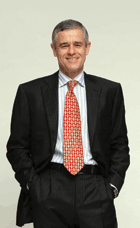
TEMASEK’S EXECUTIVE DIRECTOR, Simon Israel, has a point when he boasts of his institution’s governance, openness and performance. At a public sector level, Singapore, which lacks democracy or freedom of speech on any western scale, isn’t feted for openness or accountability. But the fact is that compared with the big sovereign wealth funds in the Gulf, for example, Temasek is actually pretty open, starting with the fact that Euromoney is sitting in its Orchard Road head office interviewing its management and leafing through its 113-page annual review. “When you think of the Singapore state you don’t normally think of transparency,” says a fund manager who has dealt with both Singaporean and Gulf sovereign wealth funds. “But compared with Abu Dhabi Investment Authority or the Saudis, it’s an open book.” It isn’t a completely open book, but then it is not under any obligation to be so. When Standard Chartered plotted a matrix pitting sovereign funds against each other in terms of openness and strategic investment approach, Temasek came out among the most transparent in the world, behind only Norway, Alaska and Alberta. At a time when sovereign wealth funds are under increased scrutiny and suspicion, it’s useful for Singapore’s vehicle to be trying to set itself apart.
“The world has suddenly woken up and discovered that sovereign wealth funds are sitting on supposedly $2.5 trillion, which could become $12 trillion or $15 trillion by 2015,” says Israel. “And they’re saying: ‘My gosh, this is in the hands of governments, and they are very likely to go out and invest this money’.” The concern that this new class of capital could be invested with objectives other than maximizing returns – for political ends, for example – is at the root of suspicion of this increasingly powerful investor bloc.
Israel believes there’s a very positive slant to these funds. “My own view is that it is likely to be more of a stabilizing force than a destabilizing force; by nature they are long-term investors and patient capital,” he says. He adds that the fact that they have used little leverage stands them in further good stead. He also wonders if there is a little hypocrisy in the west’s concerns. “If the shoe was on the other foot, if these were sovereign wealth investors in France, Germany, the UK or the US earning fabulous returns, reducing countries’ national deficits, funding social security costs and investing into the rest of the world, would they think it was an issue? I suspect they wouldn’t.” He argues that a country using a sovereign fund is much better than one that decides not to. “When a country such as China decides to form its own investment fund, that says to me that this fund will become an institution with real capabilities over time. It will be accountable and it will be responsible, and answerable to the Chinese and its citizens. That’s a lot healthier than all sorts of mysterious ways people could invest money.”
Israel reckons Temasek is distinct from other sovereign funds on four grounds: governance, commercial orientations, transparency and source of funds. It’s perhaps easiest to start with the last of them, since it’s indisputable. Temasek was formed 33 years ago by a $350 million injection of assets from the government when it first decided it would be better to have them managed by an independent body. Those assets were mainly shares in state-owned industries, and the transformation of that into the $167 billion portfolio Temasek boasts today is almost entirely a consequence of the commercial growth of that portfolio. “People seem to think we are investing currency reserves, government surpluses, pension fund monies, which is not the case. Our only source of capital was the original endowment,” says Israel.
The commercial orientation is easily proven too. Just look at the returns: an 18% compound annual growth rate since inception, 22% in the past three years, 27% in 2006 and a 38% annual return on the $58 billion that has been invested since 2002 on diversifying the portfolio into Asia and the OECD countries. Temasek measures its own performance through a datum called wealth created, based on return after the risk-adjusted cost of capital, and says that $23 billion was created in 2006 alone.
The clearest example of Temasek’s transparency is in its annual review, which details core holdings, balance sheets and strategy, and breaks down the portfolio by geography (to a point anyway), sector and liquidity. It doesn’t do everything – there’s no way of telling, for example, if it has holdings in Burma, a point of some contention among observers of Singapore at the moment – but then as a private company it doesn’t need to, or indeed to do as much as it has. “We choose to do so,” Israel says. “The principle of what we disclose as a commercial operation is where do we draw the line in terms of our commercial interests? We’re happy to explain to people our overall investment themes and strategies. We share what we’re up to. We’re transparent on our governance system, our returns, our accounts. But at some point in time you have to say, where do you stop? – because going beyond this is simply providing our competitors with very useful information or exposing us unnecessarily to markets being able to manipulate our investments.”
It’s not just about the annual review: it’s also relevant that Temasek states a target return (18%), and is an issuer of a bond. “The disclosure that goes into issuing a bond, that’s out there as a public record, probably contains more information on Temasek than anyone would care to know.” Temasek is also apparently the only sovereign wealth fund that retains a credit rating (AAA).
The most controversial claim that Israel makes is that the fund stands apart on governance. Temasek holds assets once belonging to the government in a private company with an independent board. Under Singapore’s constitution, any new elected government – hardly likely in today’s environment – can only operate on current surpluses, with past investments and reserves safeguarded. “I find it interesting to apply to people the Singapore Stock Exchange test of independence: independence of mind and judgement,” says Israel. “If you looked at any member of the Temasek board, every one of them has a completely independent mind and sense of judgement, and a very strong set of principles that would never accept the government interfering in the business. Frankly it is almost a parallel to what it would be if we were a listed company.”
All of this is true. But the big problem is that all the claims of independence and governance are cast into an unflattering light by the fact that Ho Ching, the CEO of Temasek, is married to the prime minister, Lee Hsien Loong. From a point of view of perception at least, that is problematic.
“I think that’s a fair question,” says Israel. “It’s a fact that Ho Ching is the wife of the prime minister. But I would suggest to you that if our shareholder was anyone other than the government, then this would be less of an issue. The perception is far from the reality.
“At the end of the day Ho Ching is answerable to the board of Temasek and I want to emphasize again the independence of that board. The board signs off on the major strategic investment decisions. There is absolutely no link to the government.” He describes Ho as “very much her own person” and argues that Temasek should be judged by its results.
Be that as it may, this spirit of independence is not the perception Temasek carries elsewhere in the world. Temasek’s “parentage”, as Israel calls it, can become an issue when it tries to acquire politically sensitive assets. This was clearest in Thailand, when Temasek’s ownership of Shin Corp, the telecoms holding company built by deposed prime minister Thaksin Shinawatra’s family, became a big problem after Thaksin was deposed in a coup last year. The legality of the acquisition itself has been challenged, but at the core was a grass-roots objection to a big asset being owned by Singapore.
State-owned not state directed
“It works for us and it works against us,” says Israel of the state link. “There are constituencies who feel very comfortable about knowing who is behind Temasek as a shareholder,” he says, citing China and Vietnam as examples. “In other cases it can be a negative.”
On Shin, he defends the rationale of the investment (indeed, this has never been in doubt, since Shin owns 43% of AIS, the wireless communications leader in Thailand) and points out that other bidders wanted it too. “Along the way it became politicized, and when we reach that point, there’s very little we can do about it.” Temasek has marked down the value of the investment in its accounts but thinks there is still merit in the holding. “In the long term that will prove to have been a solid investment over time.”
Temasek continues to expand in Asia, following a stated ambition to have one-third of its portfolio in Singapore, one-third in the rest of Asia and one-third in the OECD bloc. In the banking sector alone it holds stakes in two Indonesian banks (Danamon and BII), Korea’s Hana, India’s ICICI, Taiwan’s E.Sun, China Construction Bank and Bank of China, in addition to stakes in Standard Chartered and DBS (subjects of an ever-popular theory that the two institutions might one day be merged to create the Singapore global banking powerhouse the city state is believed to crave. See the DBS feature on pages 80-87 for more.)
Israel describes Temasek as “an active shareholder but not an activist shareholder,” and says in most cases the group does not put its own people onto the boards of companies it buys into, instead using the seat to install a good independent director “who can add more value to an investment than we can as an investment house”.
Temasek gets consulted a lot by other countries looking to set up sovereign wealth funds. It has hosted the Chinese, Vietnamese and Qataris among others in recent times. To all of them, Israel says, they stress the benefits of separation from the government. “We are state-owned,” he says. “But we are not state directed.”


