![]() |
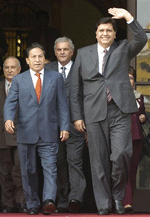
President-elect Alan García: make the markets work for Peru |
Almost non-existent a decade ago, Peru’s capital markets have flourished over the past five years, with the government and big companies such as US copper miner Phelps Dodge finding ample demand for bonds. Now the new government of president Alan García, which took office on July 28, aims to develop the markets further. There are plans to allow smaller companies to raise cash, develop a secondary mortgage market to unleash new funds to redevelop slums, and encourage pension funds to invest in productive industries, not just in sovereign bonds. “Deepening the local market in soles is going to be one of the pillars of our economic policy,” says García’s chief economic aide, Enrique Cornejo. “Our resources aren’t being put to work via the markets.” The barriers to smaller Peruvian businesses are daunting. Because many companies cannot meet the listing requirements of the Bolsa de Valores de Lima, Peru has launched only four initial public offerings with a total value of $40 million in the past 15 years, despite strong economic growth. The business sector is severely undercapitalized, with a total of $7.5 billion in debts, or around 10% of Peru’s GDP. A change in that situation is crucial to Peru’s long-term development, as small and medium-size companies generate 40% of GDP and three-quarters of all jobs in the country. However, these companies’ financing costs are up to 2.5 times those of big corporations.
Cutting down debt
Cornejo says that at the government level García plans to help develop the markets by reprofiling Peru’s sovereign debt into soles, with the aim of reducing debt levels to 30% of GDP from the present 38%. For companies, the new administration aims to standardize and simplify the registration process for debt issues, require a debt rating from only one agency and develop more short-term investment instruments. “In the secondary mortgage market, we are looking to develop a system such as that of Fannie Mae in the United States,” Cornejo says. Indeed, allowing Peruvian real estate companies to tap equity markets is now more achievable because of Peru’s economic stability, which makes investment in housing viable. García’s government aims to build on the success of the MiVivienda housing fund, which enables Peruvians to apply for mortgages with financing rates of 10% a year for borrowers who put down a 20% deposit. Since 1999, MiVivienda has approved mortgage loans totalling $187 million, generating the construction of 43,000 homes. MiVivienda says it aims to issue standardized credits in the local market backed by its mortgage portfolio.