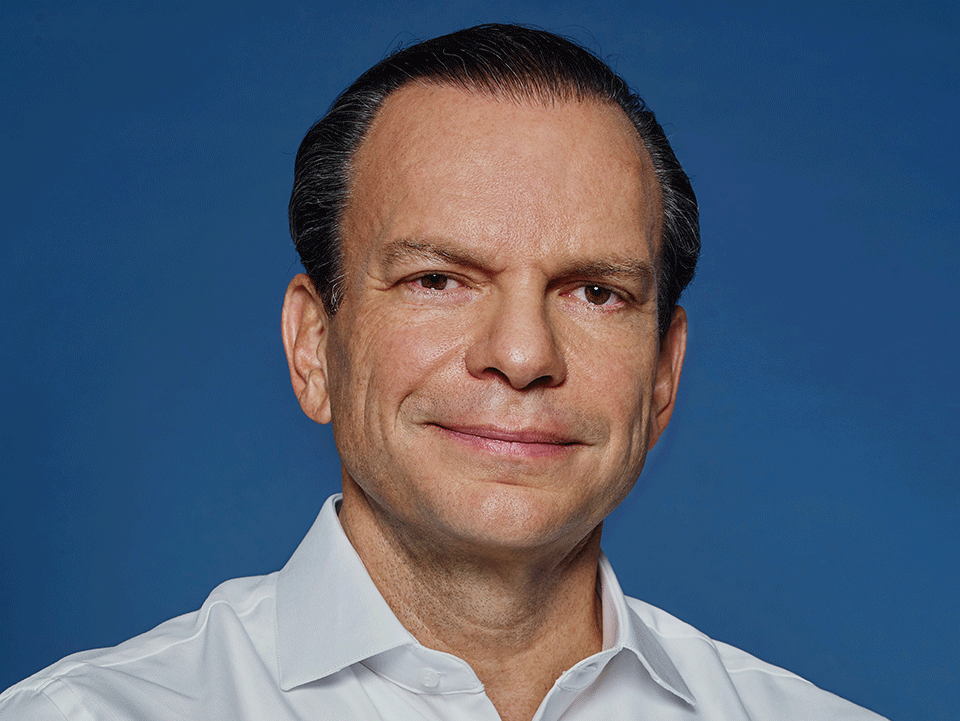
Antonio Palocci’s resignation as Brazil’s finance minister last month marked the culmination of six months of intense pressure over his role in an alleged corruption scheme. He is the most prominent casualty yet of a scandal that has dogged President Lula’s administration for nearly a year.
Though not a surprise, Palocci’s departure is still a big blow for Brazil. He is the architect of the stable fiscal and macroeconomic policy that has seen Brazil move closer to attaining investment-grade status.
When he first came to the ministry three-and-a-half years ago, Brazil’s credibility was in question. In the run up to the 2002 presidential election, the sovereign’s risk premium had spiraled out to 2000bp over US treasuries and there were fears that Brazil would default on its debt repayments. Palocci’s first task was to stabilize the situation and convince investors that he would enact pro-market policies. In this he has been a success. Today, the country’s risk premium is nearer 200bp over than 2000; the domestic stock market is booming; and the real is one of the best performing currencies in the world.
Still, Brazil has some way to go before it starts matching the performance of other developing economies, especially those in Asia. The main worry is that growth has stalled. Last year the economy grew 2.3%, compared with 4.9% in 2004. Another concern is the high level of interest rates, which stand at 16.5%.
All eyes are now on Palocci’s successor, Guido Mantega, who is a long-time ally of President Lula and former head of BNDES, Brazil’s development bank. Mantega often clashed with Palocci, especially over monetary policy. In his first public statement since becoming finance minister, Mantega said he wanted to see a sharp reduction in interest rates in order to achieve sustainable growth. The problem is that a dramatic fall in interest rates could lead to a build-up in inflationary pressure.
Mantega was also critical of Palocci’s austere fiscal policy and there’s every chance that spending levels will increase if Lula is re-elected for a second term in October, which he is still favourite to achieve.
Brazil’s fundamentals are certainly better than they were in 2002, when Lula first came to power. The country is moving in the right direction. But there’s an uneasy feeling among investors, not helped by the fact that treasury secretary Joaquim Levy is also about to depart for the IADB, leaving a big hole in Brazil’s finance ministry team. They need reassuring. Can Mantega deliver?