 |
| Tyson: Greenspan was too sanguine |
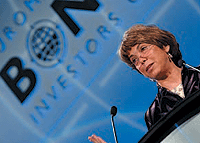
The US spends and the rest of the world lends. But the US is spending too much, and if Asian central banks don’t keep lending, this year could bring unprecedented risk for bond investors. That was the message from Laura D’Andrea Tyson, former chairman of US president Bill Clinton’s Council of Economic Advisors, in her keynote address to the 10th Euromoney Bond Investors Congress in London on February 24.
Tyson argues that the US government’s fiscal policy has enhanced the risks to the global economy.
“The global accumulation of US dollar assets could be described as the most generous aid programme in history,” she says. “The Asian financial community has helped the US avoid the ?guns and butter’ dilemma of financing a war.” Foreign official buyers soaked up 40% of net US treasury note and bond issuance last year.
This has sustained a US recovery based on tax cuts and low interest rates rather than on rising employment. So if the central banks lose their appetite for US treasuries, foreign private investors must fill the gap by buying US equities.
Federal Reserve chairman Alan Greenspan argued that this would happen in his testimony to Congress last month. “Greenspan’s testimony was too sanguine,” says Tyson, pointing out that the dollar needs to depreciate even further to cut the US current account deficit. If Asia stops buying, the dollar’s steady decline could become a plunge and interest rates could rise faster than expected, destabilizing the capital markets.
As demand for capital increases, the Fed’s unwillingness to raise rates could create a financial asset bubble.
Although Tyson does not share the ultra-pessimists’ view that these risks will definitely crystallize, and stresses that she sees no reason why the Asian central banks should stop buying dollars, she echoes former Clinton treasury secretary Bill Rubin’s assessment that they are “unlikely but significant”. You have been warned.




