 |
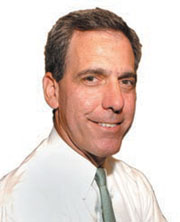
| Bennett Goodman |
Bennett Goodman owes his success over the past few years to his wife. He used to be a leveraged buyout banker at Drexel Burnham Lambert, and wanted to move into capital markets. ?The only place to do that at Drexel was in the Beverly Hills office,? says Goodman. ?So I told my wife that Mike [Milken] wanted me to move over there.?
The response was unequivocal: ?She said that my family and her family were in New York, so if I really wanted to get into capital markets I should look there first.?
That?s how Goodman found his way to Donaldson, Lufkin & Jenrette. ?I?d heard of them before, as a few people I knew and respected from business school had gone there and set up a bridge fund,? he says. They needed to tap the high-yield bond market, so Goodman embarked on a campaign to persuade the bank to hire him. ?I tried to get Garret Moran to give me a job,? says Goodman. ?At first he wouldn?t see me, so I stalked him, and finally got him to come out for lunch. I explained to him my view that capital markets was the nexus between banking and sales and trading. He asked me that if I were to do all I said I would, then what would he do? I told him he could sit back and get rich and famous. I had a job after lunch.?
A decade at the top
Goodman started in March 1988, beginning a long career at DLJ and then, after its acquisition in 2000, at CSFB. As one of the founders of the high-yield bond group, he played a large part in taking DLJ to the top of the US underwriting league tables in 1993, supplanting Merrill Lynch. It has stayed at the top ever since.
He says: ?I?m proud of a lot of things from my time running leveraged finance, but this is one thing that I am particularly proud of. There are firms that have managed to keep that kind of position in a business for, say, five years, but I can?t find a firm on Wall Street that has so consistently dominated a business, and to do so for more than a decade.?
Competitors colleagues attribute this success largely to Goodman. ?He might try to tell you how much he owes to Garret Moran or Tony James,? says Tim O?Hara, global head of high-yield capital markets at CSFB, and being a heritage CSFB banker also a former competitor to Goodman. ?But Goodman really is a pioneer.?
It?s Goodman?s management style that accounts for much of the division?s success, says O?Hara. ?In leading franchises it?s hard to keep all people happy, especially when lots of people could run the group,? he says. ?But Goodman was very good at finding, bringing in and nurturing talent, and at keeping them content so that they didn?t feel the need to leave to get a higher job elsewhere.? In fact, there is almost no instance of a managing director leaving the group for a competitor, though some have gone to work on the buy side.
The winner of the 2004 PricewaterhouseCoopers capital markets achievement award deserves recognition for leading a small firm with much less capital at its disposal than rivals to dominance in a key market segment for so long. ?In the mid-1990s, when other firms were making a lot of money focusing on proprietary high-yield trading, we decided to focus on flow trading and build a customer-focused trading business,? says Goodman. ?By 1996 and 1997, competitors were trying to emulate us, but we had such a head start.?
And Goodman continued to invest in the business. ?We didn?t have the capital to buy our way in, so we had to be profitable, and then we?d plough that back into the business.? Soon after he took over the group, Goodman set up distressed debt trading, a leveraged loans business, and a structured high-yield credit business covering such things as CDOs.
One of Goodman?s fondest deal memories is working on satellite TV company Echostar. ?One of the things I like best about this business is meeting guys like Charlie Ergen,? he says. ?When we met him back in 1994 we thought he was a great entrepreneur. All he had was a business plan to launch satellites, sell some receivers and compete with market leader Hughes.? Goodman decided to back him, and it almost cost the firm dearly. ?We underwrote a $350 million bond deal for them, with a 12 7/8% coupon, and had to buy some of the bonds back in the aftermarket. The price tanked when one of their satellite launches failed. I told the bank that we believed in his story and should back him.? The firm has since flourished, of course and in 2000 made an ultimately unsuccessful bid for Hughes. Goodman?s team has helped raise about $10 billion in debt for Echostar over the years.
In 2000, after DLJ announced it was selling to CSFB, Goodman and his team nearly decamped to HSBC. That prompted many to speculate that the high-yield franchise would not survive long at the top. Instead, the division has flourished. ?We like defying conventional wisdom,? says Goodman. ?Over the years we?ve had Merrill, Morgan, Goldman, Citigroup and even Bear Stearns a few years ago all saying they?re going to take over our spot as number one, and none managed it.?
Goodman left late last summer. ?I wanted to leave while out on top,? he says. But in March he was convinced to return by John Mack, CSFB?s then CEO, to run the new alternative capital division.