 |
|
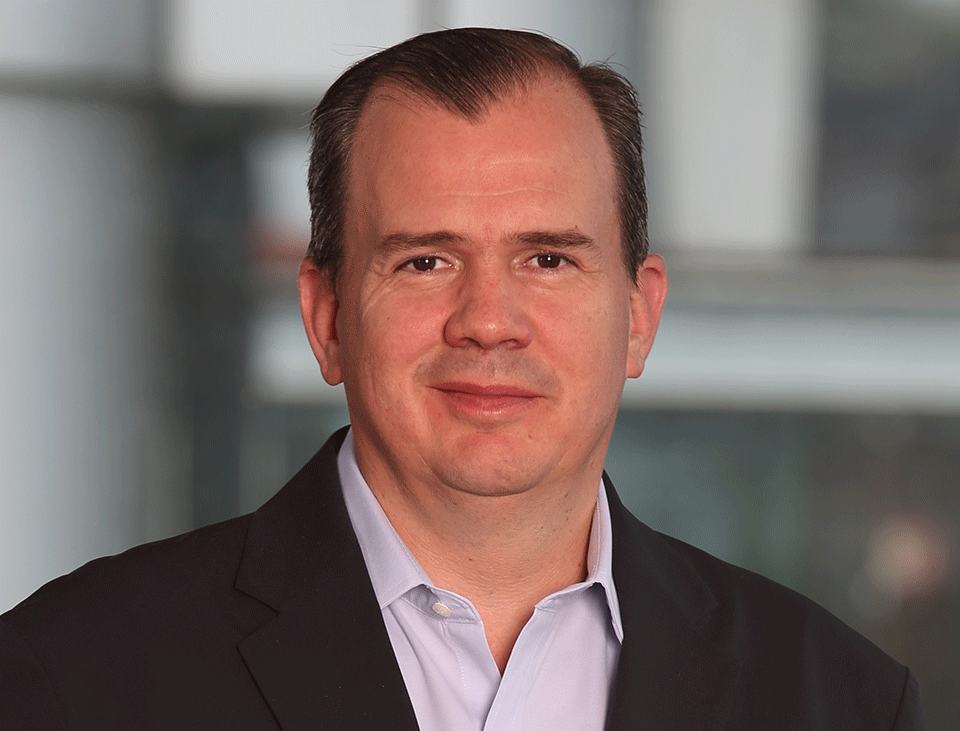
Sullivan (top) and Smith (bottom): CalPERS first prompted the directors of Lombard to seek value investments in Asia where it now benefits from managing money of powerful locals |
 |
FEW PRIVATE-EQUITY funds operating in Asia have stranger origins than Lombard Investments. Originally based in San Francisco, it started life in the mid-1980s investing in local US radio stations aimed at ethnic minorities. Just how it found itself in Asia buying stakes in golf club makers in Taiwan and shrimp processors in Thailand is an interesting tale in itself. “We started as a US pension fund investing in the US with US investors,” says Peter Sullivan, Lombard’s chairman and managing director. “We made a number of investments in radio stations with CalPERS [California Public Employees’ Retirement System].”
CalPERS, one of the world’s largest investment institutions, proved to be the key to Lombard packing its bags and heading east. “They wanted to look at some opportunities in Asia, and they asked us to help out,” says Sullivan. “We started out investing in a fund managed by CDIB [China Development Industrial Bank, a Taiwanese bank]. That gave us a bird’s eye view of investing in China without managing the investments themselves. In 1996/97, we started Lapic [Lombard Asian Private Investment Company (HK) Ltd]. It was a great time to close a fund.”
Although Lombard still holds investments in the US and maintains an office in San Francisco, its focus is now very much on Asia.
“We feel the opportunities are greater for us in Asia,” says Toby Smith, managing director at Lombard. “We were a little early perhaps. In 1996, capital was raised on a never-ending growth story. That assumption changed with the Asian financial crisis.”
At home in Thailand
Lombard then started to deploy its capital aggressively. With Lapic I, a regional fund of $253 million, it has made investments in Hong Kong, Korea, the Philippines, Taiwan and Thailand. In Thailand, the opportunities were so numerous that Lombard launched a dedicated country fund, the Thailand Equity Fund, in 2002, with $245 million of capital. It is a large sum for a fund investing in a relatively small economy but Lombard has experienced little problem in finding targets.
“People bad-mouth Thailand all the time,” says Bill Kerins, managing director of Lapic. “They say it’s bad for business, but we’ve made 11 investments so far in Thailand and they’re all on target.”
It might sound easy, but as Pote Videt, managing director of Private Equity (Thailand) Company Limited, Lombard’s affiliate and the manager of the Thai fund, points out, finding larger deals has not been plain sailing. “We’ve ended up with several big deals,” he says. “So we’ve been very focused. We’ve sourced a lot of these deals. A lot of companies say they’re not interested, but we keep coming back. We’re seen as local – we’re treated as a domestic investor, but we can also be seen as a foreigner when necessary.”
The Thai Equity Fund sourced capital from the Thai finance ministry, 12 local commercial banks, the government pension fund and savings bank and IFCT, a former government-directed lender. Internationally, Lombard managed to raise funds from World Bank affiliate the International Finance Corporation, the Asian Development Bank, CalPERS and DEG, a German development financial institution.
“It’s a powerful group,” says Kerins. “That can make a significant difference.”
Just what that difference means in terms of dollars and cents is not clear. Like most private equity funds, Lombard keeps its cards close to its chest and is not prepared to make public its funds’ internal rates of return. There are, however, specific indications that Lombard has been doing extremely well recently. Lapic I is already fully invested and the managers note that although the fund has divested only five of its 11 investments so far, it has returned almost all of the original capital to limited partners, suggesting that the fund has made very healthy profits. The Thailand Equity Fund is already half committed or invested and several investments have already hit the IPO markets.
Several of the firm’s investments have performed exceptionally well. Smith refers to the Thai fund’s Bt130 million ($3.2 million at current prices) November 2002 investment in local securities company Trinity Watthana for a stake of 14.4%. “When we invested in Trinity, we were investors ahead of the IPO,” he says. “The company’s gone up by a factor of six times and we’ve exited about one-third of our investment.”
Another home run appears to be Taiwanese company Fu Sheng Industrial (Fu Sheng), the world’s largest contract manufacturer of golf club heads and the largest compressor producer in Greater China. Although Lombard’s investment is a modest 3% in the Taiwan-listed company and it has yet to divest, marked to market the punt has proved a good one. “The price has gone almost 50% since we invested and the stock still trades at 10 times PE,” says Kerins. That’s not bad value for a company with five-year averages on return on equity of 35% and earnings per share growth of 24%.
Even Lombard’s very first investment, Korea’s sixth-largest broker, Good Morning Shinhan Securities, proved a winner. “That was a five or six times investment,” says Sullivan.
Home runs and strike outs
It has certainly not been all one-way traffic and Lombard will admit that it has had to cut its losses from more than one investment when things have turned sour. Although the firm has scored some successes, the Philippines especially has proved a difficult hunting ground.
At first blush, Lombard’s strategy appears to be remarkably straightforward. “We’re value-oriented investors who like to buy companies at a relatively low PE with established track records,” Kerins says. “We’re looking for inefficiencies in the market. Asian markets are very inefficient. We do the basic blocking and tackling: good research, corporate finance techniques.”
Less conventional in Asia, however, is Lombard’s obsession with corporate governance and instilling, sometimes imposing, change in the boardroom. Lombard insists, for example, on a board seat on all of the companies that it invests in. Through these it exercises a right to veto the appointment of independent non-executive directors. It also insists on adherence to strict corporate governance principles.
“Generally there’s a strong alignment of interests with management,” says Smith. “When we invest, we like to think of our capital as an agent for change, perhaps for an acquisition, fixing a capital structure.”
Sullivan agrees. “The key criteria is who you’re working with,” he says. “That’s a lesson we’ve learned over and over again. You have to align yourselves with management that you can trust. Corporate governance is key – a willingness to improve corporate governance – and the company needs to want us in for reasons other than just the money.”
Despite Asia’s patchy record on corporate governance, Lombard claims that its strategy is succeeding. Many Asian companies are facing generational transfers of control, with more enlightened family shareholders who sometimes find themselves without the commanding shareholding of their forebears.
Kerins says: “Suddenly, some of these families find themselves a minority shareholder so the maximization of shareholder value becomes key to them. We’re on the board of all of these companies, advocates of good corporate governance – it helps ensure our exit. Many times, we’ve been asked to help institutionalize it, after the family is dispersed and it’s no longer relying on the patriarch.”
Despite the apparent idealism, Lombard is pragmatic in its approach to corporate governance and has retreated from investments when it has met resistance.
“Corporate governance does benefit companies but you’ve got to look at the environment in which the company operates,” says Sullivan. “Some countries disadvantage good governance because continuing systems and legal structures don’t function.”
He cites an example of this. “We had one situation in the Philippines where the management was willing to change to improve corporate governance but the environment of dealing in the market, the suppliers and customers, didn’t allow that,” he says. “We realize that you can’t take on any corporate governance challenge and win all the time. In this case, we’re trying to wind our way out of it.”
Lombard clearly prefers to take a persuasive rather than a confrontational approach to engineering change in Asia. “We don’t want to be in a high-profile situation like Sovereign but we cheer from the sidelines,” says Kerins, referring to Sovereign Asset Management, an institutional investor that is in a bitter tussle with incumbent management at SK Corp in Korea.
Buy and restructure
Lombard might shy away from boardroom fights but it is very active in looking to generate value from its investments in more tangible ways.
Through the Thailand Equity Fund, the firm recently closed a Bt300 million investment in Somboon Advance Technology, one of Thailand’s leading original equipment manufacturing (OEM) auto parts manufacturers. “We looked at 25 companies in this sector,” says Videt, “before we found the right one. This was a 60-year-old company that got into trouble due to high debt and diversification into real estate.”
Somboon has a solid and profitable core business but a weak and ill-suited capital structure, so Lombard might have found a company with strong upside at an attractive valuation, provided of course, it can unlock that value from beneath a debt pile.
“We try to restructure our investments,” says Kerins. “We’re very involved in the process, often getting involved in negotiations with the banks.”
Lombard has also got deeply involved with several of its investments in sourcing and pursuing acquisition opportunities. The acquisition strategy being pursued with its assistance by two of these investments, Fu Sheng and Thai Union Frozen, aims to capitalize on what Lombard believes will become a key trend for successful Asian companies.
Kerins explains: “In the next 10 years in Asia, the big story will be insourcing, Asian companies buying infrastructure in the US, going downstream into the US, initially buying tired brand names. Asian companies will pick them up, but eventually Asian businesses will be coming to the US in a big way. Look at the OEM industries in the US that have been hollowed out. There are a number of opportunities where it’s clear that Asia has gained the upper hand.”
Kerins cites the example of Fu Sheng where, following Lombard’s investment, a strategy to capitalize on its precision manufacturing capabilities by moving into higher value added products has been initiated. So after a thorough trawl of the US market by Lombard, Fu Sheng acquired in September certain assets in the US of Coastcast Corporation, a bankrupt supplier of titanium, cobalt, nickel and steel precision investment castings for the medical, automotive and commercial markets.
“We think there’s a lot of growth in [Fu Sheng],” says Kerins. “Golf clubs will be the cash cow. The air compressors business is a proxy for industrial growth in China. Fu Sheng is at the forefront of Asian companies buying distribution, technology, sales and marketing expertise and brands.”
Thai shrimp processor Thai Union Frozen (TUF), another Lombard investment, is developing along similar strategic lines, says Kerins. “TUF used to be an OEM. Six years ago they bought 50% of Chicken of the Sea, a US branded food company. Then they came to us to raise money to buy the other 50%. The stock of TUF has been generally re-rated. Now they’re valued more as a brands and distribution business. They bought Empress [International] last year, a US frozen shrimp business. Now they buy shrimp from 65 different countries – not just Thailand.”
The strategy is clearly paying off: TUF’s revenues have more than doubled and its stock price is up more than 90% since Lombard made its investment in 1999.
What of Lombard’s own plans to grow? With almost $500 million of assets under management, it already occupies the medium-size funds space in Asia. With Lapic I fully invested and already returning capital and Thailand Equity Fund rapidly investing, the obvious next step is to hit the road in search of capital for a new fund. Although the fund’s principals are tight-lipped about capital-raising, their ambitions are fairly clear. “Lombard intends to be one of the premier private-equity fund managers in Asia,” says Kerins.
Ignoring the obvious
Unlike much of its competition, it does not intend to pursue that ambition by investing in Asia’s two fastest-growing markets, at least not immediately.
“We’ve never felt that we have to be in China and we still feel that,” says Kerins. “We’ve looked at China intensively and we’re coming to the point where we think it’s an attractive place to invest.”
What is holding the firm back, it seems, is one of the golden rules of private-equity investing: enter an investment with your eye firmly on the exit.
“It’s important not to lose sight of the fact that we’re a financial investor,” says Kerins. “We put money in but eventually we need to get it out. The key issue [in China] is exit. If you’re a multinational corporation making cell phones or automobiles, you can build a $1 billion plant and write it off. They’re taking money out via the product.”
That is why, Kerins points out, only $1 billion or $2 billion of total foreign direct investment in China has been private equity. Nor has Lombard been active in India. “India is part of our strategy – we’ve not done deals there for different reasons,” says Kerins. “We’ve made a conscious decision not to invest in China having full access to deal flow and knowing the market very well. We’ve not invested in India because we’re not comfortable.”
While Lombard continues to avoid Asia’s largest developing economies for now, it has its sights firmly set on pretty much the rest of the region. “Going forward, we see seven or eight countries that interest us – Korea, Malaysia, Japan, Hong Kong, Taiwan, Thailand and Indonesia,” says Sullivan. Lombard is even starting to look at Vietnam.