 |
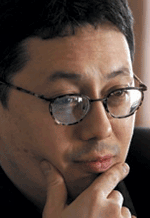
Anvar Saidenov, the new governor of the National Bank of Kazakhstan, talks about inflation, the tenge, and social development. What are your priorities as the incoming governor of Kazakhstan’s national bank?
Although we’ve lost all oversight responsibilities to the agency for financial supervision, there are still three types of licences that we grant to banks and financial institutions. So the coordination with the agency, particularly in the first stages of its existence, is a priority for us.
Another is monetary policy. We are responsible for stability of prices and inflation and that’s what we’re focusing on at the moment. Of course, we should operate on the money market in such a manner as to keep inflation within the targeted range.
Then there is currency control liberalization. We plan to adopt a new law on currency control and regulation. The idea is that by 2007 we will reach full convertibility of capital account transactions.
Do you think the current inflation rate of 6% is reasonable?
Yes, our core target for inflation is 4% to 6%. In the past we used money-based targeting to keep inflation within an acceptable range; now it has switched to inflation targeting. We’re in the process of selecting the model by which core inflation will be calculated, and then we will select the model of the transmission mechanism – the way to influence certain financial indicators by open-market operations so they will affect inflation.
Is it particularly appropriate for an economy such as Kazakhstan, which is receiving huge inflows of foreign exchange?
That’s a big question, because there are arguments that for an economy like Kazakhstan, where a number of factors are of an external nature – like commodity prices and the situation in Russia – that big changes in inflation are affected by factors beyond the influence of the central bank. Even in such countries as Canada, the results of core targeting are mixed. And for Kazakhstan, which is a transition economy, it’s more complicated.
With so much money pouring in, there’s a lot of concern that the value of the tenge will have to rise significantly, which would hurt the small, vulnerable non-oil sector by making imports more attractive. How will you cope?
It’s one of the major challenges for the central bank. We’ve had this discussion on the consequences of the Dutch disease.
We are looking at the real effective exchange rate and our calculations confirm this exchange rate or slightly lower will keep the competitiveness of our producers. Even if the tenge appreciates in terms of real effective exchange rate by 4%, it will still be acceptable.
So you are not too worried?
No, we are not too worried. We have other instruments, such as the stabilization and future generation fund, the national fund. If there is too much pressure on the tenge, we can put money into the fund.
Talking about the fund, why don’t you release the audit of it?
I worked through the website. They have figures for the profitability of different portfolios. Everything is there, in tenge, in dollars. But it’s the ministry of finance speaking. It’s not the auditors speaking. That’s the difference. I agree. But it’s not a matter of principle that we will not disclose this report.
Many people say life was better in the Soviet days. When is the government really going to tackle poverty in earnest?
It’s more in the mind of people than on a statistical level, because in 2003 we had real GDP 6% higher than in 1991.
But the economy has changed a lot?
The shape of the economy has changed a lot as well as the shape of life in general. Nobody will deny that in terms of social infrastructure, there is deterioration. I can say the standard of education is much lower, and the health sector is in very bad shape.
The infrastructure too?
In a way it is physical deterioration because everything was the legacy of the Soviet system. There is a need for huge investment in this area. Middle-aged people felt more secure in the past. But the system was different. Many people may have forgotten that there was nothing to buy in the shops.
Do you think that in health and education you have to reform before you spend?
There is general understanding of the need to tackle poverty. We have funds and opportunities available to do this and we have to utilize them. The point is to use these funds in a right manner, because nobody can deny there is corruption, misuse of funds, misguided policies.


