Merger targets reassess their value

TURKEY’S 41-YEAR-OLD quest for membership of the European Union is fast nearing make or break-point since a December decision by the EU leadership will either pave the way to the opening of formal negotiations or kill the attempt stone dead. The decision, most analysts in Turkey say, will either breathe new life into what is still a fragile economy or send it reeling.
Although Turkey would still be several years away from EU membership, a favourable decision in December could initiate formal candidacy. After reviewing the results and recommendations from an annual October progress report prepared by the European Commission, the EU’s Council of Ministers will decide whether Turkey has met the basic criteria to launch formal membership negotiations. The announcement will include a timetable, with negotiations expected to begin in June or July 2005. They involve protracted bargaining over time and terms for Turkey to embrace and adjust to the 80,000-page acquis communautaire, the body of rules and regulations that governs everything from sanitary rules in cheese manufacture to carbon dioxide emissions from cement plants.
If the Council of Ministers concludes that Turkey has failed to meet the Copenhagen Criteria laid down in 1993, Turkey’s EU project is off and a process that began in 1963 with the Ankara Agreement, which associated Turkey with what was then the European Economic Community, will have come to nothing.
“If Turkey gets the green light, it’s hard to overstate the good news for macro stability, for credit flows, for foreign investment and for the Turkish markets in general,” says Gunduz Findikcioglu, chief economist & research manager for the Turkish Industrial Development Bank. “But a rejection leads to a radically different scenario. Turkey’s financing requirements will be even higher in 2005, assuming growth pursues at the current speed. Should there be a current account-driven crisis indeed, it will make the 2001 crisis pale in comparison and the virtual certainty of default of foreign debt.”
That so much could ride on a single decision by the EU bureaucracy seems extraordinary. And few Turks harbour illusions about the general European public’s willingness to embrace an Islamic country they associate mainly with the migrant workers in their midst.
“We know that Turkey is not yet a perfect democracy and there are still challenges,” says Bahadir Kaleagasi, the Brussels representative for Tusiad, Turkey’s powerful business association. “But we are well past the test of a critical mass of reform and now it’s a test of Europe as well. It takes a great deal of political vision to embrace Turkey and embrace an inclusive twenty-first century. But the process will lead to more stability, to transparency and prosperity and growth.”
It’s not just that Turkey needs the EU as a driver of economic growth through foreign investment, increased trade and aid, says Soli Ozel, a professor at Istanbul’s Bilgi University. EU membership, he says, has become the shorthand for reform in virtually every sector as Turkey’s indigenous forces for change in areas from education to human rights have coalesced behind the promise of the EU’s blue banner and its field of gold stars.
Europeans might harbour reservations about admitting Turkey: Turks have no such doubts about wanting to join.
“I don’t think the Europeans ever expected that Turkey would be able to move so quickly to meet the basic Copenhagen Criteria,” Ozel says. “But the consensus in support of EU membership cuts across society in almost every way. It has become a referendum on our identity. We have met the criteria, the Europeans have run out of excuses to push us away and it’s difficult to imagine what the backlash will be if we are rejected at this late date.”
In financial circles, two events have combined to give new urgency to the EU talks and the related renewal of a stand-by loan facility from the IMF. One is the last-minute unravelling in July of plans for a merger between Turkey’s third-largest bank, Garanti Bank, and Italy’s Banca Intesa. It is the second time the two have failed to consummate plans. Among the reasons cited by Ferit Sahenk, chairman of Garanti’s parent, Dogus Group, is the expectation that a better deal can be found. If Turkey looks on course to join the EU, more suitors might yet emerge.
Fragile banking sector
 |
|
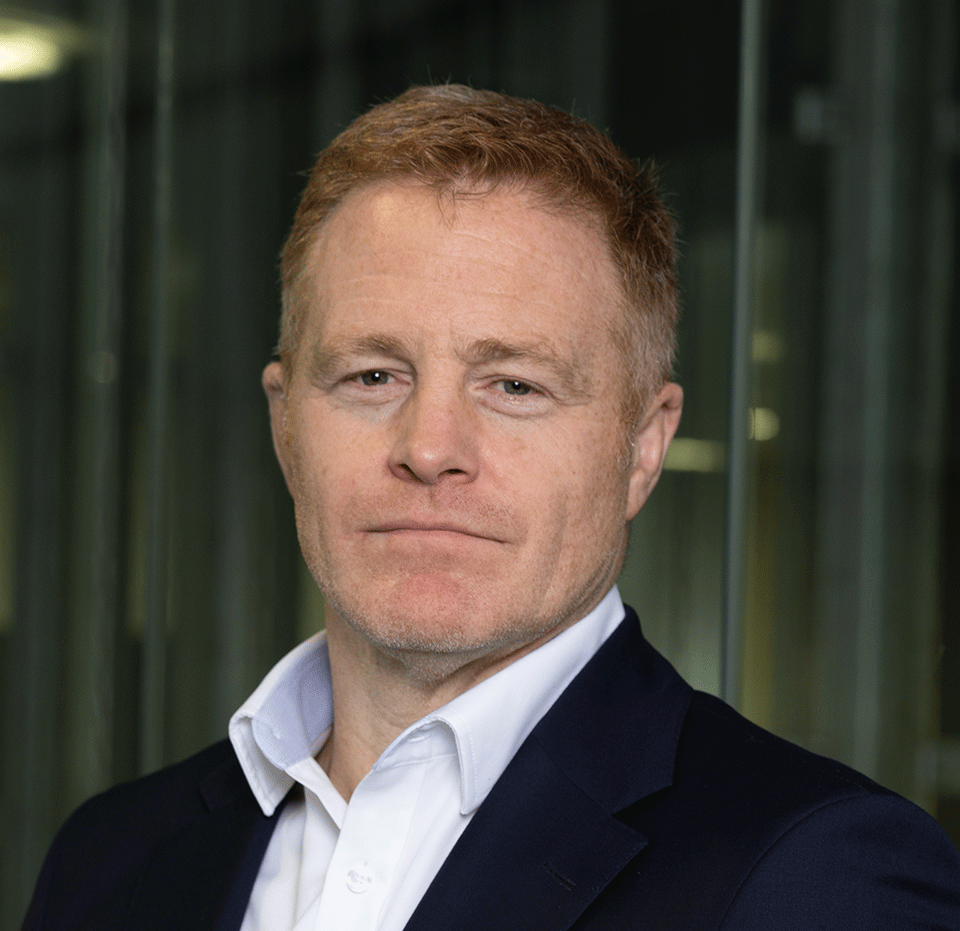
Ozel: “the consensus in Turkey in support of EU membership cuts across society in almost every way. It’s difficult to imagine what the backlash will be if we are rejected at this late date” |
The second issue is the restructuring of a set of accords between banking regulators and the Cukurova Group, the parent of Yapi ve Kredi Bank. Yapi ve Kredi avoided seizure at the height of the banking crisis with a deal to repay troubled loans to its parent over 15 years and ultimately to sell the bank. That deal was renegotiated in July and August to reduce the repayments from $6 billion to $4 billion while cutting the repayment time frame to two years. Although the deal was generally welcome in financial circles, it raised two questions: how will Cukurova raise the money and does it have a suitor in mind? All hopes for a happy end to Garanti’s search for a partner and Yapi ve Kredi’s resolution of its NPLs to its parent – with our without a foreign partner – depend on good news in December from the EU.
“The result of these two developments is that the banking sector is left ever more fragile and the consensus is that for things to go well, both a new IMF accord and agreement with the European Union are essential,” says Erdal Saglam, a financial writer for Turkey’s largest daily, Hurriyet.
Although Turkey’s association with the EU dates to 1963, it was only in the 1990s that the prospect of membership gained momentum. In 1995 Turkey signed a customs union with the EU, the only candidate state ever to do so as Turks like to remind anyone who will listen. In 1997, after the EU’s Luxembourg Council of Ministers’ meeting declared that Turkey was at that point ineligible for membership, planning got back on track. Since 1999, Turkey has been back on its EU roadmap, culminating with the December 17 summit of the Council of Ministers. Should the ministers fail to be impressed with Turkey’s readiness, there is no Plan B. Several European politicians, including former French president Valéry Giscard d’Estaing, have floated trial balloons, including a “special status” for Turkey as envisioned for the Ukraine.
Turks have made it clear that they will have no truck with such an arrangement.
“The timetable to full membership is not so critical but full and complete membership is,” says Tusiad’s Kaleagasi. “Anything less is unacceptable.”
Although the details of full membership are seldom discussed in Turkey, those who do consider the finer points of an EU future point out that the hard work really begins after December. Only a handful of Turkish companies are in any way prepared to deal with EU rules on consumer safety, environmental emissions, hygiene and a multitude of other issues. “Yes we want to gain candidate status, but as soon as we do there’s a form of commercial culture shock awaiting virtually every Turkish company,” cautions Selva Tor, CEO of financial consultancy Mavera.
Turkey has, however, made great strides in the past two years on the twin fronts of economic reform and meeting the standards of an EU deeply concerned about human rights, democratization and a reining in of the historical power of Turkey’s military.
On the economic front, Turkey’s pursuit of tight monetary policy and general faithfulness to austerity pacts with the IMF and World Bank has brought inflation to an annualized rate now estimated at 12% – a low level almost unheard of in at least three decades.
In a further sign of confidence, the government is planning to knock the proliferation of zeros off banknotes at the beginning of 2005. A million Turkish lira will be just one new lira and the unit’s division into 100 of the all but forgotten kurus will make coins practicable again. The government has promised more: prime minister Recep Tayyip Erdogan has vowed to reinvigorate sluggish privatizations and economy minister Ali Babacan has promised further structural reforms in 2005 and a cut in the public debt.
Sweeping legal changes to make the economy more transparent and foreign investor-friendly have included acceptance of international arbitration, the abolition of minimum capital requirements, the removal of restrictions on real-estate acquisition and a clear restatement of the free transferability of profits, dividends or the proceeds of asset sales. Turkey also now guarantees national treatment of foreign firms by local authorities, acknowledging that in the past foreign companies were often singled out by municipal authorities for a multitude of inspections and rules that bordered on extortion.
Some legal reforms remain to be resolved, particularly in the areas of patents and intellectual property rights, but the landscape is scarcely recognizable from what it was less than half a decade ago.
Europe is running out of excuses
On the social front, human rights rules and practices have been greatly improved. Use of Kurdish, and the language’s broadcast and its teaching have been legalized. The death penalty has been abolished. The release from prison on appeal of Kurdish activist and former parliamentarian Leyla Zana, who faces charges of fomenting separatism, was widely seen as a bow to Brussel’s critics of Turkey.
Turkey has fallen into line with European sensibilities in foreign affairs as well. The Turkish parliament’s rejection last year of US requests to open a second front in the then-looming Iraq war won respect, particularly in France and Germany. Turkish support for an internationally supported referendum last spring on integration of the Greek and Turkish halves of Cyprus in advance of the island’s accession to the EU had a surprising result: the Turkish population of Cyprus accepted the plan but the Greek side rejected it. This meant that Cyprus joined the EU as a divided state. But for once it was the Greek side – and not the Turks – that was perceived internationally as intransigent.
“It’s hard to imagine what more Turkey could have done to please the EU,” says Abdurrahman Ariman, head of SPN Investment Consultancy and long Turkey’s chief champion for an improved foreign direct investment regime. “That, of course, doesn’t mean we have a lock on EU membership but it does mean the Europeans are running out of excuses.”
Although Turkey has its own class of Eurosceptics who caution against loss of sovereignty and heady promises of investment and interest, most bankers and businessmen see the EU’s nod to Turkey’s eventual accession as synonymous with growth and progress.
SPN’s Ariman, for example, believes it is realistic for Turkey to seek annual FDI in the region of $20 billion a year, roughly equivalent to the total FDI the country has attracted in its history. “But that’s only possible with the promise of stability that comes with a firm commitment from the EU,” he says.
Fragile banking sector
 |
|
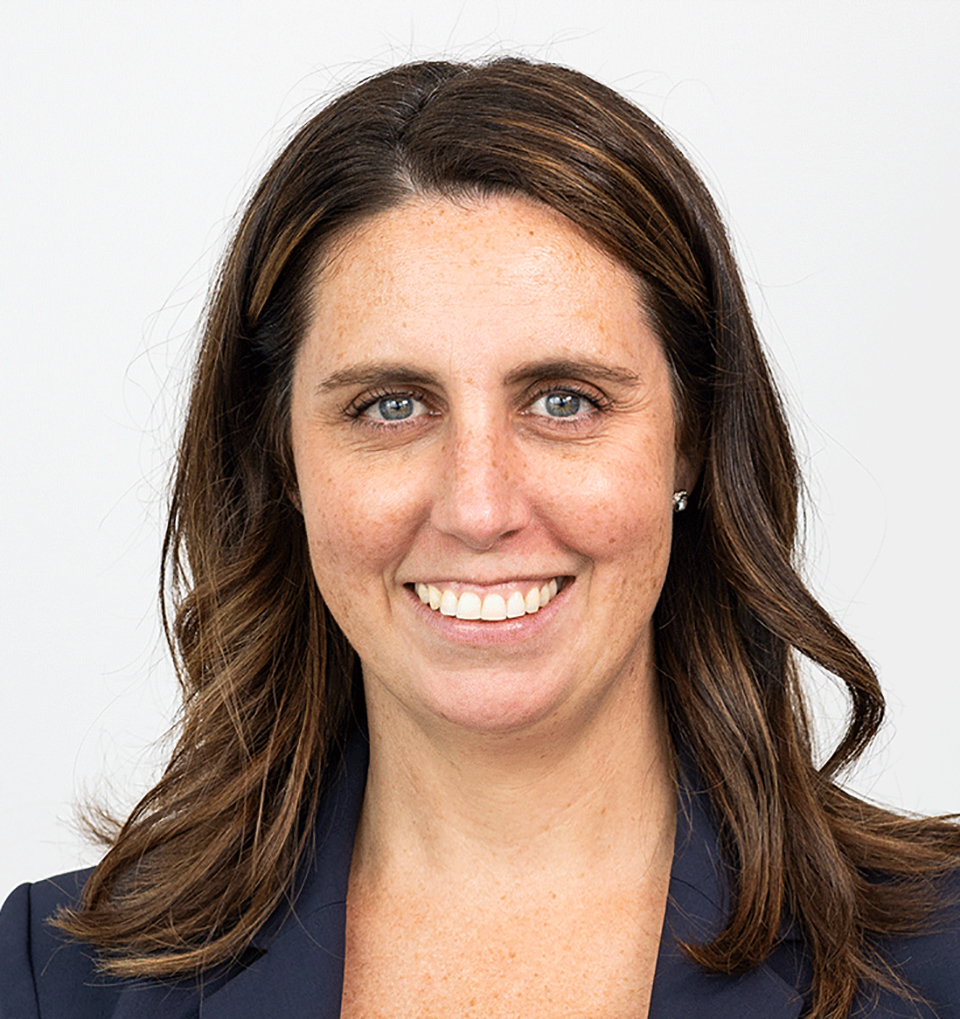
Ercel: “foreign banks need Turkey as a new and promising market; Turkish banks need foreign expertise and capital” |
Turkish Industrial Development Bank’s Findikcioglu reports that his institution, Turkey’s only development bank, receives steady signals that the start of negotiation is crucial. France’s Groupe Agence Française de Développement (AFD) is currently seeking to place a sizeable amount in credits in Turkey. The loans extended to Turkey by the European Investment Bank might double in the next few years if there is a positive decision in December. Although the Garanti-Intesa deal fell through, others are moving forward. BNP Paribas and Turkey’s tenth-largest private bank, Turkiye Ekonomi Bank, formed a 50-50 partnership in July that most observers expect to broaden, involving new investment after December.
Italian and French banks in particular are looking at Turkey, says Gazi Ercel, a former central bank governor who now advises investors. He points out that just 3% of Turkish banking is in foreign hands, compared with at least 70% in the states that became EU members in May. A second factor – and a key attraction for well-capitalized new entrants from mature banking markets seeking new growth opportunities – is that Turkey’s aggregate commercial loans add up to just 18% of GDP. That’s up from 14% a few years ago but is still one of the lowest rates in the world.
The industrial sector is starved of credit, with the average maturity of commercial loans now just three months. Only the cash and expertise of foreign banking can turn the situation around.
“The foreign banks need Turkey as a new and promising market,” says Ercel. “The Turkish banks need foreign expertise and capital. The Turkish economy needs a reinvented banking sector, a real banking sector, and that can only occur with foreign entry. Small is not beautiful, particularly in the context of the European Union. And the banking sector needs foreign partners to be in the big leagues.”
Most Turkish observers are confident that the EU will start formal accession talks given Turkey’s progress on many fronts – even if the goal is to make them as protracted as possible. But there remain problems, or excuses in the words of some, that the EU could seize upon. The fear is that politicians, particularly in Austria, France and Germany, who have publicly opposed Turkey’s membership in the past will be searching for any pretext to snub the country.
Polls routinely show that 70% to 75% of Turks support EU membership. But polls also indicate that more than half of Turks believe that Europeans will find a way to continue keeping them out. And European opponents of Turkey’s membership are not without tools at their disposal to wage their case.
Although a host of legal reforms have been passed, implementation is open to question. Human rights abuses by police continue to be reported. And although courts and the justice system – in particular national security courts – have been reorganized in line with EU norms, justice is done grindingly slowly. Corruption still haunts most areas of public life.
Turkey’s standing to join the western club was also thrown into question by the fatal derailment of a new high-speed train between Istanbul and Ankara in July that killed 38. Under investigation are broad allegations that in the rush to produce a showcase “fast train” akin to France’s TGV, the transportation ministry and railway authorities cast aside expert advice and re-geared locomotives for speeds in excess of their own and the track’s capacities. That crash was followed by a second less than three weeks later: a head-on collision of two passenger trains on the same route that killed six people.
On the financial front, the return of rapid growth has brought a rising trade deficit. Reaching nearly $17 billion in the first six months of 2004, the trade deficit is growing at an annualized rate of more 80%. This is expected to reach $30 billion by the end of the year.
The current account deficit is also growing, as is private sector debt. The current account deficit of $9 billion in May overshot the government’s target for the year and the growth in exports and in the economy in general has failed to be reflected in employment. The current account has been identified by the IMF as the principal concern.
Debt sustainability in doubt
“Strict financial discipline and saving any budget overperformance, at least until the risks to the current account have been clarified, will remain key to maintaining the success of the macroeconomic programme,” said IMF managing director Rodrigo de Rato in a July assessment of Turkey’s performance. The indications are that Turkey’s current $19 billion standby agreed in 2002, of which about $17 billion has been used, will be renewed in October.
Turkey’s total liability to the IMF is now about $20 billion, primarily issued in tranches since 2002 with five-year maturities. Even with the current performance of the economy, this is barely manageable, say Findikcioglu and other economists who argue that an extension with a further standby accord will provide needed breathing room. If the economy were to be hit with another shock, maintenance of payment on this debt would be impossible without restructuring, they say.
This is what is driving anxiety about the fast-growing current account deficit, says Ercel. In the past 50 years, the current account has only exceeded 1% of GDP twice: in 1979 when it reached 10% and in 2000 when it reached 4.6%. In both instances, the ballooning current account preceded major financial meltdowns. Today the current account deficit is above 4% of GDP and is expected to be at 5% by the end of the year – just as critical news from the EU is to be issued.
Central to the IMF’s support of Turkey and a pillar of Babacan’s economic programme has been a commitment to maintain a primary public surplus of 6.5% of GDP. Any touting of Turkey’s financial virtues routinely trumpets the maintenance of this goal. This is a good sign of discipline but it only indirectly aids on the current account as the latter is Turkey’s economic Achilles heel. The current account is not easily controlled by policymakers as it is affected primarily by private demand, the appreciation of the Turkish lira and the wildcard of energy prices.
Findikcioglu shares the worries about the current account and stresses that this means that IMF flexibility and willingness to roll over debt or even issue new debt will be critical.
“Even without new funds, simply rolling over repayment of the existing debt to 2007 would probably be all we need,” Findikcioglu says. “But without that kind of help we will be in serious trouble even if everything goes well with the EU.”
Other indicators are a cause for concern. Official unemployment is now about 12% and unofficial estimates place it has high as 20%. Concern that the Turkish lira is overvalued by as much as 20%, along with worldwide concern about oil prices, has added to the spectre of volatility.
Against that backdrop, even pondering an EU rejection is something no-one wants to do.
It would mean a certain devaluation of the Turkish lira, a probable collapse of the government, which has staked its reputation on success in EU negotiations, the dashing of hopes for renewed FDI flows and incalculable damage to the stock market. If not setting the stage for a direct military intervention, it would certainly bring the generals back to the policy table from which they have been in retreat. And the conflicting impulses of nationalism and religious extremism – always present in Turkey – would be inflamed.
“It would be a mess on the border of the European Union that would serve no-one,” says Bilgi University’s Ozel.
“There simply is no Plan B. The result would be chaos,” says Ercel. “And the Europeans know this – which is why they’ll have to find some way to avoid an outright rejection.”
Should lingering economic and social problems be a reason to keep Turkey out? Or are they in effect an incentive to stay the course as they indicate just how much worse things might be were Turkey not tying its future to the EU?
Europe’s leaders will soon decide.