Profiles of family offices

AN INCREASING NUMBER of lawyers, accountants, private banks and ultra-wealthy families themselves are trying to break into the family office sector, describing themselves as multi-family offices, or multi-client family offices, private investment offices or even virtual family offices.
There are now an estimated 3,500 family offices in the US and about 200 in Europe. But the influx of players, each with its own terminology, is causing confusion for families. So much so that an increasing number have turned to consultants for help.
And while each hybrid of family office has its merits, can they all succeed when there are only 70,000 potential clients?
Employing an entourage might sound like an extravagance, but for the ultra-rich family the family office could well be a necessity.
Families that have acquired vast sums through the sale of a family business do not necessarily come from a financial background. A group of investment advisers to ensure that their money is looked after and passed on in good order to succeeding generations can be a good addition to the household staff. Families that have inherited money will similarly need advice on how to ensure that the needs of each family member are met. For families in their sixth generation of wealth with over 200 members, often scattered across the globe, this can be extremely complex.
And perhaps most important for wealthy families, the establishment of a dedicated team of advisers ensures that the family has complete control over any decisions, and that family affairs remain confidential.
Family offices can take various forms, ranging from those employing a single secretary to organize travel and bill payments for the family, to a team of investment professionals, accountants, tax lawyers, and suppliers of concierge services.
They do not come cheap – a rough guide is about 1% of assets under management annually, and the average asset threshold recommended is $400 million.
“In the late 1990s, as significant pools of wealth were being created, family offices became en vogue,” says a senior executive at a private bank. “But now families are realizing the costs involved. Often our discussions with families lead to the conclusion that they don’t need a family office or simply cannot afford it.”
Property roots Family offices in Europe were embedded in the estate offices of French, British, and German nobility in the nineteenth century and earlier. “Property and land have played a far greater role in wealth preservation in the UK than the US, and many families built up landed estates rather than establish a dedicated investment office,” says Charles Cade, head of research at Close WINS.
Property development company Grosvenor Estates, for example, also looks after the affairs of the Duke of Westminster, and traces its roots to 1677 when Sir Thomas Grosvenor obtained a piece of land in west London by marriage. The emphasis on property explains why just 200 family offices are estimated to be in Europe.
It is rather in the US that the family office earned its label, with John D Rockefeller Sr becoming the first of the great industrialists to employ staff to advise on his newfound wealth.
In the mid-20th century, family offices lost their appeal as wealth diminished but the new money liberated through company sales since the 1980s has caused a revival.
The multi-family office evolved from families that opened the doors of their offices to other families in order to cut costs, or those that were interested in a new business venture.
One such family was the Phipps. The Phipps family office, Bessemer Trust, had been established in 1907 to look after the $50 million Henry Phipps, partner of Andrew Carnegie, had made from the sale of Carnegie Steel to JP Morgan. But taxes, philanthropy and the expansion of the family had meant that the wealth was being spread more thinly. By the early 1970s the cost of the family office was becoming a drain.
“There was about $1 billion split between about 100 descendants. The family office had 200 staff and many of the jobs were being duplicated. For example, there were four people in estate planning alone, and no-one had died in the family for 10 years. The Phipps family was probably paying about 2% of its assets under management for that office and it shouldn’t have been paying more than 1%,” says Robert Elliott, senior managing director of client account management and business development at Bessemer Trust.
The Phipps had various options. “They considered selling the office, but they did not like the idea of giving up control, or changing the type of business that it had become,” says Elliott. “They also considered outsourcing some of the services such as estate planning but had been used to comprehensive wealth management and weren’t keen to hand parts over to different people.”
Instead, in 1975, the Phippses decided to employ new management and open up to other wealthy individuals and families. Bessemer Trust now has $41 billion of assets under management. Today, the Phipps’ wealth, while significant, accounts for just $4.5 billion of the total assets.
For families smaller than the Phippses, opening up to other families can be a way of achieving critical mass and therefore buying power. The Scotts, owners of medium-size insurer Provincial Insurance, set up the family office Sand Aire two years after selling the business in 1994, with the intention of opening it up to increase assets under management, thereby achieving better returns, and the opportunity to hire and retain more experienced staff (see box).
The multi-family office is an attractive concept for families that do not have enough money to form a single family office, or who prefer the comfort of investing alongside one or more other wealthy families. But they are not to everyone’s liking. “Family offices are initially established to cater to the specific needs of one family, so new families that become clients should ask whether the services and products are suitable for their own family,” says Stephen Martiros of family office forum CCC Alliance. “And families need to be sure that cost savings are being passed through.”
New breed of family office One solution is to merge multi-family offices but Liz Nesvold, managing director of Berkshire Capital Securities, a wealth management M&A firm, says this is not always easy. “It’s much harder to bring together two multi-family offices than to do an outright acquisition where you have a distinct parent company,” she says. “There are so many decisions. Who will run it? Whose investment platform do they use? Which fee schedule?”
Such issues have prompted the formation of a new breed of family office – the multi-client family office, or the private investment office. These offer investment capabilities and a range of wealth management services but have no attachment to a specific wealthy family. These often take the shape of small private banks, such as Heritage Financial Management.
Mary Jane Fredrickson, of the Family Office Exchange (FOX), believes that while families may have concerns about turning to a multi-family office with a core family calling the shots, it is open architecture that is the key consideration when choosing an alternative to establishing their own family office. “Priority for services and resources is a consideration but a much more pervasive issue is the assurance of no conflicts of interest. There are questions about where the assets are managed – is there a tendency to use a certain firm’s fund of funds, for example,” she says.
Most multi-family offices have some in-house investment capabilities. In some instances this is because the family has an interest in certain asset classes. Rockefeller & Co and Bessemer, for example, both manage traditional assets in-house, and outsource the management of alternative investments because there is a feeling it requires different investment skills.
Demands for pure open architecture have inspired the creation of private investment offices such as Lord North Street in the UK and Unigestion in continental Europe that have no connection to a family, and no in-house asset management.
Both offer strategic asset allocation advice and act as a multi-manager. Unigestion began offering family office investment in Geneva in 1999, expanding to London in 2000. Growth has been brisk. “We’re looking at about 30% growth per annum in assets, with particular interest from families in the £10 million to £30 million bracket,” says Andrew Wheeler, executive director at Unigestion.
Lord North Street has also had significant interest from families, and has accrued £1 billion in assets under management in two years.
While the popularity of private investment offices, multi-family offices and multi-client family offices is evident from the amount of wealth accrued in a short space of time, there are concerns that if they focus too intently on asset gathering, they will compromise their personal service to families. Charlotte Beyer, founder and CEO of the Institute of Private Investors, says: “Multi-family offices establish themselves as intimate entities, but as they get bigger they can no longer profitably pay as much attention to their original clients, so go out and become asset gatherers. It is a natural evolution but there needs to be a more honest dialogue between them and their clients. Exactly how many families are they taking on each year is a question that families should ask of multi-family offices.”
Yet if these hybrids do not gather assets they will clearly fail. “For the smaller multi-family offices it will be difficult,” believes Nesvold. “They generally do not have the technology, infrastructure and ultimately scalability and are bringing in clients on the back of add-on services rather than a comprehensive solution to wealth management. Many have thin margins and need to think about their long-term strategy.” Mark Peters, Citigroup Private Bank’s head of US high-net-worth clients, says: “It’s rare to see multi-family offices with more than a dozen client families as they tend to fracture after one generation as clients want to choose their own service provider.”
In 1995, two families attempted to get round the potential flaws of the multi-family office by creating a consortium of wealthy families called CCC Alliance. The forum does not offer investment products, but is designed to bring families together to share their experiences in investment management, asset allocation and other wealth management issues.
“It’s different to other organizations as we don’t have vendors within the group so there are no conflicts,” says CCC Alliance’s Martiros.
Families pay a one-off $12,000 initiation fee and annual dues to cover the costs of its staff. CCC Alliance now has approximately 50 member families, each with a minimum of $100 million, which has also led to significant buying power. The group can get discounts on custody, active index management and trading costs, as well as services such as private healthcare or car hire. It can also obtain direct access to hedge funds or other investments.
Private banks struggle to respond
With increasing numbers of family office hybrids offering independence and buying power, the private banks have struggled to make it in the market with what are called virtual family office propositions.
“Some private banks have done a good job. But clients are cautious.” says Fredrickson. “There is the perception that institutions have just shifted around resources and services and packaged them up as a family office offering.”
William Drake, co-founder of Lord North Street, says it will be difficult to convince the outside world that private banks are not just offering add-on services as a means to capture more investment management business. “Private banks are generally subsidiaries of investment managers and investment banks, and profits come from selling their products. There will probably be some client-minded people in the private bank who make the argument to their bosses that their clients are wealthy families that want best-of-breed products so then they’ll try to create a family office solution offering clients some sort of open architecture. But there is bound to be a conflict as the groups will make higher margins if the assets are managed in-house than if the relationship between the private bank and the family is purely advisory.”
Alexander Scott of Sand Aire, however, believes the private banks are not really competing with multi-family offices anyway. “I think four years ago there was a rash of people opening and naming family office departments in these banks and interestingly there was a thought that we were competing. But now I think multi-family offices and strains thereof are viewed more and more as effective distribution. We can provide access to multiple families and with a limited sales team, private banks can describe the product once and we can tell them quickly if it is appropriate or not.”
Morgan Stanley Private Wealth Management has avoided offering anything other than investment services to families.
Similarly UBS has increased its focus to pure asset management services for wealthy families. “Asset management is our core competency,” says Marie-Louise Faering, head of the family business group at UBS Wealth Management in Zurich. “We do offer global custody and have add-on services of art banking, wine banking and philanthropy, but we don’t replace the functions performed by the family office. The term ‘family office’ is used by some banks, but I think that is confusing. Banks provide services to family offices, they do not replace them.”
To ensure their family office services are more convincing, some private banks are establishing family office subsidiaries. Pictet and Deutsche Bank, for example, have done this. Deutsche Family Office, set up in 1999, is designed to act as a consultant, selecting managers and lawyers and other service providers on behalf of the family. To emphasize its independence from its parent, Deutsche Family Office does not charge traditional management fees but project-based consulting fees.
Pictet, established in 1805 to serve the families and friends of Jacob-Michel François de Candolle and Jacques-Henry Mallet, set up a dedicated family office in 1998 employing specialists in tax, law and accountancy. “Families needed more specialized services, so we couldn’t just do this on the side of the private bank,” says Pierre Alain Wavre, head of the family office. The new entity provides teams of three for each family to advise on the structure of their wealth, asset allocation and investments and reporting. It also provides concierge services such as arranging education, or aircraft rental.
Private banks may be having to reconsider how they attract families but their scale should ensure them a role. “There’s a massive contradiction with families at the moment. If you ask them whether they would prefer to be served by a boutique or a large institution, they almost always reply – a boutique. Yet if you ask them what service provider they use, the most common response is a large firm. The challenge is to try to keep a boutique feel regardless of size,” says Beyer.
Acquisition drive
The concierge services often make the client feel they are receiving a more personal service, and one route to successfully offer these services at a profit is through acquisition. Wilmington Trust, set up in 1903 to look after the wealth of the family of chemicals entrepreneur Pierre Samuel Du Pont, announced the acquisition of Grant, Tani, Barash & Altman in April this year. Based in Beverly Hills, the company offers tax preparation, bill-paying, insurance accumulation and concierge services of household staff management, real estate searches, car, aircraft, travel and mail management.
“Clients had been asking us to provide these services, and rather than offer them ourselves, it was considered more effective to acquire a firm with 20-years’ experience,” says Rod Wood, executive vice president of Wilmington Trust’s Wealth Advisory Services. “As investment management becomes more of a commodity, we try to provide value to our clients through a holistic approach to wealth management. The trick is to get paid for providing family office services other than by billing as a percentage of assets under management. Historically, the industry has provided many of these services for their asset management fee and therefore felt like they were giving them away for free. We intend to charge our family office clients on an annual retainer basis above and beyond any asset management or trust fee.”
Berkshire’s Nesvold says that acquisitions in the family office area are becoming more popular as companies want to obtain access to clients with more than $10 million of investable assets. “The large financial services organizations are looking to buy service providers as they may not be able to develop services in-house. The needs of families with $100 million are very different to the needs of their $2 million clients.”
She cites Credit Suisse’s acquisition of Frye-Louis, a family investment adviser, and SunTrust’s acquisition of wealth management firm Asset Management Advisors (AMA) as examples where large bank buyers have successfully penetrated the ultra-high net worth market.
“Prior to the acquisition, clients tell me they rarely ran up against SunTrust pitching for $100 million business in the final round, but today they are able to access that type of relationship through AMA.”
It is not only large organizations that are on the acquisition trail. “We’re seeing more interest from smaller players looking to affiliate with another company to build out the combined platform. Usually there is something strategically missing on both sides,'” says Nesvold.
Lydian Wealth Management, an independent adviser to families, had just $3.5 billion in assets at the start of 2003. It then bought alternatives specialist Windermere Investment Associates to increase its investment offering, and Philadelphia-based Copper Beech Advisors, which focuses on family wealth preservation, to expand its reach in the US. Lydian now has $10 billion in assets under management.
To aid them in choosing family office structure, an increasing number of families are seeking the help of intermediaries such as consultants. Family Office Metrics has benefitted from a surge of interest since its inception two years ago. It has developed a benchmarking mechanism of family office service providers, has 10 clients in the US and one in the UK and wants to partner with a consultant in Europe.
Co-founder Jon Carroll says: “Families tend to be emotional in their choices, making decisions based on the amount of mahogany and marble in the building or how much they like a relationship manager. There are an increasing number of family office solutions out there, and families need to take care in finding the best match.”
Euromoney profiles a colourful group of family-office businesses below.
Kedge Capital:
A club of like-minded people
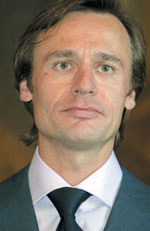 |
| Ernesto Bertarelli |
“Kedge” means to navigate through difficult waters with the use of anchors, so it is apt that the investment office of Ernesto Bertarelli, an avid sailor who navigated the Alinghi team to victory in the 2003 America’s Cup, is called Kedge Capital.
Bertarelli is a businessman as well as a top yachtsman. He was 30 when, in 1996, he took over Swiss biotech company Serono from his father. As chief executive, he grew it to become the leader in treatments for infertility and multiple sclerosis. In July 2000, Serono, now with a market cap of around $10 billion, was listed in New York, and the family released some of its shares.
Rather than allocating the proceeds to investment managers, Bertarelli decided to create an investment platform for the family that would later open up to other families. “Smaller family offices often open their doors to other families in order to lower costs. For Kedge, however, we wanted to create a network of smart individuals. The more sophisticated the investor, the better access to investments you receive,” says Alexander Papadimitriou, who heads the private-equity side of the business.
With the help of Denis Mirlesse, former CEO of GAM, Bertarelli established Kedge Capital at the beginning of 2001, investing solely in private equity, hedge funds and real estate. “The family did not request us to invest solely in alternatives, but we felt it was the right structure to get exposure to all asset classes,” says Papadimitriou.
They also decided to set up the company with a co-investment approach. “We find hedge fund managers and private-equity managers to co-invest with, and Ernesto and his family, Kedge’s investment managers and third parties all invest alongside them. It is a very different philosophy to anyone else’s. The concept of Kedge is that everybody’s interests are aligned. Everyone implicated is a co-investor and no-one is an intermediary,” says Papadimitriou. “It’s sort of like an investment club of like-minded people.”
The decision was twofold, says Papadimitriou. “We felt that a professional team that co-invests would feel much more involved in what they were doing. And second, you can see in the industry that when intermediaries are rewarded on asset-gathering alone, they don’t have to care too much about the long-term performance for their clients as the chances are they will have moved to a different company by the time returns on private equity are realized.”
Families that co-invest pay a fee based on assets under management to cover research, manager selection and reporting provided by Kedge’s 31 employees in London, Jersey and Geneva. Real-estate investment management and the Bertarelli non-investment related family office are in Geneva, and investment advisory for private equity and hedge funds are in Jersey and London.
Neither the number of families nor assets under management are disclosed.
Single-family offices enable wealthy families to keep their affairs completely private.
For Chuck Feeney, founder of duty-free shopping empire DFS, secrecy was of utmost importance when it came to managing his wealth.
The LongChamp Group:
An offshoot of philanthropy
The business began in earnest in 1960 when Feeney opened a duty-free shop in Honolulu, Hawaii. Twenty years later DFS had grown into a retail empire.
Feeney, however, was not driven by money. Preferring a plastic bag to a briefcase, he was viewed by some as miserly.
They couldn’t have been more wrong.
In 1982, Feeney established modest trusts for his family, and then secretly transferred his entire 38.75% interest in DFS to a foundation, now known as The Atlantic Philanthropies, based in Bermuda. These donated to various charitable causes. In order to maintain anonymity, the structure was not owned by Feeney, and so he took no personal tax deductions on his donations, and the family office that was established separately was given the name The LongChamp Group, after a street in Paris.
The name was veiled in ambiguity. Unknown to Feeney, it would successfully obscure his financial affairs for a further 15 years. “Longchamp was the name of a leathergoods company that was becoming increasingly successful, and people believed we were managing the money of the Longchamp family, which simply wasn’t the case, but it was convenient for us,” says Jean Karoubi, second cousin of Feeney’s then wife, and president and co-CIO of The LongChamp Group as appointed by Feeney.
In 1997, however, the decision was made to sell DFS, and it was time for Feeney’s identity as the money behind Atlantic Philanthropies to be uncovered. While Feeney himself was worth very little, the shares that he had transferred in 1982 fetched $1.6 billion, making him one of the most generous men in history.
Today LongChamp, with 19 staff in New York, has become one of the world’s top-10-risk-adjusted funds of hedge funds firms, after opening its doors in 2000. It remains a discreet enterprise, however. Indeed, LongChamp has less than 12 clients.
The decision to invest the family money in hedge funds was made by Karoubi. “To me it does not make sense to have 60% in US stocks and 40% in US bonds, when there is so much choice and diversification. Out of that concept I wanted to find as many ways as possible to diversify risk,” he says.
LongChamp has about $500 million invested in hedge funds, with a further $250 million in assets of the family and
one other family.
Lord North Street:
Ensuring no conflicts of interest
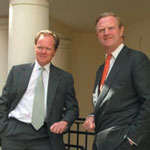 |
| Adam Wethered and William Drake |
Lord North Street does not want to be called a multi-family office, says co-founder William Drake. “We don’t offer accounting or tax or concierge services. The evidence from the US is that those services are difficult to price, and there are lots of providers that offer them anyway. We prefer to use the term ‘private investment office’.” What it does offer is independent asset allocation advice and manager selection for families with more than £25 million.
Drake, a trustee of a wealthy UK family, noticed a gap in the market for independent investment advice, choice and transparency for families. With Adam Wethered, former head of JP Morgan’s private banking business in Europe and the Middle East, Drake then set up Lord North Street in 2000. Initially a consultant and adviser to wealthy families, working from Wethered’s house in Lord North Street in the Westminster district of London, the company then received regulatory approval to manage money, and in two years has attracted eight families and around £1 billion in assets under management.
With no single family at its core, Lord North Street’s pitch is its independence.
“We are one of the few organizations in the UK that provide structures and products designed individually for each family,” says Drake. “The problem that often occurs with multi-family offices that have a family at the core is that other families entering may feel they are playing second fiddle to the first. Perhaps they perceive the products created by the original family not to be as suited to their own needs. And some families don’t particularly like the idea of making the original family richer by becoming a client.”
Further independence is maintained by the outsourcing of all investment management to asset management firms, and running multi-manager portfolios.
Lord North Street works with single-family offices to determine a suitable asset allocation for each individual and trust or charity within the group, and select managers or funds. “There is no concern of a conflict of interest with us that perhaps you would have with private banks which are ultimately subsidiaries of asset managers or investment banks, and so will make more money if assets are managed in house,” says Drake.
John D Rockefeller Snr, who started his working life as a book-keeper in Cleveland Ohio in 1855, went on to develop the world’s largest oil refiner, the Standard Oil Company, which lives on as ExxonMobil. His good business sense and frugal lifestyle resulted in a fortune so vast that in 1882 he formed a family office to manage it.
Rockefeller & Co:
Maintaining a boutique feel
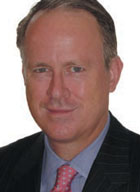 |
| Jim McDonald |
In 1980, the family office opened its doors in New York to other wealthy families. “The decision was based on pragmatism about the future,” says Jim McDonald, president and CEO of Rockefeller and Co Inc. “The multiplying of the generations [by then the fourth], the taxes, and a huge amount of philanthropy, meant that the wealth per family member, although still significant, was far less than that of the first and second generations. And the belief was that the strong capabilities that had been built up in wealth management, and the culture of the Rockefellers, could be effectively provided to other families, charitable organizations and other institutions.” Now Rockefeller-related clients constitute less than half the company’s business. As of June 30, this year Rockefeller had $11 billion in assets under administration, of which $4 billion is managed in house.
Rockefeller and Co is regarded by those in the family office industry as exemplary. McDonald says: “Obviously we were fortunate to have critical mass when we started, and to have had 100 years to figure out the complexities involved in providing services to multi-generational families. But we’ve really stayed focused on wealth management and clients so have maintained a genuine boutique feel.”
While other multi-family office initiatives have underestimated the complexity, and have put marketing and sales before delivery, Rockefeller has avoided trying to become all things to all people.
Services are divided into three categories, the first being in-house investment management. A team of more than 20 invest directly in long-only equities and fixed-income securities on behalf of clients. The second, wealth management services, encompasses asset allocation, manager selection advisory, administration, compliance, trust and estate planning, expense management and alternative investments through third parties. This year alone, two families with in excess of $400 million and one with more than $240 million have signed up to this segment. The third segment is information management.
But growth is being kept steady. “We’re not leading with investment products. If we’d led with hedge funds the last five years, we would probably have had a steep asset-gathering curve as they have been a hot area. We believe that in certain spaces hedge funds have their place, but believe at this point many have oversold what they can deliver, and the area is quite crowded,” says McDonald. “We’re happy our business model is not built purely around hedge funds or other alternatives – we have a much more broadly grounded model. What we’re leading with is comprehensive long-term relationship building. We attract families looking for 20- to 30-year relationships and like to take time in the buying process. It keeps us from overshooting the mark.”
Similarly, Rockefeller is not overstretching itself on growth. Its wealth management services remain focused on north America, where it is easier to have on-the-ground teams. “Organic growth goes with being a boutique,” says McDonald. “We like our culture and it would be difficult to find other entities to fit into our world.”
Sand Aire:
Carving a private-equity niche
 |
| Alexander Scott |
When the Scott family sold mid-sized UK insurance company Provincial Insurance in 1994 for £300 million and set up a family office in 1996 as a long-term investment business, they knew they would eventually open it up to other wealthy families. “We felt that the more money under management, the greater the buying power would be, and the deeper the investment in human resources could be,” says Alexander Scott, former chairman of Provincial, and founder and chairman of the new venture.
Keen to ensure that other families would feel the family office was as much theirs as the Scotts’, the name Sand Aire, from the former address of Provincial, was adopted rather than the family name.
Indeed, while the family office caters to four generations, you won’t find photos of the Scotts on the walls of the London office. “It’s very important for multi-family offices, from a regulatory point of view and ethical point of view, to demonstrate that this office is not the Scott’s family office, it is the office that serves all our clients – the founding family is one of many clients,” says Scott.
To look after the proceeds of the sale, the Scotts wanted an organization that could assess the best investment skills of multiple suppliers in multiple asset classes. “The concept of open architecture is known now, but back then it didn’t seem to exist for UK families,” says Scott, so he went to the US, a more mature family office market, to look around for a model.
Since opening its doors to others in 2002, Sand Aire family office has attracted a further 12 families that use part or all of the services of consultancy, wealth administration, reporting, monitoring, asset allocation and manager selection. It now has about $1 billion in assets under management and administration.
Like many family offices, Sand Aire seeks to invest in sectors and opportunities in which they believe inefficiencies lie, and in 1997 the office established a stand-alone private-equity business, headed by David Williams, formerly of 3i.
“We had limited resources, so when it came to looking for returns on investments we needed to choose an area where markets were least efficient, which we felt was private equity,” says Scott. “We also capitalized on the fact that we were a family, so were different. And we felt that we were sufficiently niche to deliver results that would potentially be better than were we to outsource.”
The fund invests directly in UK privately held family businesses and is a limited partnership. Some families having become limited partners, while others only use Sand Aire’s other services.
Scott believes families find investing in private equity interesting. “It’s likely that the owners of the underlying assets may not spend their lives reading financial publications, so a lot of what is undertaken on their behalf by multi-family offices may feel obscure, complex, or technical.
“But private equity is really tangible.”