A credit success story

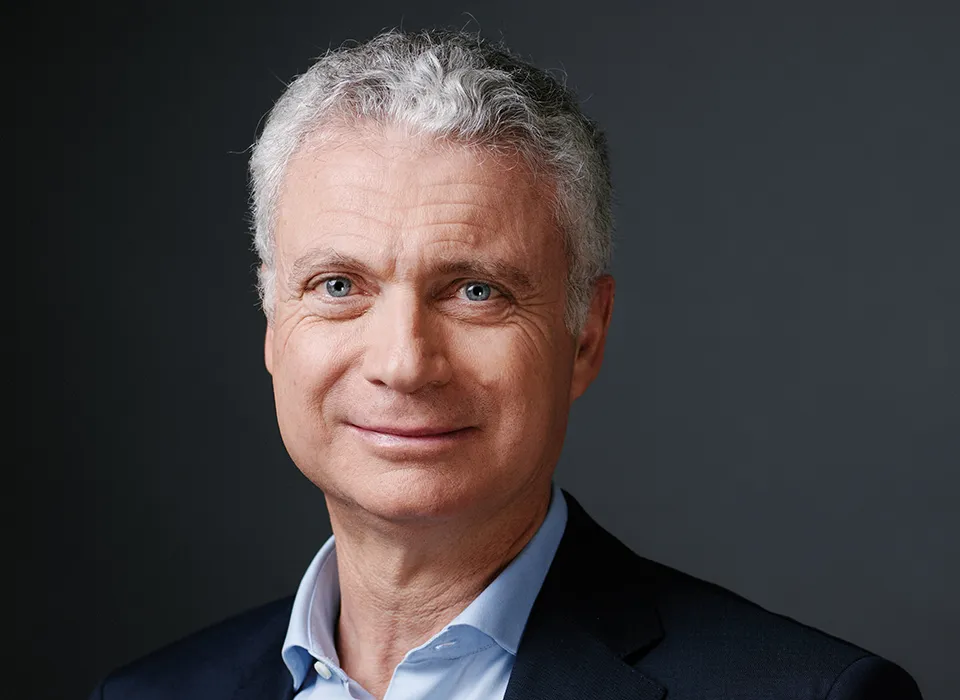
Hrvoje Radovanic, assistant finance minister and head of funding for the Republic of Croatia, talks to Guy Norton about the country’s borrowing plans for this year and discusses the key drivers behind the strong performance of Croatian debt in recent years.

What is Croatia’s financing target for 2003 and how close are you to achieving it?

On the international bond issuance front, the ministry of finance has already successfully raised the bulk of its roughly e750 million funding needs for this year with the launch of a e500 million seven-year issue in February.

With regard to the rest of the year we are looking to launch a ¥25 billion ($210 million) samurai bond in Japan in the third or fourth quarter which will complete our planned international bond issuance programme for 2003.

In terms of other sources of overseas financing, we expect to receive around $200 million of concessionary funding from international financial institutions this year – $100 million from the World Bank as part of a structural adjustment facility and a further $100 million from other supranational bodies such as the Council of Europe, the European Investment Bank and the European Bank for Reconstruction & Development.

On the domestic bond issuance front we launched a e200 million tap of our outstanding 2012 kuna-linked bond which we launched last May for e150 million and then increased by another e150 million in September. At a total issue size of e500 million the 2012 now offers investors a good level of liquidity and is the benchmark issue at the long end of the government curve. In terms of further issuance this year, we intend to raise e100 million in April and then another e100 million in September.

All of these international and domestic bond issuance plans are predicated on the assumption that the government will secure K2.5 billion ($350 million) in privatization revenues in 2003, the vast majority of which is expected to come from the forthcoming sale of a 25% stake in oil and gas company INA.

Additionally, the government has made a commitment to provide guarantees for two financing exercises by the state-owned motorway company HAC. The first will be for a $250 million transaction scheduled for launch in the third or fourth quarter and will feature an insurance wrap from OPIC of the US. A mandate for that deal should be announced at the end of March.

The second $250 million transaction will feature a wrap from Japanese export credit insurance agency Nexi and has already been mandated to Bank of Tokyo-Mitsubishi and Deutsche Bank. Both deals are likely to take the form of syndicated loans rather than bonds, although there is the possibility that the OPIC-wrapped deal could emerge as a Rule 144A dollar Eurobond.

Is the euro likely to remain your core issuance currency?

Yes. Given the country’s ambition to become an EU member by 2007 and because the EU is our major trading partner it makes sense for us to raise the vast majority of our funding in euros.

At the same time we fully intend to maintain our presence in the samurai bond market in Japan as it offers a nice add-on to the euro market from an investor diversification perspective. As a regular issuer in Japan it is easy for us to raise ¥25 billion or so a year which we are perfectly happy to keep in yen as we expect the exchange rate to continue to move in our favour.

Overall we are very comfortable with our yen exposure which, at the equivalent of around K1.3 billion, is only about 7% to 8% of our outstanding external debt.

In 1999 the risk premium on Croatian euro bonds was 600 basis point over Bunds, now it is just 90bp over? Is that amount of spread tightening justified?

You have to remember that 1999 was an especially difficult year for Croatia. The war in Kosovo caused a 40% drop in tourist receipts, the country’s banking crisis was at its height – with a lot of loan exposure to German banks, which have traditionally been big buyers of Croatian euro bonds – GDP was falling and the country was still suffering from the after-effects of the Russian crisis in August 1998.

Since then the situation in Croatia has improved dramatically. The last three years have seen record numbers of tourists since independence in 1991, the banking sector has been strengthened by privatization and the sale of state-owned banks to foreign strategic investors, and GDP has been expanding by an average of 3.5% to 4% a year – at least twice the EU average over the same period.

Fitch has also upped its rating to BBB- from BB+ which means that all three of the major global rating agencies rate Croatia at investment grade [Moody’s rates Croatia Baa3 and Standard & Poor’s rates it BBB-].

Growing investor confidence that Croatia will join the EU in the next few years has also clearly had a positive impact on the perception of Croatia and the risk premium on its euro bonds.

What changes have there been in the investor base for your euro bond issuance in the past
few years?

Germany remains a core buyer of Croatia’s euro bonds, with a mixture of banks and funds accounting for around 40% to 45% of overall demand. Italian demand has tailed off recently, most likely because Italian retail investors were badly burnt by the Argentina debt default, to which they were heavily exposed.

In terms of new investors we’ve seen more demand from the Netherlands – especially from pension funds in 2001 when we launched a 10-year euro bond. This year we visited Greece for the first time as part of the roadshow for our seven-year bond in February and were pleasantly surprised to receive e100 million-worth of orders from investors there which helped us to achieve tight pricing on the bond.

Also the creation of private pension funds in Croatia last year has added an important extra component of demand for our debt. Last year they had around K1.7 billion to K1.8 billion to invest and we expect that amount to grow rapidly over the next few years. As the pension funds must invest at least 50% of their money in Croatian government securities the pension funds in Croatia have created a genuine backstop bid for our debt that has given confidence to international investors and helped to drive down our spreads.

What is the outlook for your domestic funding programme?

The Croatian economy is heavily euroized, with around 90% of retail deposits held in the single currency.

That has meant that we have had to issue euro-denominated bonds, with payment linked to the kuna/euro exchange rate. As we expect the kuna to appreciate against the euro we expect that demand for straight kuna paper will increase in line with the growing strength of the currency.

Is there much international investor participation in the domestic government bond market in Croatia?

With domestic rates at historical lows and close to those that apply in the euro zone, international investor demand for our domestic bond issuance is negligible – less than 1% is held by overseas buyers. Given the growth in the investment and pension funds industry in Croatia, that does not present a problem as we are keen to cultivate the development of a genuine institutional investor base in Croatia.

What are the core strengths of the Croatian credit story?

First and foremost is our consistent economic performance over the past 10 years, which is on a par with, if not better than, many of the first-wave EU accession countries in central and eastern Europe.

A second strength is tangible progress towards joining the EU, with the expectation that we will be the strongest of the second-wave EU accession candidate countries.

Do you expect any changes in your ratings this year?

There is a certain logic that our ratings will improve over the course of the next 12 months, based on the country’s positive economic development and progress towards EU accession. We met with officials from Moody’s in February and will meet with Standard & Poor’s and Fitch later in the year.

Given what Moody’s did with the first-wave EU accession countries last year [improving their ratings by two or three notches ahead of them becoming members of the EU on May 1 2004] and the fact that Croatia can boast three years of improvements in the country’s basic macroeconomic indicators, we could foresee at least an improvement in the outlook on our ratings if not an outright upgrade, which would of course have a positive effect on our cost of funding both domestically and internationally.

At the moment there are two main constraints on our ratings – uncertainty about the speed of EU accession and about the outcome of parliamentary elections that must be held by the end of March 2004 at the latest.