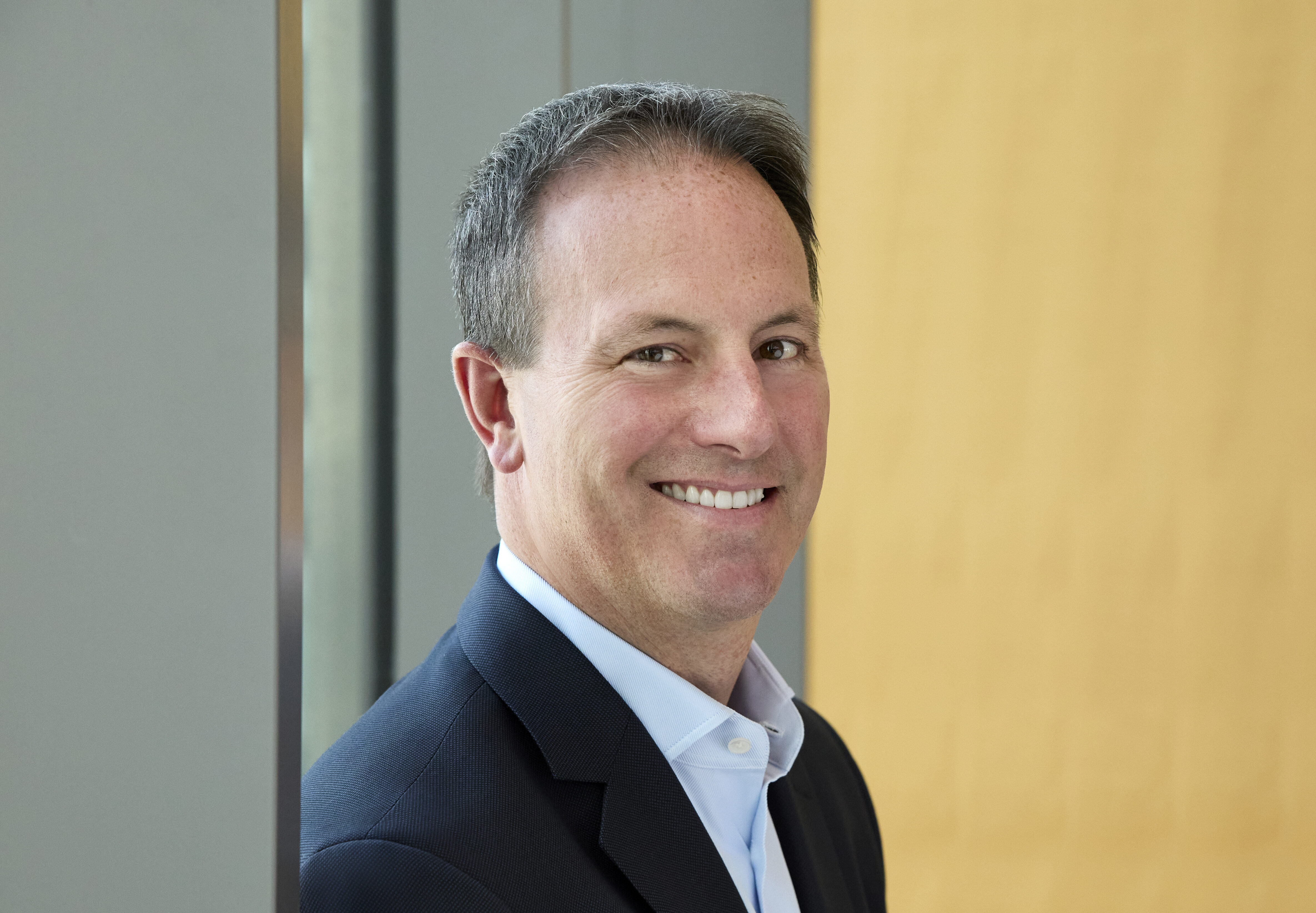
Morgan Stanley boasts, in Anand Iyer, one of the most-respected and top-ranked analysts in US convertible bonds. He and his team have also constructed one of the few useful and informative websites on the product, convertbond.com.
Senior executives will also tell you that the bank has one of the best trading desks for converts, if not the best. It’s not so easy to get a sense of that from clients, although in surveys carried out by Greenwich Associates, among others, Morgan Stanley often places top.
But Morgan Stanley’s record in convertible issuance in recent years has been patchy, as it readily acknowledges. “We carved out a great spot in tech convertible issuance in the late 1990s,” says Dan Simkowitz, managing director and head of equity products at Morgan Stanley. “But we didn’t have ourselves best organized for after the bubble.”
As convertible issuance reached record levels in 2000 and 2001, Morgan Stanley was no more than an also-ran, and that hardly improved in the first few months of 2002. It was a period of new structures and new issuers as the convertible bond product was used for the first time by many high-grade issuers that just two years before would have kept a haughty distance.
Missing out back then, though, proved to be a blessing. Many of the deals done then were the zero-zero converts with higher than normal premiums sold with a one-year put, often as replacements for CP, and mostly to hedge funds. Some of those came back to bite in late 2001 and 2002 as a result of the continuing market malaise and deteriorating corporate balance sheets and earnings. To be able to claim little association with such deals is no bad thing
Since the middle of last year, though, Morgan Stanley has returned as a major force in convertibles, especially in the US. Since last summer, as well as so far this year, it has been bookrunner on more deals than any other bank, and places between second and fourth in the volume league tables depending on the day.
One of its more notable deals of the latter half of last year was a $1.5 billion deal with Banc of America Securities for General Mills. By itself it was a good deal, incorporating a simultaneous call option purchase from Diageo that eliminates all potential dilution. But it was also the first sizable deal to come to market for months as investors and issuers grappled with falling markets and a corporate bond spread crash in the wake of the WorldCom fraud and bankruptcy. Only six deals had been priced in the two months before General Mills’ deal, raising a total of just $1.3 billion. The General Mills deal was snapped up.
Morgan Stanley’s success does not appear to be limited to lending relationships, historical investment-banking relationships or sector specialization, as is often the case with competitors. Instead, it has been bookrunner on deals for a wide variety of investment-grade and sub-investment grade companies. These have ranged from as small as $100 million for LIN Television in May up to the largest deal of the past year, the $4.5 billion two-tranche deal for Tyco in January. In fact, Morgan Stanley has been a bookrunner on the four largest deals of the past year.
Some of the large transactions are ridiculously overrun with bookrunners. Morgan Stanley, though, appears to have been either the main or one of the two main bookrunners in both the Tyco and General Motors deals, as well as in the third- and fourth-largest deals this year: Wells Fargo’s $3 billion issue in April and Sallie Mae’s $2 billion in May. Both of them were inaugural convertible deals, and both used a new structural feature that enabled each company to get a lower cost of funds than in the straight debt market with a high conversion premium to boot. Wells Fargo’s premium, at 110%, was in fact the highest premium ever to that point. Such a high premium was achieved by adding extra warrants at the conversion price. Morgan Stanley helped pioneer this structure, although a similar feature had been used before in a transaction for Mandalay Resorts, led by Merrill Lynch and Banc of America Securities, a month earlier.
The firm has also had some success in opening up various parts of the market: General Mills is one such example, as is AirTrans. It’s the first airline to come to market this year, and several others followed its lead after Morgan Stanley sole-led its $125 million deal at the start of May
In Europe it’s been a similar story, although issuance has been much more muted. Morgan Stanley has been at the forefront of the market, and is top of the league tables for the first half of 2003, just ahead of UBS. It was sole bookrunner on ASML’s convertible in May, which incorporated similar features to the Wells Fargo deal to get ASML the highest premium in the European market. And the bank was joint bookrunner with Goldman Sachs on Deutsche Telekom’s e3.2 billion deal in February, the largest mandatory convertible ever in both the US