One of the most striking aspects of Wells Fargo’s headquarters in San Francisco is that there really isn’t one. The building on Montgomery Street is nominally the main HQ but in fact the bank operates out of several different locations in the city’s financial district. Not for this bank the monument to itself that many of its peers and competitors choose to erect.
That’s not the only fact that is surprising about Wells Fargo. Another is that America’s fifth-largest bank as measured by shareholder equity is one of the few that has managed to merge or buy rivals without too many headaches. On top of that it has never tried to become, or wanted to own, an investment bank.
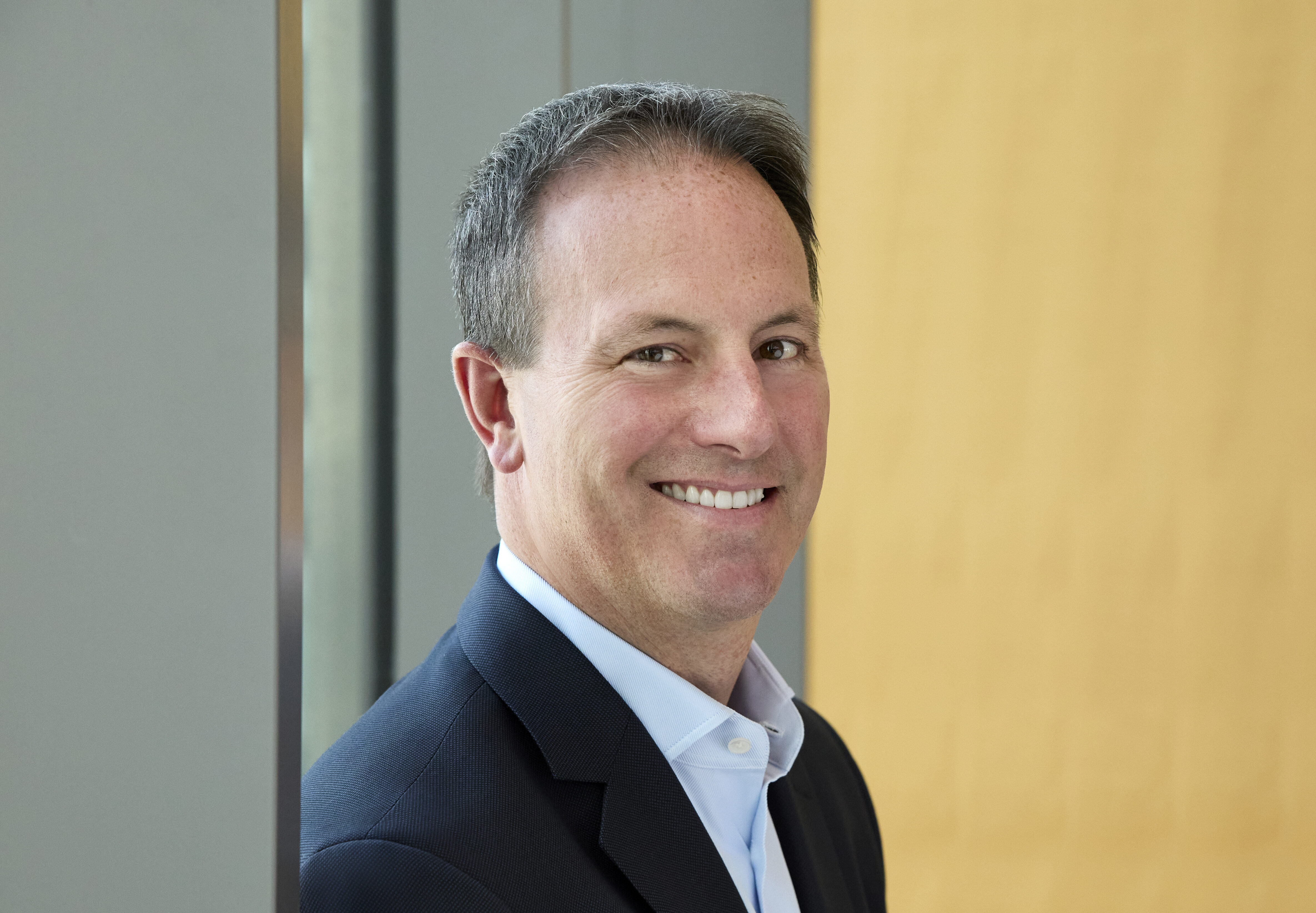
And then there is Nino Fanlo. He’s 42, joined the bank from Wall Street in 1995, and without any formal experience was promoted to the treasurer’s post in 2000. He has since become perhaps the most successful treasurer of any US bank. It’s a close-run thing: Al di Molina, Bank of America’s treasurer, is widely respected and admired by bankers and investors alike. Their two banks are similarly rated, and both appear to have excellent risk-management systems and processes.
But Wells Fargo stands out from the crowd: its bonds trade through all its financial-services peers, and even through many of the best-rated US corporates. You could include GE on either list. It doesn’t matter, because Wells Fargo deals tend to outperform GE’s as well. A case in point is the bank’s recent preferred trust deal. “The retail trust-preferred 30-year non-call five deal we did for them recently came at a coupon of 5.85%, which is the lowest ever,” says Suni Harford, managing director at Citigroup. GE, by contrast, gets around 5 7/8ths or 6% on its deals.
And now Wells Fargo is on positive ratings watch from both S&P and Moody’s. The former already has the bank at Aa1, which means any upgrade will take it into the rarified universe of triple-A rated non-sovereign borrowers.
And that makes Fanlo look good. “Nino’s a young guy from Wall Street who moved to Wells Fargo, took on the role of treasurer without any experience to speak of, and has done a tremendous job,” says one observer. “His people love him.”
Fanlo is quick to share the credit. He refers to CFO Howard Atkins as his mentor, and points out with pride that CEO Dick Kovacevich has an inclusive, workmanlike approach to his job – all the way from the salaries executives pay themselves to making sure that he will always speak to any branch employees who call him.
As for the team under his command, he relies on two chief lieutenants: Barbara Brett, who runs the whole of the funding desk, and Paul Ardleigh, who concentrates on long-term funding. Fanlo says success as a borrower springs from the fact that Wells Fargo is a well-run, conservative institution. “It’s not me, it’s the bank as a whole. What we have is a combination of tremendous businesses with continued success with our customers.” He points to the bank’s recent history as evidence: “Our mergers have been extraordinarily successful. Both cultures really believe in shareholder returns. We’ve no interest in low risk-return. All you have to do is look at our massive underinvestment in investment banking. Our customers aren’t crying out for us to do it, and those looking for it can get excellent service at any one of several well-established investment banking houses.”
Even so, observers still give Fanlo a good deal of credit for fleshing out the bank’s overall story with market savvy and good management. “They have three different areas within the bank to raise capital for,” says Harford. “Bank funding, holding company funding, and capital funding. Nino and his team have done a great job of getting the three to function as one unit.”
The bank’s appeal to both debt and equity investors stems also from its risk management processes. That’s been especially important in the past two years as many banking peers have been hit by market, operational and reputation risk issues while Wells Fargo has remained largely untainted. “Our credit risk, direction risk, operational risk, mortgage servicing risk and equity portfolio risk have all been significantly dampened even as we’ve generated double-digit earnings,” says Fanlo. That, too, is a team effort. The lack of any significant loan losses compared with its peers, for example, is the responsibility of Dave Hoyt, head of wholesale banking.
Fixed-income expertise Directional, interest-rate and mortgage servicing risks fall squarely in Fanlo’s camp. This is where his background holds more relevance than first impressions suggest. Before joining Wells Fargo in the summer of 1995 Fanlo had spent several years at Goldman Sachs, including five years in London. He was hired by Gary Cohen, now one of the investment bank’s fixed-income chiefs, and needed the approval of a partner to seal his employment; that was provided by Hank Paulson, now Goldman’s CEO. “I started off as a bond trader,” says Fanlo. “Then I moved on to mortgages, running the commercial mortgage-backed securities synthetic trading desk and effectively running capital markets in London as well.”
He was lured to Wells Fargo, and to the delights of living in San Francisco, to oversee the bank’s CMBS securitization efforts, and within a year was handed the added responsibility of running a CMBS and high-yield securities portfolio as an investor. In 1999, a year before becoming treasurer, he took over derivatives sales, trading and marketing, which mainly involves interest-rate products but also some commodities and equities.
He still retains those roles, with his CMBS and high-yield portfolio now about $3.5 billion in size. “So in addition to my role as treasurer I also have a P&L responsibility, which makes up around 3% of the bank’s earnings,” he says.
Jim Merli, Lehman Brothers’ head of US high-grade debt syndicate, says: “They enjoy the benefit of being one of the most highly rated financial institutions in the country. They’ve got brand appeal with both institutional and retail investors, and across all the products, whether fixed, floating or convertibles. Typically they have the ability to do anything and everything they want.”
The lowest-ever coupon on the $450 million trust-preferred deal is one such example. Another is the bank’s April debut in the convertible bond market when it raised $3 billion on exceptionally good terms. “One of the predecessor banks might have done a convertible back 25 years ago or more, but this is the first we’ve done,” says Fanlo. He’d had investment banks knocking on his door for nearly three years trying to persuade him to take advantage of what had become at the end of 2000 a hot and very cheap market for all issuers, not just the high-yield credits that would traditionally use convertibles.
In keeping with the bank’s conservative approach, Fanlo resisted. A zero-coupon, zero-yield bond might sound great initially, but the one-year puts that so many of these deals included in 2001 risked creating a refinancing need a year later that didn’t justify the effort or the fees. For some it was worth it, as these zero zeros could act as commercial paper substitutes, and there were a lot of high-grade companies finding their access to that product closing. That was never a risk for Wells Fargo. And in any event, says Fanlo, “we have to use CP as a source of funding less than any other financial institution in the country. At present, for example, with our balance sheet at more than $350 billion, CP represents between just 0% and 1% of assets.”
What finally appealed to Fanlo about the convertible market, though, were the terms he could get. First, the structure was more robust, with no put until year five. But that was a minor consideration, more a question of packaging than substance. Second, and much more important, were the financial terms. Fanlo and his three underwriters managed to wring a conversion premium out of investors of 110%, the highest ever for any convertible in the US until Maxtor topped it with a premium of 125% three weeks later.
What’s more, the bank managed to fund at Libor minus 25 basis points, which is at least 40bp tighter than it could get in the regular term debt market at five years. Although a 30-year deal, it has a call in year five and so is treated by most players as a five-year deal.
It’s just another example of the bank’s astuteness. Harford at Citigroup says: “They’ve always been opportunistic, which their credit rating allows, but they have been more systematic. So they won’t issue a three-year deal and then a week later come out with two-year paper. They’ll wait for the market to come to them.”
There’s one thing Wells Fargo hasn’t done, though, says Fanlo. “We haven’t done a true global deal with a roadshow,” he says. “We had targeted the summer to do one, but it’s more likely that we’d do it in the fall.” He’s thinking of getting out to Asia and Europe to see investors and issuing a deal worth about $2 billion. The bank has never done it before, he says, because “we have only minimal non-US business. And there’s a concession of three or four basis points for doing such a deal. It’s narrowed somewhat recently, but there’s neither an operational reason nor a desire to have to pay that premium. If we do a dollar deal in a liquid maturity and asset swap it, though, we should be able to make it indistinguishable.”
The biggest issue Fanlo faces now, though, as with almost all financial institutions, is how to read interest rates. Thus far the team has done a pretty good job. “Interest rate risk duration has shrunk in the last two years. We extended our exposure in 1999 and 2000, and have been shrinking it since then.” What happens next, though, is the tougher call. “We’d positioned ourselves for an interest-rate increase, but now our main concern is that the 10-year treasury goes to 2.5% from 3.5%,” says Fanlo. “But there’s more of a chance that it’ll be above 3.5% in the next 12 months or so. If not, we might compromise for two years, perhaps. But if the world does end, so to speak, we’ll be hurt, but we’ll get hurt much less than others.”