The US economy is growing at over 8% a year. Jobs are returning, industrial production is improving and households are still spending. Everybody expects this business cycle to be like those before and they’ve lapped up stocks in the US and Europe, in anticipation.
Despite the rising chorus of optimism, I remain convinced that the consensus will be disappointed on growth. That’s because most of the excesses of the 1990s’ boom were not corrected by the mild recession of 2001.
A recession is supposed to correct imbalances and create conditions for another healthy economic cycle. But the last recession was unlike most others. In 2001, investment collapsed but consumption didn’t. On average, a recession results in a two percentage point contraction from entry to trough. In 2001, US real GDP contracted just 0.6 of a point over three quarters. Only the brief recession of 1969-70 was as mild.
This time it is an economic recovery with:
– the highest level of consumer debt;
– the lowest job creation;
– the weakest wage growth;
– US budget and current account deficits that are widening not narrowing;
– low inflation and no corporate pricing power;
– oil prices high and rising, not falling.
Look at the evidence: US real consumption growth expanded 1.3% in the 2001 recession and has averaged 3% year on year since. The Federal Reserve’s interest-rate cuts, president Bush’s tax policies, cash from mortgage refinancing, easy credit and dazzling discounts gave shoppers the means to keep spending. This Fed-financed debt boom has driven up real house prices by more in the last recession than in any previous one.
Then there is the job market. In the past three months, 286,000 new employees have been added. That looks impressive and a jobs turnround is under way. But for all the rampant economic growth, this return in jobs is scant. Never has job growth been so weak in the recovery phase of an economic cycle.
That’s partly because jobs are being lost or in reality relocated to the competitive manufacturing hubs of Asia and especially China. Despite a 126,000 rise in October, US factory jobs are still contracting. US Inc can’t compete with producers that pay workers a buck an hour. More jobs will go east in the next few years, putting a strain on employment growth.
Weak employment outlook The US needs to generate about 250,000 jobs a month to sustain 3.5% to 4% real GDP growth. I see a new jobs rate of less than 100,000 over the next year. Indeed, of the top US companies surveyed in October, only 12% expected to take on more staff in 2004.
With the Democrats leaderless and in partial disarray, it looks likely Bush will win another term in a year’s time. If so, he will be the first re-elected president since depression-era Herbert Hoover to be greeted by a smaller workforce than when he entered office.
Some argue that loss of output and income from lower payroll numbers doesn’t matter as long as the bulk of people with jobs are getting paid more to compensate. They aren’t. Average hourly earnings grew an annualized 0.8% in October, the lowest rate on record.
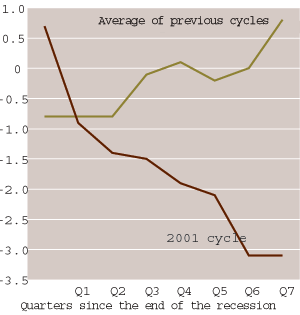
| US budget balance (% of GDP) |
 |



