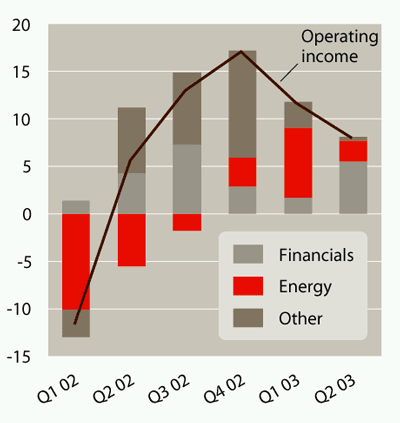
The bulk of corporate earnings results for the second quarter of 2003 from S&P500 companies are now in and equity bulls are claiming that they justify the sharp equity rally since mid-March. I’m not convinced. More companies beat analysts’ expectations, but then estimates had been revised down sharply.
The reality is that the 9% year-on-year rise in second-quarter earnings is actually less than that in the first quarter. And much of that was accounted for by cost-cutting and currency gains rather than top-line sales growth. Most important, the financial sector accounted for over 40% of the earnings growth surprise. The stark truth is that the rest of corporate America (ex-energy) generated less than one percentage point of reported earnings growth.
During the second quarter, falling interest rates were the key to profit growth. They encouraged households to refinance like crazy, generating record profits for financials, and gave consumers the wherewithal to maintain spending. Slimmed-down investment banks took advantage of lower interest rates and volatility in debt markets to drive earnings.
Mortgage business was brisk because of record low rates and refinancing. Investment banking benefited from falling interest rates, as underwriters placed 21% more debt than last year in the first half this year. High-yield debt issuance grew 72% year on year to $70.5 billion. Financial margins are near record highs. While paying peanuts to savers, the banks are charging borrowers the earth for using plastic.
It wasn’t just the banks reporting a surge in financial profits. GM’s finance arm made up the bulk of its profits. Financial services delivered 100% of Ford earnings. GE too generated 37% of profits from its finance units.
As long as profits improve, does it matter where they come from? I think it does. That’s because profit growth cannot be sustained in the sectors generating it now and there’s little sign other sectors will take profit leadership in the second half of the year and beyond.
For the financials, the good times have come to an end. Federal Reserve chairman Alan Greenspan has sent government long-bond yields up over 150 basis points from their lows. So mortgage refinancing has fallen 68% from its peak and a conventional mortgage costs one percentage point more.
With the short end of the yield curve staying low, you might assume that financials would make even more money because of wider interest-rate margins. But as the earnings evidence of the second quarter shows, it is the level of transactions in mortgages and consumer credit that has delivered profit growth. Now that interest rates have risen, the US housing boom is set to slow. So there will be less demand for credit.
Optimism unwarranted The recent rise in treasury yields will slice into the consumer debt and housing bubbles. Less money will flow to consumers from mortgage refinancing. That will hurt spending and force consumers to save more. And higher mortgages rates will crimp property activity and prices. Banks will then be forced to offset higher charge-offs against profits. The consensus is expecting 42% earnings per share growth from financials in the fourth quarter. In my view, they will be lucky to grow at all.
So, if the current optimism in equity markets is to be maintained, the rest of US Inc must raise earnings growth. Is that likely?
Take industrials. The consensus has high expectations. Earnings are expected to grow 17% year on year by the fourth quarter. But that would be a miraculous turnround – earnings growth has been falling steadily over the past two years. There has been no recovery in corporate pricing power in the sector. And if that does not return, there will be no sharp recovery in revenues or earnings growth.
As for the technology sector, there is no sign of any recovery in global demand. Overcapacity is rife. So don’t expect significant upturn in IT investment plans or chip prices. All this suggests that the consensus expectation of 43% earnings growth in the sector for this year’s second half is not going to be met.
Consumer cyclicals will struggle. Analysts are optimistically expecting a reversal in the downtrend in consumer cyclical earnings growth in the second half of this year. But consensus expectations of 11% year-on-year earnings growth by the fourth quarter are unlikely if the housing market busts. And shoppers still expect heavy discounts as the norm. So raising prices is a big no-no. Take autos. Ford has no chance of achieving its target of flat pricing for full-year 2003, after north American net pricing in the second quarter fell 2.7% year on year.
For the rest of the year, financial sector earnings will miss consensus forecasts by a country mile. That means current consensus forecasts of a 13.5% year-on-year rise in the third quarter and 21.3% in the fourth quarter in total S&P500 EPS growth will not be met. Markets are going to be badly disappointed.
Contributions to earnings growth (%yoy)