|
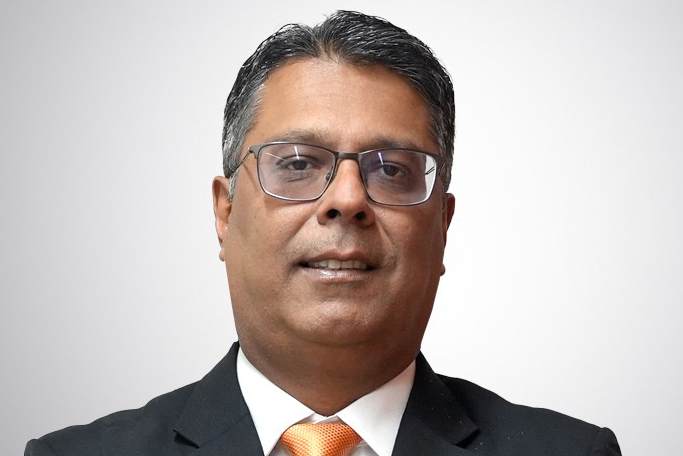
Tien Dan, president of Changjiang Securities, and BNP Paribas Peregrine’s Dry shake on it |
||||||
Behind the scenes of China’s quickly developing financial system a lot of frantic negotiations are taking place about the entry of foreign investment banks into the domestic market. Joint ventures are the likely vehicle. Though few involved are comfortable admitting it, international banks and Chinese securities houses are eyeing each other up, wondering who to hold hands with.
“It’s like a terrible school disco,” says one banker. “Everyone is waiting to see who will pair off with whom when ‘Stairway to Heaven’ starts to play.”
Under China’s regulations, foreign players are unable to underwrite or act as brokers in the lucrative domestic A-share equity market. But new laws, drafted by the China Securities Regulatory Commission in December, may be about to change that. The legislation will allow foreign investors to take 33.3% stakes in domestic securities houses, with a possibility of increasing that to 49% after three years. This will give them the prize of being able to underwrite domestic equity issues. According to Guillaume Dry, deputy chief executive officer, BNP Paribas Peregrine Group, the legislation will be passed within weeks.
So far, only one foreign joint venture has been established. CICC was set up in 1995 and is 49% foreign owned. China Construction Bank is the domestic partner and Morgan Stanley has a 35% share. Morgan Stanley was able to side-step regulations against foreign joint ventures underwriting A shares because of powerful connections but is still unable to trade in the market. Since its establishment other international banks have looked on with a mixture of envy at Morgan Stanley’s privileged access to China’s domestic market and Schadenfreude at occasional tales of management tensions between the two sides.
Just two other banks have as yet made it known that they will be following in Morgan Stanley’s footsteps. And it’s not the usual suspects of the big US houses. This time it’s two French firms leading the way. CLSA has signed an agreement with Shanghai-based Xiangcai Securities and BNP Paribas last month signed what it calls a framework agreement with Changjiang Securities in Beijing. Dry explains: “The agreement means laying an important framework that prepares the way for applying a licence as and when it is lawful to do so.”
With no laws set in stone, it might seem premature to be signing anything at all. One banker offers his opinion: “Both CLSA and BNP Paribas have weaker brands than the bulge brackets to attract the better Chinese houses. So they both probably realized it was in their interests to get in as soon as possible.”
Rodney Smythe, chief executive officer of CLSA Asia, explains why the firm is making the first move. He says: “It’s not clear to anyone what shape the capital markets will take in the long term and our view is that we would like to be involved in as many pieces of them as possible.”
Other joint ventures will definitely follow but how far down the aisle the various potential Chinese and foreign partners have so far tiptoed is anyone’s guess. The two largest Chinese securities houses, Galaxy Securities and Guotai Junan Securities, are certainly receiving regular calls from admiring suitors – something the coy foreign banks don’t admit or deny. Sources at Guotai Junan admit that HSBC has approached the firm and preliminary talks have been held.
Other Chinese brokerages lower down the league tables are also proving popular. JPMorgan, Lehman Brothers and Société Générale are all said to be in deep and meaningful conversations with China’s ICBC about the future of ICEA.
ICEA was set up between ICBC and Hong Kong-based Bank of East Asia. By now having talks with other potential suitors, ICBC seems to be admitting it chose the wrong partner the first time around. “Bank of East Asia was kind of a strange choice,” a senior banker says. “ICBC wants the prestige of tying up with a world-class institution, so it should find JPMorgan a lot more appealing than Soc Gen. And Lehman is primarily just a debt house so would be less than ideal.”
Observers, however, are wondering why no deal has been announced given the length of discussions. “ICEA has been hawked around for a long time but still hasn’t been able to get any deals off the back of it,” says a source. One reason may be because David Li, the CEO of Bank of East Asia, is seemingly against bringing in another partner for fear of dilution. The talks will continue to be protracted.
Goldman Sachs, which says it will grow its business in China organically, is also, according to some sources, playing close attention to suitable targets. And while CSFB is very quiet, describing itself as the new kid on the block, it will definitely be looking. John Mack, the initiator of the CICC deal while at Morgan Stanley, and Wei Christianson, head of China investment banking ensconced in Beijing, are big guns to bring to bear in any serious negotiations. But with six more managing directors in Hong Kong quietly fired by CSFB on March 26, observers are wondering what direction the firm will take in Asia.
Most banks admit only to be monitoring the situation and preparing to alter their strategy when appropriate. And because the rules are evolving even as banks begin to engage with the regulators they will remain cautious. “We are not sure what the endgame is. It needs to be clearer about where things are going. At this point in time we are not about to sign anything,” says one banker.
Choosing the right partner is a headache. Banks are unsure whether to go for either the weak securities house, with poor management, in an attempt to mould them into acceptable partners, or the large dominant operations that are less malleable.
“The risk of going for one of the big players is that we are unsure of the horrors that could be in there,” says a banker. “The attraction of taking a smaller one is you get the licences and then build the business yourself.” It is rumoured that UBS Warburg approached the Chinese regulators and asked if it was possible to take control of a small operation with a 33% stake. “Unsurprisingly the CSRC said ‘forget it’,” says one banker. “Why ask a question when you know that will be the answer?”
UBS declines to comment.
Smythe, explains the reason for CLSA’s choice of suitable partner: “We have gone for a second-tier [firm] in spite of the fact that it’s not one of the big turnover players. If you have an organic business then it’s a good bet.”
The lure of domestic bliss
There’s a balance of power in all marriages but it’s not yet clear who, between the foreign banks and the Chinese firms, needs who more.
Chinese capital markets exert an enormous allure, with the eventual prospect of being the financing pool for a huge economy bringing high secondary turnover and hefty new-issuance volume. China’s best companies have issued bonds and shares abroad but will, in future, be likely to use the domestic capital markets as these grow.
The domestic securities firms lack the skills of their western counterparts and joint ventures provide a mechanism for them to absorb these. In the distance looms the prospect of eventual open competition with foreign providers, following accession to the World Trade Organization.
Some suggest that it is actually the Chinese who are keener to bring in the global firms than the other way around. One banker says: “The Chinese are aware that competition is coming and realize that it would be better to leap into bed with it than fight it.”
In China, the underwriting business has essentially been risk-free. A company was floated and all securities operations had to do was to sit back and see the price rise. With very little analysis required but lots of cash with nowhere to go it was a winner all the way. They know that this is going to change and just putting the firm’s logo onto the brochure is not going to be enough. Book building and finding out where demand is before you underwrite are useful skills to learn from the best global banks.
So when “Stairway to Heaven” starts to play, what happens to those who don’t have a partner? “If the big international banks and the big Chinese players do strike up joint ventures then the smaller guys are going to be marginalized. And those left alone will be going nowhere,” concludes a banker.