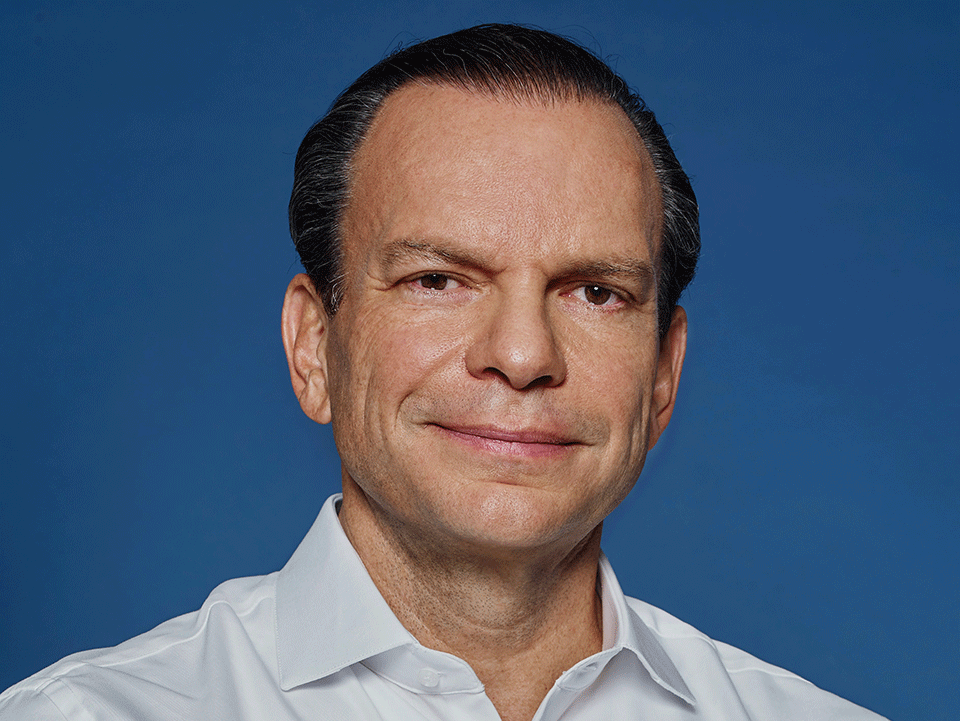
When Julian Simmonds, global head of foreign exchange and structured products businesses at Citigroup, announced his decision to retire this May, it sent shockwaves through the bank. Senior executives are thought to be trying to talk Simmonds, who joined Citibank in 1972 and achieved prominence by building its forex business into the undisputed market leader in the 1980s and 1990s, into hanging round a little longer. “No one event has prompted my decision,” Simmonds tells Euromoney. “But 29 years is a long, long time in a high pressure position. I have outside interests, as has my wife and I’d like to participate in those with her.”
To the cynical ear, this sounds like so much cover. Surely there has been a falling out, or he has been poached away. Simmonds says: “Let me make it clear I am not walking out into another job, though I have strong commercial instincts which may bring me to something else. I am ruling nothing out. I want to make sure the businesses I’m responsible for get transitioned correctly and they will continue to report to me until that is complete.”
Could it be that this process of transition, part of further cementing the merger between Citibank and the businesses of Travelers, has helped Simmonds to make his decision? The warrant business he ran is being absorbed into the equities division. Perhaps even more tellingly, foreign exchange will now be absorbed into fixed income.
Simmonds supports the move. “It’s absolutely the right decision. So much of what we do on the customer side in forex now relates to fixed income. The merger is all about bringing these businesses together and this is also all tied up with the branding decisions. It would have been a mistake to do this two years ago. But now my retirement offers up the opportunity to do more of this.”
Simmonds is now negotiating with the bank and the individuals who run the structured products businesses over how these should be reorganized. “This shouldn’t take months. It should take weeks,” he says, sounding impatient to be off.
While trying to re-organize such prominent franchises amid an atmosphere of fear and uncertainty within financial services, Citigroup will miss a leader of Simmonds’ durability. He built foreign exchange, with at times lukewarm support from John Reed – the former chairman of Citibank who was no great fan of trading – which meant he could not pay his people top dollar. He also thrived through the most troubled period of 1989-1991 when Citibank came close to collapse.
One Citigrouper has another explanation for Simmonds’ decision. He turned 50 on the day Citigroup returned to the top of Euromoney’s foreign exchange poll, after a one year absence, and sensed his job was done. So it’s all our fault.