Merrill Lynch led 501 Euro and global bond deals from May 1999 to the end of last month, more than any other lead manager. The firm has bounced back strongly in this key sector, following its nervous and probably misguided retrenchment in the wake of the 1998 Russian crisis. Despite personnel turnover, Merrill has quickly reaffirmed the leadership in international bond markets it built so proudly in the late 1990s.
Its recent track record of deals includes a large number of jumbo transactions for frequent borrowers, for emerging market sovereigns and corporates, as well as ground-breaking corporate deals, innovative structures and introductions of new issuers.
Like most big US investment banks, Merrill took a big share of bond mandates from the large federal agencies, Fannie Mae leading the way. Merrill led or joint-led $43 billion of bonds for Fannie Mae between May 1999 and June 2000, just ahead of Morgan Stanley Dean Witter, with $41.8 billion.
Merrill has also led a string of big corporate deals for European and US issuers, notably Ford, GMAC and GECC, as well as more challenging globals, for example for A-rated US consumer finance company Household International. This May, it led a $2.5 billion global for US oil company Phillips Petroleum.
The deal was challenging in a market sceptical of event risk. Phillips had been downgraded to BBB when it acquired Arco’s Alaskan oil assets, but the deal, co-led with JP Morgan, was oversubscribed and increased.
The firm has also played a lead for European corporates such as Repsol, Deutsche Telekom and Volvo. It has led sovereign issues for a variety of names, including Brazil, Turkey, Cyprus and Portugal.
One of the bank’s largest deals was for Società di Cartolarizzazione dei Crediti INPS (SCCI). In November last year SCCI, the Italian state pensions body launched a e4.65 billion three-tranche securitization backed by overdue social security payments from Italian corporations. The Italian treasury described the deal to Euromoney as a major exercise in its budgetary operations for 1999. All tranches received a triple-A rating.
Another deal Merrill is particularly proud of is the Archimede bond issued by the Region of Sicily and launched in May this year. Despite being issued at a time when doubts existed about the long-term stability of the Italian municipal market, and Sicily’s unwelcome associations, the e670 million bond has been a success. According to Merrill, which co-managed it with Banco di Sicilia, its size makes the bond the “most relevant Italian regional bond in circulation” and provides the first benchmark for investors in this market.
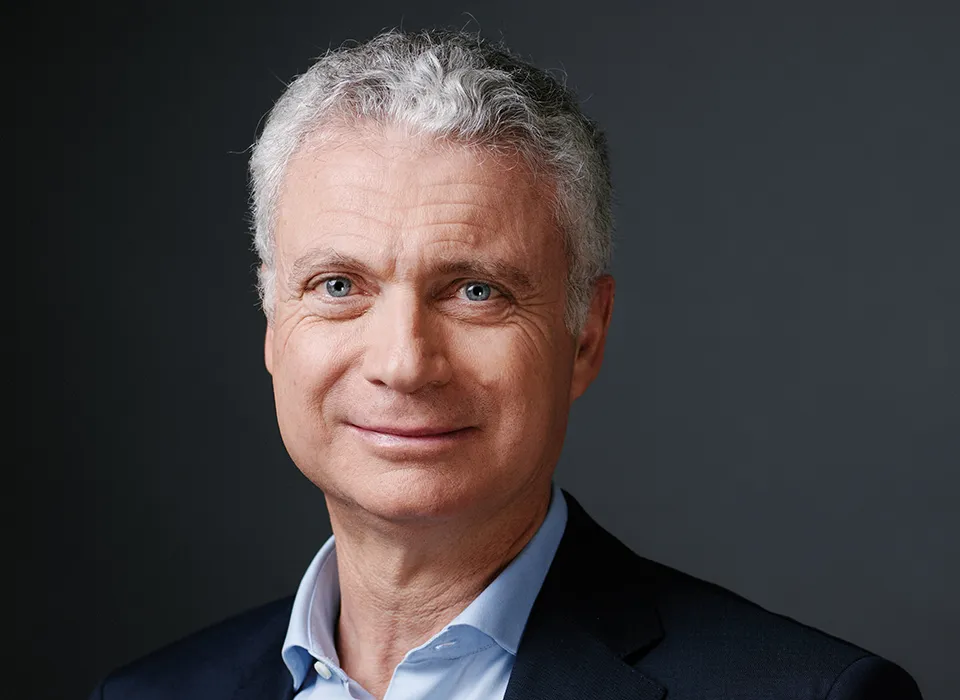
Merrill’s Bart Bronselaer, head of debt capital markets for Europe, Middle East and Africa, attributes Merrill’s success to the organization and knowledge of its teams. “As the products become more complex, the clients need the banks to understand fully what they want. Also our teams are organized on industry lines, our people fit into well defined plots.
We need our teams to be staVed by specialists ready to fight the European battle.”
After a staff restructuring in 1999 the bank had to aggressively rehire the talent that had left the previous year. With Merrill at the top in terms of deals managed, the rehiring seems to have worked. As Bronselaer adds, “Merrill Lynch is like a Formula 1 car.
When all the components work together it really works.”