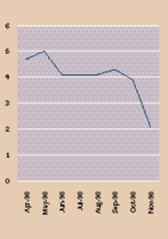
Investment bankers in Spain are asking themselves where their next $500 million is coming from. That is at least how much they have earned so far from the sell-off of Spanish state assets. The programme ranks as the fifth-biggest in the OECD after the UK, Italy, France and Australia, with the Spanish state collecting Pta1.8 trillion ($11 billion) in privatization receipts.
This year the elephant transactions will virtually come to a halt, with the disposal of large stakes in national grid Red Eléctrica, defence electronics group Indra and Iberia airlines, together worth perhaps $2 billion. On the face of it the outlook would seem a bit alarming for the banks: how to justify and continue paying for all those expensive investment bankers and research analysts who were put in place when things were so buoyant, and in an overcrowded market where in the past state privatization agency Sepi would invite 30 banks or more to bid for mandates.
For most bankers the answer is a shift in strategy – a focus on smaller private transactions offering more lucrative fees. “It’s going to be a tougher environment, particularly for those of us who were most active in the heyday of the privatization programme,” says Enrique Casanueva, managing director and head of corporate finance at Santander Investment.
The investment-banking arm of Banco Santander accounted for about a fifth of total privatization receipts paid out in the past two or three years, as global coordinator of major deals such as state oil company Repsol, steel producer Endesa and banking group Argentaria. “Investment banks will have to adjust to the new situation and I am confident that private deals will generate the best fees,” says Casanueva.
He cites the case of Ferrovial, Spain’s second-biggest contractor, a privately owned group that is one of the next in line for a stock-market listing. The offering is valued at an estimated Pta150 billion, on a par with Repsol’s Pta150 billion secondary offering in 1997 or last year’s Pta284 billion privatization of Tabacalera. “However,” says Casanueva, “here we are looking at a fee structure in the range of 3%, about twice what the state is paying for privatized assets.”
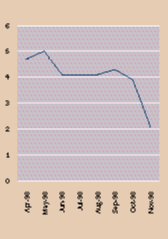
Logically, investment banks can squeeze a higher fee out of smaller private transactions since they do not have to deal with the government’s concerns about transparency. “Government fees were forced down by the intense competition but also because politicians needed to cover their backs to avoid exposing themselves to accusations of overpaying the global coordinators,” says a Spanish banker.
Santander’s Casanueva is confident that investor interest will keep the private and family-owned company sector buoyant for several years, particularly in areas that are underrepresented in the Spanish market or where there is a high level of fragmentation.
“We obtained the mandate as sole adviser to Enatcar, the coach company that will be coming to the market in the near future,” he says. “There were an amazing amount of enquiries from domestic as well as foreign investors.” About 30 groups expressed an interest in the company, including British, French and Portuguese investors.
An original valuation of Pta12.5 billion was placed on Enatcar and this has now zoomed closer to Pta28 billion, a smallish deal by privatization standards but one that carries a fee of at least 3%. “Fees had taken a tremendous beating but now some middle-market deals are becoming quite attractive,” says Casanueva. “You can make $1 million on a relatively small transaction.”
Bankers are also beginning to jostle for some surprisingly big business among Spain’s privately owned corporates. Clothing retailer Zara, Spain’s fifth-largest company, has decided in principle that it will seek a listing and bankers have hung a price tag of at least $6 billion on it. This is a classic example of an almost unknown gem in the private sector, owned by Amancio Ortega, a publicity-shy entrepreneur from La Coruña and one of Spain’s wealthiest men. One Spanish investment bank is providing Ortega with preliminary advisory work free of charge in the hope of obtaining the mandate.
M&A activity, real as well as rumoured, is helping to keep the banks busy in the absence of privatization income. Press reports of merger talks between Spanish and French tobacco giants Tabacalera and Seita had advisory teams on the edge of their seats for a few days, says a US investment banker in Madrid. “It hasn’t happened yet but it’s no secret that both companies need to acquire critical mass in the euro zone,” he says.
Financial services consolidation
The recent merger between Banco Santander and Banco Central Hispano was the first step in a likely round of large-scale consolidation in the financial services sector. In the same week, Argentaria’s chairman, Fernando González, made it clear that his bank was “open to proposals”, and Banco Bilbao Vizcaya’s (BBV) chief executive Pedro Luis Uriarte was assuring the market that 1999 could be a year of “surprises”.
Isabel Bermejo, deputy director of investment bank BBV Interactivos, foresees a second round in large-scale advisory activity. “The first stage is coming to an end with the final sales of state assets,” she says. “We are now looking at forthcoming legislative changes that will allow entities like the savings banks, which account for half of the country’s financial system, as well as the state railway Renfe, to go public.”
Jorge Calvet, managing director of Warburg Dillon Read’s Madrid office, says a key strategic element must be to keep an eye out for opportunities among its customers. The bank is focusing research on mid-cap companies and hiring to beef up its team of five analysts. “When dealing with privately owned companies it is crucial to be considered an adviser you can trust as well as a top execution house,” says Calvet. “People in the private sector are seeking good advice, not just bodies round a table. We devoted a lot of time to the big privatizations and now we are building up our relationships with privately owned companies. For example, we are finalizing the paperwork for General Optica, a privately owned chain of opticians with a valuation of Pta40 billion to Pta50 billion. This is a growth story and we are confident it will attract international investors.”
Calvet says that with Spanish interest rates at 3% people are looking for other places to invest. “Given the dividend yield versus current rates it makes sense to go into the stock market despite the risks, and this gives a boost to retail demand,” he says.
Getting serious about succession
BBV’s Bermejo says that the heads of family-owned companies have reached a level of maturity where they are seriously thinking about what will happen to their businesses once they have departed the scene. “They are starting to realize that the stock market offers them a source of liquidity, an enhanced brand name and the opportunity to grow in a global market,” she says.
Irene Hernández, vice-president, equity capital markets, at JP Morgan in Madrid, says the bank’s strategy is to be selective in choosing its targets and to put 110% effort into that endeavour. “With the privatization programme coming to an end we can foresee strong growth in the number of family-owned companies going public,” she says. “Spanish companies need to grow and the stock market is an alternative to closing down or seeking a buyer for a company that lacks critical mass. Given our strong private-banking team in Spain we have a close working relationship with many family-owned enterprises and we are now talking to a number of them about this option. We are looking to identify companies with a strong equity story and not just cases of someone trying to provide some family members with liquidity. This process requires time and a lot of work, but it is a growing part of our business.”
Hernández says the bank is also active in Spanish M&A and projects involving equity-raising, such as finance for a large acquisition or a restructuring programme. “Some companies are starting to think about hiving off non-core subsidiaries and having a strength in derivatives enables us to devise novel solutions for our Spanish clients,” she says. The Spanish market is highly competitive. Retail tranches have for the most part been heavily oversubscribed, and some companies take the view that for this reason it is not worth going to foreign institutional investors. We explain that their target should be to look for a balance and that institutional investors are for the longer terms and also have a better understanding of the company’s fundamentals.”
Investment banks need to get closer to their clients and put out feelers for companies that may be ripe for IPOs. This is where keeping a reasonably strong team of people on the ground finds its justification. The Madrid office of Salomon Smith Barney, for instance, recently obtained clearance from the UK authorities to act as a branch of its London headquarters in order to introduce and market new products to Spanish investors. The bank also intends to move some of its senior research analysts to Madrid to put them in closer touch with the local market.
“We are now more selective in our portfolio of accounts,” says Salomon managing director Alberto Ibáñez González. Unlike some of its competitors, Salomon has decided not to focus on small-cap companies. Instead it has set a target of the 25 or so top Spanish and Portuguese corporates, preferably those with an international presence. “We will have fewer accounts but we will cover them more comprehensively,” says Ibáñez. “This strategy has paid off in the past and it will continue to do so in the future. The fact is that Salomon Smith Barney was not a major player in the Spanish privatization programme, yet 1998 was our best year ever in Spain.”
In addition to traditional investment banking activities in Spain, Salomon plans to be present in equity sales. Also, acting as a branch of the UK headquarters it will market US and Japanese securities to local institutions. It intends to introduce Travelers insurance products in Spain and wants to develop its ability to cross-sell investment products, a business still in its infancy in the Spanish market.
Ibáñez says an excessive number of investment banks are chasing the same business in Spain. And domestic investment banks are competing aggressively and neck to neck with the international players. “We remain very optimistic,” he says. “Privatization has only accounted for perhaps 15% of our business in Spain, which is about equally divided between equities, M&A and fixed income. Our competitive edge is the fact that we’re now part of a much larger platform and can offer four businesses in Spain – private, corporate, investment and consumer banking.”
Local players are indeed turning up the heat, and even foreign competitors concede that there are few countries where domestic banks have picked up the tricks of the trade as adeptly as in Spain.
“It is obvious that we can now execute an IPO as skilfully as any international investment bank,” says Gonzalo Toraño, chief executive officer of Argentaria Banco de Negocios. “There is no need to bring them in as global coordinators, and in fact we are acting alone on major IPOs for transport company Azkar and engineering group Abengoa. Toraño says that Argentaria will apply the expertise acquired in having worked on every Spanish privatization that contained a retail tranche to generate IPO business among its small and medium-size corporate customers.
“This is a good time to bring private companies to market,” he says. “Unlike last July, P/E ratios are no longer at frightening levels. The truth is that the offer is narrowing as the privatization programme winds down so logically there should be a good deal of margin pressure. However, this is not what we are seeing. The market is behaving maturely and company owners are aware that in an IPO the important thing is for the investment bank to deliver an accurate story to the market. They know that the objective is to pitch the price at sensible levels.”
Toraño highlights the need for a close personal relationship with corporate clients and the advantages of having an extensive domestic network. “A foreign bank is clearly limited in its ability to reach a broad base of potential domestic IPO candidates,” he says. “We have been placing our research focus on smaller-cap companies for some time and this will continue to be a growth area. We also need to find new products to help replace the loss of privatization fees. I am convinced this will be related to a greater presence of private companies in capital markets. For instance, Spain needs to consider introducing a subordinated-debt market, and convertible bonds is another area that needs to be developed.”
International competition
The advantage of having a large domestic operation has not escaped the notice of international investment banks. Schroders acquired Carnegie’s Madrid operations a few years ago and has now built up one of the top domestic research teams. Merrill Lynch bought FG Inversiones in 1996 and Morgan Stanley Dean Witter recently reached agreement to take over Spanish broker AB Asesores.
“One of the reasons we acquired FG Inversiones was precisely because the Spanish privatization programme was winding down,” says Julio Babecki, vice-president, investment banking, at Merrill Lynch. “A large group of mid-cap and family-owned companies are coming to market and starting to do international transactions, so it was clear that in order to tackle this business we needed a local presence. Investment banks are focusing more and more on sectors instead of companies. This is fine for big-ticket business but it doesn’t work so well for smaller accounts. For instance, it is difficult to have someone in London providing research on a Spanish food company like Campofrío when this same analyst has to focus on Nestlé.”
Babecki says it is costly and inefficient to have international investment bankers chasing Pta20 billion mandates, and that the bank required a good local sales and trading team for debt and equity, as well as full research capability. “We bought locally to allow us to know what is going on in the domestic market and work on smaller transactions,” he says. “In small and medium-size IPOs you have to have a local distribution capacity. It’s largely a question of critical mass. In these transactions added value and fees are smaller, but if you have the capacity to execute domestic as well as international, your role takes on greater significance and it becomes a worthwhile deal. Syndicates tend to have at most one or two global coordinators in smaller IPOs and you can expect a higher fee structure.”
Babecki expects a large flow of Pta50 billion to Pta100 billion IPOs coming to market and foresees strong investor demand. Merrill Lynch was global coordinator last year of the IPO for Rioja winery Barón de Ley, a typical mid-cap institutional deal that was originally worth Pta16 billion and after a few months of listing is now capitalized at Pta45 billion. A lot of activity is expected this year given the backlog of issues pulled after last September’s market collapse. “There are at least 10 big IPOs and equity offerings in the pipeline and we see this trend accelerating over the next two to three years,” he says.
From the private-equity issues done so far it is clear that the major growth potential lies in areas underweighted in the Spanish market, such as food and leisure. “All consumer-related sectors have strong potential given the favourable outlook for the Spanish economy,” says JP Morgan’s Hernández.
Wild growth in consumer sectors
Yields have risen spectacularly across a broad spectrum of consumer sectors. Winery CVNE was showing growth of 132% by mid-March, hotel group Meliá was up 117%, fast-food chain Telepizza 920%, duty-free group Aldeasa 82% and textile manufacturer Dogi 137%. “We are going to see a lot of activity over the next few months,” says Argentaria’s Toraño. “We will be working not only on IPOs, but also in other areas such as M&A, acquisition finance and management buy-outs. So far this year we financed an MBO jointly with 3I for Carrera y Carrera and we also raised MBO financing for auto-services group Krafft. We are now looking at another three similar transactions.”
Some of the banks are playing the Latin American card, a natural area of expansion for Spanish companies. In the past few years the three big banks – Banco Santander, BBV and BCH – have spent well over $8 billion to building a physical presence in Latin America. And North American players in the Spanish market can trumpet their strong links to the region.
JP Morgan, for instance, was not that active during the Spanish privatization programme as mandates for global coordinators are generally awarded on league table rankings. “That has now changed and we are confident that the equity pipeline will grow and that we will have a major presence in the process,” says Hernández.
The US bank is pushing its strength in Latin America to attract Spanish clients that may be interested in moving into the region or raising finance for existing operations. JP Morgan worked with financial services group Mapfre on raising private equity for its Latin American affiliate. It also acted as adviser to BBV on its aquisition of Brazilian bank Banco Excel Económico as well as Telefónica on the privatization of Brazil’s CRT.
“Our deep-rooted presence in Latin America and Spanish companies’ interest in the region enables us to use that strength to help companies expand overseas,” says Hernández. “It is definitely an attractive add-on for our clients.” *


