“Differentiation” was a much-used word as investment bankers pitched the Philippines story to European investors in February. The marketing-speak succeeded in placing $350 million of Republic of the Philippines bonds, giving the country the distinction of being the first Asian sovereign to issue a euro-denominated bond.
Investors still required a fair bit of convincing, though – and a pretty attractive spread – to take on the sub-investment-grade paper. Much of the sales pitch was an education process for investors unfamiliar with the Philippines credit, said bankers close to the deal, but nevertheless there are plenty of pointers that the republic has managed to buck the trends of the rest of region and really does have its own story to tell.
“The Philippines is one of the countries in the region that did not go down to the low points that other countries did,” says a Hong Kong-based investment banker. “It was the only country that has not been downgraded, and much of Asia had a lot further to fall.”
However it is perhaps a sign of an economy that’s past the worst when analysts and bankers offer such a diverse range of views on the state of the country. “The economy is bottoming out,” says Robert Wilson, head of corporate finance at Paribas in Manila. “But the engine of growth – bank lending – has not started to pick up. The central bank is leading interest rates down, but it is not going to kick-start the economy. The Philippines never really had the crisis in its banking and property sector that many of its Asian neighbours have experienced,” he adds.
Inevitably comparisons are drawn between the Philippines and its neighbours. Although in many cases the Philippines comes out better, particularly on the fundamentals, there are still doubts about its attraction for equity investors. “There is probably better value in Thailand or Korea,” says Wilson. “Lack of liquidity in the Philippines means it does not come near the top of that list. There are no great bargains.”
Foreigners account for around half of the stock market’s investment and tend to lead trends, but a small burst of activity in March was the only real sign of foreign interest and turnover remained pretty low. Daily turnover is around $25 million to $50 million, which, reckons Wilson, is “pretty pathetic” compared with turnover of three times that much at the market’s height.
“There is not much excitement although the leading blue chips are fairly strong with some foreign buying,” says Wilson. “The foreign money coming in thinks the economy is on the up and more are waiting to see bank lending on the increase and first-quarter GNP in positive territory.”
Barclays Capital’s head of research for Asia, Desmond Supple, identifies “business cycle dynamics” as a leading factor that distinguishes the Philippines from other economies in Asia. “Bank system credit crunches and consumer price deflation undermine future incentives for private investment,” he says. “The Philippines is different because it is going to be one of the first economies to emerge from its downturn in its business cycle for several reasons. Its banking system is stable structurally and it can mobilize savings into investment capital, which is noticeably absent in other countries.”
Supple also points to government measures to regenerate the economy, with interest rates being cut, and an easing in fiscal policy that is expected to spur stronger demand. Barclays expects growth of 1.7% for the coming year, with the rest of Asia flat or negative.
The latest figures from the central bank indicate a 2.1% increase in commercial bank loan portfolios for last year and a reduction in non-performing loans to 10.37% in December, from an 11.82% past-due ratio a month earlier.
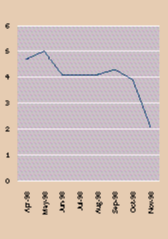
Real GNP growth is forecast by the government at 3% to 3.5% for this year, with inflation expected to be 8% to 9% and a current account surplus of 1.1% of GNP.
Return of the dealmakers
At a time when the stock market is edging back up, the corporate finance business is also starting to revive. Jardine Fleming Exchange Capital Securities research director Joven Babaan says: “I think people are becoming more positive and more optimistic. In the past people were resigned to a crisis situation here, now they are more hopeful and that gives birth to a lot of transactions.” Mergers and acquisitions, recapitalization and selling of assets are all on the rise. “Capital mobilization is a good sign and a good basis for recovery,” he says.
There are investors looking for opportunities, such as in the cement industry, where the world’s leading players including Cemex, Blue Circle and Lafarge, are making strategic investments.
Wilson at Paribas laments the lack of new issues both in equities and bonds, with the only sign of activity a convertible private placement by San Miguel subsidiary La Tondena Distillers, which is selling Ps1 billion ($26 million) of five-year convertible preference shares to BancAmerica Equity Partners and US-based private equity firm Orchid Asia Holdings, matched by a further Ps1 billion being bought by San Miguel itself. The deal was arranged by JP Morgan and proceeds will be used to reduce existing debts. Property conglomerate Ayala was expected to come to the market with a share issue to raise “a substantial amount of cash” in order to fund a proposed strategic acquisition.
Many deals are on hold until the country’s economic situation becomes clearer. “Policy has been crafted quite well and the policymakers have responded appropriately to the crisis and are doing their best not to stunt growth, but investors are reluctant to come in until they see signs of recovery,” says Luz Lurenzo, vice-president of research at ATR Securities.
The government’s official forecast for GDP growth for this year is between 2% and 3%, but ATR is more optimistic suggesting 3% plus. Many commentators point to the relative strength of the Philippines’ banks as one of its saving graces when compared with Thailand, for example, and they also act as a useful pointer to economic recovery.
“Anecdotal evidence suggests that imports will continue to grow,” says Babaan, citing Metrobank, which has a large share of the import-credit business, and reported 30% letter-of-credit growth in January and February. Equitable Bank’s letter-of-credit business grew 40% year on year. That growth could be attributed to two things, either the markets have ground down investors to very low levels or demand is increasing, says Babaan. A lot of other indicators suggest a positive trend, he argues. Cement volumes are starting to turn up, for example, and estimates of electricity consumption growth vary between flat and 2% to 3% growth.
The stock exchange index appears to be relatively stable at around 2000. “There’s a healthy price tension,” says Babaan. “Investors in the fourth quarter of last year jumped in because the market was oversold and there were a lot of bargains. In the early part of this year they stayed within the market and there was a lot of realignment of portfolios. Now new players are starting to come in because they are starting to recognize the positive indicators,” he says.
The Philippines Stock Exchange has set itself the goal of further developing the country’s capital market.
“Despite the listlessness of the stock market for more than a year now, the stock exchange was able to turn the market sluggishness to its advantage,” the exchange claims in a recent statement. “Slow market movement was taken as an opportunity to build up the infrastructure and other facets of the equities market, so that empowered, it would be ready to face the more challenging times in the re-emergence of the bull.”
The exchange has ambitious plans for listing put and call warrants, government treasury bonds, mortgage-backed securities, corporate bonds and municipal bonds, as well as facilities for trading small and medium-size company stocks. It also plans to introduce regulations to cover short selling and securities lending.
“Rules and regulations on listings, trading, and operations are being reviewed that would create an exchange that is efficient, transparent, orderly and that would entice more investors to come into the Philippine market,” says the statement from the exchange. “The notion that the Philippines would be among the earliest to recover remains reverberating at the backdrop of better economic prospects. The return of investor confidence to the country as an investment destination will be directly manifested in the stock market as foreign inflows start to increase.”
“In the short term we do not expect a surge in the Philippines but we do expect a stable market,” says Babaan. “There will be modest growth initially, but with every case of general re-rallying of Asia, the Philippines has to benefit.”
In the bond market, domestic interest rates are heading down and investors are looking to shift from short-term to long-term maturities, with some resultant demand for fixed-rate bonds, but by and large equities are still preferable to bonds, Babaan adds.
Lurenzo at ATR Securities is less enthusiastic. She reckons the Philippines stock market is moving sideways, although there has been some pick-up in volume. “There may be some scepticism about whether a recovery will happen this year and whether it will trickle down to corporate profits,” she says.
Policy continuity
The new Estrada government has generally been praised by local and foreign commentators. The Hong Kong-based banker says: “The Philippines has a long history of IMF programmes so it was not a matter of national pride and the reform process started by president Ramos has been continued by the Estrada administration and has been strictly adhered to.”
The political and economic message has been central to selling the Philippines overseas, particularly with the government’s recent euro-denominated bond and its successful $1.2 billion global issue in January. Credit-rating agency Standard & Poor’s confirmed the country’s BB+ rating for long-term foreign currency sovereign debt and switched its outlook from “negative” to “stable” in January. “The change in the outlook reflects improved prospects for policy continuity from the Ramos to Estrada administrations and the diminished likelihood of a deterioration in external liquidity and financial flexibility,” says S&P. The country’s ratings are still constrained by poor external liquidity, weak public finances and a weakened banking sector, S&P adds, but a strong export sector and relatively stable and open political system are in its favour.
| GDP growth quarter on quarter | Inflation year on year |
 |
|
| Peso to the dollar | Interest rates |
|
|
| Source: Datastream/ICV | |
The euro deal, lead-managed by Warburg Dillon Read, JP Morgan, Deutsche Bank and Goldman Sachs, although ground-breaking, was not without controversy. Warburg, JP Morgan and Deutsche all took book-running positions – a recipe for chaos says an observer. “It just becomes a coordination problem and a control problem,” he says. “The Philippines has a number of relationship banks and they wanted to involve as many of them as possible, but that is not always the best thing in terms of the most successful deal. “Having three book runners was not particularly smart. It makes for a bit too much chaos. Investors were missed off the roadshow list and there was a lack of focus. These things happen when you have got too many cooks because there are coordination problems. I do not think even the book runners were sharing the list with each other.”
The deal was the first by an Asian sovereign issuer in the euro currency market and the first sub-investment-grade issue out of the region since the crisis. The Philippines issue was compared with the euro issue launched a few days earlier by Hong Kong conglomerate Hutchison Whampoa, a corporate name that was well understood, transparent and had a single A rating. “The Philippines is different in many ways. It is an entity that people understand less. It was a challenge to educate the European investor base on the Philippines. That was really the rationale for going on a fairly large roadshow, where the deal ran very differently from the US dollar deal, where investors know the credit very well,” says a banker closer to the deal.
“A lot of investors had to go through a very complicated approval process because they had never bought the Philippines before,” the banker says. “The deal took a lot more time. Investment fund managers and portfolio managers had to go to their seniors to get permission. There is no doubt about it that the market for Asian credits and sub-investment grade credits is considerably less liquid in Europe than in the US, but it is potentially an enormous market.”
Barclays’ Supple says: “The Philippines has growth potential over the short to medium term. The country’s bonds are among the most attractive in Asia, especially judged against Thai issues, which have a higher yield and few growth prospects; similarly Korea’s. The Philippines economy can recover and the risk premium does not seem that justifiable when you consider the kind of risk premiums in the rest of the region.”
Narrowing spreads
Some of the recent rallies in Asian markets were fuelled by trading in assets coming from institutions elsewhere in the region, such as Thailand, where they were reluctant to lend domestically, with bond yields declining. Thai and Korean institutions are also buying their own bonds. The narrowing of spreads in the Philippines, meanwhile, is being driven more by genuine international investor sentiment from New York and London, says a commentator.
“There is liquidity out there, which makes it an attractive bond market. The rest of Asia is screaming for fresh issuance,” says Supple.
The Philippines bond was too expensive, says a banker. “It was a difficult name and a brave move by these guys. They paid up and on the spread basis it was expensive, but you have to pay a price in order to be the first in the market.”
The euro issue was indeed expensive when compared with the republic’s $1.2 billion issue in January. The Philippines’ 2008 bond was trading at 396 basis points over US Treasuries at the time. With a swap differential between dollars and the euro of around 50bp over five-and-a-half years, the margin on the dollar deal equates to around 350bp over 10 years in Europe. The headline spread of 425bp on the euro deal was therefore equivalent to around 475bp in the US.
“In this market people buy on a spread basis, and that’s expensive,” Supple says. He adds: “It was a brave attempt and it would have been easier if the first issue out of the region was somewhat higher rated. It would have had more appeal and it was not an easy deal.”
Typically, deals are priced at the end of the roadshow, but in this instance there were several days after the end of the round before pricing was announced. “It got done and they were happy with it,” says Supple. “The lesson learnt is that certain names are a lot more easy to market.”
The notion that there were pricing and book-running problems is rejected by Suneel Kamlani, head of the Asia-Pacific debt capital markets group of Warburg Dillon Read, who says: “The coupon was very attractive for them at 8%. The five-and-a-half-year maturity fitted extremely well and got them a headline spread slightly higher than the headline spread at which the dollar deal was trading.”
On the book runners, Kamlani says: “It is usually the issuer’s decision as to how many book runners they would like to see on a transaction. It was a debut transaction for them on which three book runners achieved the objective they were looking for, which was to get broad investor support and good secondary market performance. There is no such thing as a magic number of book runners.”
“The market environment in which the issue was launched was one in which investors generally were withdrawing from emerging market credits, there was tremendous volatility in Latin America and a couple of deals in euros that had not gone as well as expected. We were targeting investors who had not tested the Philippines credit.”
“Investors were very impressed with the management, with the reform measures undertaken and relative stability of the Philippines economy given the crisis that Asia had seen in 1998. Given the strong export sector which has become a big boost to the economy they were quite impressed with the credit story. From a yield perspective the trend was to look for investment to provide an attractive yield pick-up,” he says.
The Philippines originally planned to launch in the euro markets last year, but the Russian crisis “sent spreads to the moon”, the Philippines’ existing bond widened to spreads approaching 800bp and the plan was put on hold.
“The transaction was a landmark transaction by the Philippines following its highly successful $1.2 billion global issue,” says Kamlani. “The global was a transaction which received unanimous support and was a very attractive source of funding for them. The motivation behind the euro was more strategic, to be the first Asian sovereign in the euro-denominated bond market. What the Philippines showed was their market savviness in getting into a market to establish a benchmark, and they established a new investor base.”
Much of the book-running problem could be ascribed to the cut-throat competitiveness between banks looking to make a name for themselves in the euro market. “The banks are very aggressive in the euro market and promising the world to euro issuers because they want to put their flag down on the market,” says a US banker. “If you go back many years when the Eurobond market was developing there was competition between European and US banks and at the end of the day the US houses dominated the market and still do. European banks are going to be damned if they are going to let the same thing happen to the euro and I think it will. These banks just do not have the reach out of Europe in the same way. Until this market develops they will have a very difficult time competing. They are going to be very aggressive about the potential for the euro and promising an awful lot. There is an expectation problem. They are used to going in on US dollars and getting a lot of interest.” The banker describes as “lukewarm” European interest in the Philippines issue. “The issuer should be applauded for being brave. It went out at a difficult time with a difficult name,” he says.
“The deal was not difficult to get away,” counters another banker. “The investors that were targeted were people who had been burnt in Russia last year and Latin America. When we did the roadshow it was clear there was a high amount of interest and everyone liked the credit. There had not been any successful euro deals and people were a little hesitant at first but once they saw the deal coming at market-driven levels there was a definite pick-up in interest.” The banker admits that there was some comment on the number of book runners on the deal, but discounts it. “I think it worked well,” she says.
“People were very interested in the fact that the banking system was much better compared with that in Thailand and that non-performing loans were falling in number,” the banker says. “The Philippines did not have the same kind of boom, so it did not have so far to fall,” she adds.
The budget deficit and the government budget for this year was reasonable and attainable and investors acknowledged the fact that the strong trading partners were Europe and the US so there was not that much impact from the region. The peso was one of the top-three performing currencies last year and the GDP figures last year would probably have been positive but for the El Niño weather phenomenon pulling down agricultural sector output, ran the argument.
“Of course they have challenges to face and infrastructure is one, the banks are not perfect and a lot of improvements are needed but it is a stable democracy and a strong transition of government,” the banker adds. China is expected to be the next Asian sovereign to follow the Philippines into the new euro market, with a South Korean semi-sovereign also likely to test the market this year. *




