|
European monetary union (EMU) now seems almost certain. But the politics of running the single currency are not straightforward. Germany wants to free the running of EMU from national political influence. Under the terms of a stability pact, EMU member states would be fined automatically if they broke fiscal targets. Similarly, Germany and the other core European states aim to ensure that monetary policy is smoothly controlled by an independent central bank, the European Central Bank (ECB), in the style of the Bundesbank. So the euro will be strong from the outset and kept so. Thus Europe’s voters will have little influence on either European monetary or fiscal policy. They will elect national politicians and parties, who will select executives and leaders who will make up the Council of Europe (formerly the Council of Ministers), which will elect the ECB’s executive board, which will dominate monetary decision-making. Also, if there is to be a stability council (to run the stability pact), made up of EMU countries’ finance ministers, then responsibility for fiscal policy will also have largely been shifted to a distant institution. And even if there is no stability council, the automatism of the stability pact itself would ensure that fiscal policy becomes even less subject to democratic discretion and sovereign decision-making. Voters will recognize only a fourth-hand version of their chosen leaders’ ideas. It’s photocopy democracy, where instituted Euro legislation becomes a faded version of original policy. Photocopy democracy happens when elected officials are no longer able, or don’t have the quality, to take tough economic decisions directly. These decisions then get relegated to increasingly distant institutions, which cannot be targeted by voters. Blame is deflected from elected politicians and tough decisions are implemented by the deus ex machina of a distant Zeus at the head of Europe’s unaccountable institutions. Ultimately though, photocopy democracy contains the seeds of its own undoing. At some point, I believe, there will be a popular reaction. And that’s when EMU unravels. But it will probably be long after EMU’s inception. About the same time as you read this, an EU summit will attempt to finalize the stability pact for fiscal control under EMU, and the ERM-2 currency arrangements. Both require unanimous agreement between EU member states. We expect a rigorous, German-style stability pact to be signed, forming a solid, credible foundation for EMU. But failure to agree a pact even a short-term “technical” delay would risk significant financial market volatility. Neither chancellor Helmut Kohl of Germany, the great protagonist of an integrated Europe, nor the leaders of the Southern Comfort Country (SCC) bloc, want that. Any delay means the unwinding of European bond yield convergence. And that means higher interest rates and bigger budget deficits in the periphery. In the waiting room An ERM-2 will probably be announced at the same time as the stability pact. It is intended as a waiting room for the currencies of those countries which fail to get into EMU at its launch. The idea is to prevent them from gaining competitive advantage over the euro bloc by depreciating their currencies ahead of later EMU accession. The likely structure would be a series of “fluctuation bands” with a maximum of ±15%, similar to the current ERM. Just as today’s ERM is regulated by the European Monetary Institute (EMI), so ERM-2 would be run by the ECB. In theory, all EMU hopefuls would have to be ERM-2 members ahead of accession, and most as soon as EMU is launched. In practice, though, it is not clear whether ERM-2 membership for at least two years would be a requirement for EMU entry (as membership of the original ERM is now). Countries in ERM-2 won’t see their bond yields rocket because they’re in what markets will perceive as a short-term EMU ante-chamber. The likelihood of a country staying in ERM-2, but being refused EMU entry for more than a year or two, is extremely low. So either EMU convergence would drive an ERM-2 country’s bond yields towards those of the euro bloc and keep its currency stable, or long-term EMU exclusion would generate bigger spreads and currency volatility. It’s a black-and-white scenario with no middle ground. Then in January, the EMI meets to discuss its own transformation into the ECB. As the monetary policy-machine of EMU, the ECB’s role is key. But who will control it? If EMU begins with nine countries, the ECB’s governing council will initially have 15 members. First, it will include each national central bank governor in the EMU bloc. Each governor will serve a five-year term and be re-electable. Second, it will also have a six-member executive board, which will help decide European monetary policy and ensure that it is properly implemented. The executive board’s members will be selected by the Council of Europe again from EMU member states. Each member of the executive board will have a vote equal to those of the central bank heads in the ECB governing council. The executive board will have an eight-year tenure, but will not be re-electable. Who’s in, who’s out? Wim Duisenberg, the Dutch head of the EMI, will serve as the executive board’s president. And a German will almost certainly be vice-president. As “core” countries are also likely to secure two other seats on the ECB executive board, the core will have nine seats on the first ECB governing council. As such, it will have a working majority to dominate European monetary policy. Finally, in spring 1998, the Council of Europe will make its decision on who’s in and who’s out of EMU. This will be based on two recommended lists one from the EMI, another from the EU Commission. The vote will be on complete lists of countries, not individual countries. The EU Commission’s list will be soft on the Maastricht criteria and long on politics. The EMI’s list is likely to be closer to the Bundesbank’s ideal of strict application of the criteria. But the two lists will probably be fused into one behind the scenes, long before the Council of Europe votes, to avoid financial market volatility. Of course, this “behind closed doors” decision will be politically charged. It will effectively determine which countries decide European monetary policy from EMU’s inception, and those which simply have to accept ECB directives. That’s because only first-wave EMU members will be considered for the ECB executive board’s first eight-year term. And countries with membership of the ECB executive board will have a decisive numerical advantage over those countries represented on the ECB governing council only by their central bank heads. If EMU is unstoppable, so is European bond yield convergence. The biggest gains to be made from this are in Italian bonds and in UK gilts as I think the UK cannot afford to stay outside a big, strong-currency euro-bloc particularly if it’s a high growth region to boot. And EMU will be unstoppable unless the German coalition falls to bits; Kohl dies a hasty political death, or there is sub-1% growth in core Europe next year. I ascribe a 60% probability to EMU happening on time, and 40% to delay due to these risks. The euro will start life as a strong currency characterized by fiscal discipline and Bundesbank-style monetary policy. Later its deep economic flaws may weaken it. Growth lies at the heart of the EMU equity argument too. Initially, at least, the EMU bloc will have little to gain from a weak euro. Foreign currency-denominated exports will have shrunk from 22% of GDP to 13% for the euro bloc as a whole. A weak euro would undoubtedly spur this small export segment of GDP, but it would be offset by higher domestic interest rates and weaker domestic demand under a German-dominated ECB hell bent on proving its credibility. So the route to fast growth is high domestic demand inside the EMU bloc, which absorbs the vast bulk of output. The way to achieve that is with a strong currency and low interest rates. This would set up a virtuous circle of falling budget deficits and public debt (as a percentage of GDP), compliance with the stability pact, falling interest rates, higher investment, more growth and more jobs. The fact that a consumer boom in Italy might widen its trade deficit with Germany would no longer matter in a unified currency bloc, any more than Nevada’s trade deficit with California does! Handcuffed to Germany’s progress And it’s likely that compliance with the Maastricht criteria, and later the stability pact, will cut the role of government in Europe’s national income, and not just increase the tax take. Shrinking government is a very powerful booster to profit share in national income, as long as what governments free up is not grabbed by wages. And it’s not likely to be. Labour market reform is springing up all over Europe advanced in some countries like the UK and the Netherlands, under way in Spain, and incipient in Germany. From here, Germany will drive the process. Other countries, no matter how different their cultures, will be handcuffed to Germany’s progress by the stability pact, which will force similar changes upon them to price their unemployed into jobs. The post-EMU world looks good for Europe’s corporate sector. But EMU’s faded democracy, in which national electorates have little or no influence over decisions on currency, public spending and interest rates, is a fertile field for populist reaction. That could eventually bring the euro to its knees.
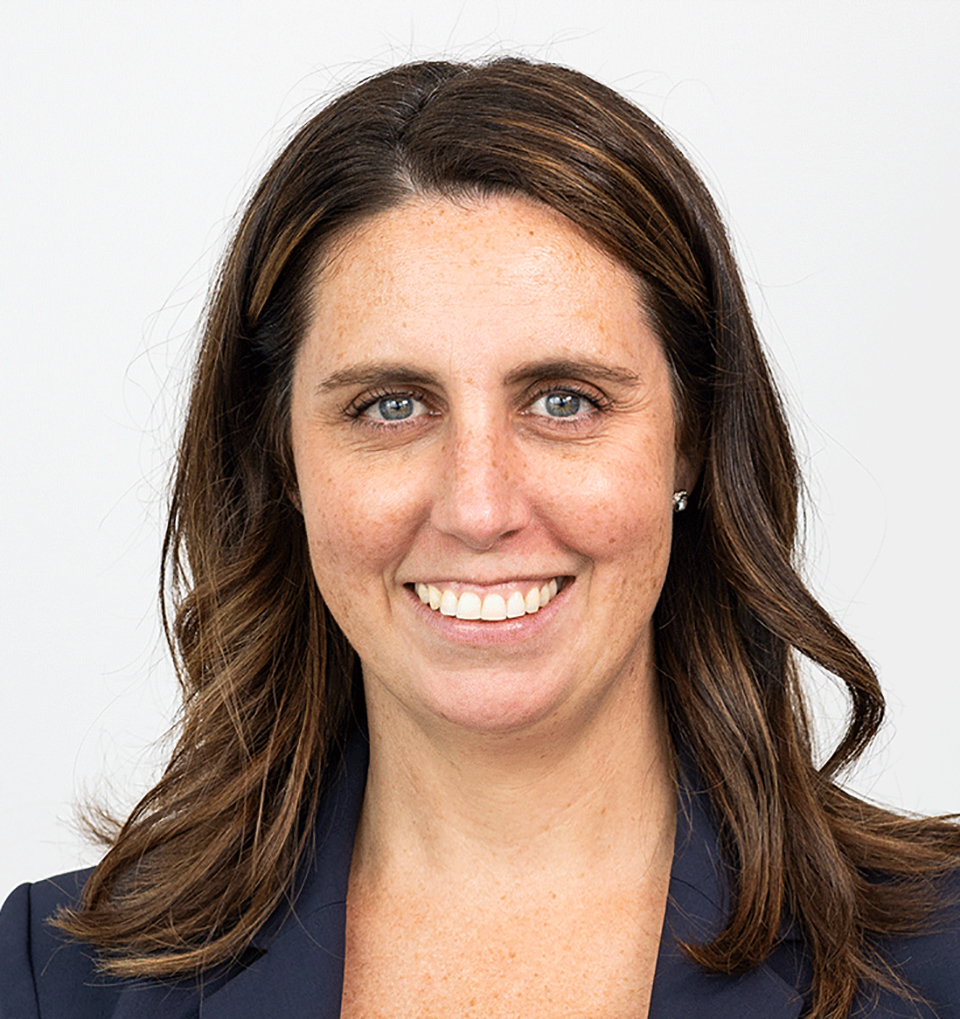
David Roche is president of Independent Strategy, a London based research firm. |
|||||||||||||||||||||||||||||||||||||||||||||||||||||||||||||||||||||||||||||||||||||||||||||||||||||||||||||||||