Awards for Excellence 2016

|
|
Also shortlisted: |
|
Bank of America Merrill Lynch |
|
Citi |
|
Goldman Sachs |
|
Morgan Stanley |
For many years, HSBC’s investment bankers had to put up with being the butt of the jokes of their competitors. But those working in its flourishing global banking and markets (GB&M) division may well have the last laugh. In time, the last 12 months will be seen as a watershed period for a business that has often struggled to define its identity, and one whose performance rarely matched its potential. GB&M has long had some excellent businesses: the problem was its successes always came with a ‘but’.
Yes, it had a superbly profitable franchise in Asia, but it should do, given its long presence in Hong Kong and China. Yes, it was great at debt capital markets, but it had no equivalent equities or M&A franchise to speak of. Yes, it was a bank of global scale, but you cannot really call it a global bank when it is relatively weak in the biggest market of all, the US.
The ‘buts’ also came with an ‘if’. If HSBC could really harness the power of its franchise, in particular if it could turn its unrivalled commercial banking relationships – especially in the emerging markets – into investment banking business as well, then it would become a real force to be reckoned with.
Over the last three years or so, that is what HSBC has done. And since the start of 2015, this performance has not just become apparent in the deals that it has done, but also in the numbers GB&M has produced.
Take the full year results for 2015. HSBC increased revenues in GB&M by 7% over 2014 in tough market conditions. More impressively, it managed to increase profit before tax by over 30%, all at a time when it was dramatically reducing the risk-weighted assets in its business. Which global competitor can claim the same or better? The first quarter of 2016 was tougher still for most global investment banks. But HSBC’s revenues in GB&M fell by a relatively small 10% and the division still posted a profit before tax of $2.1 billion.
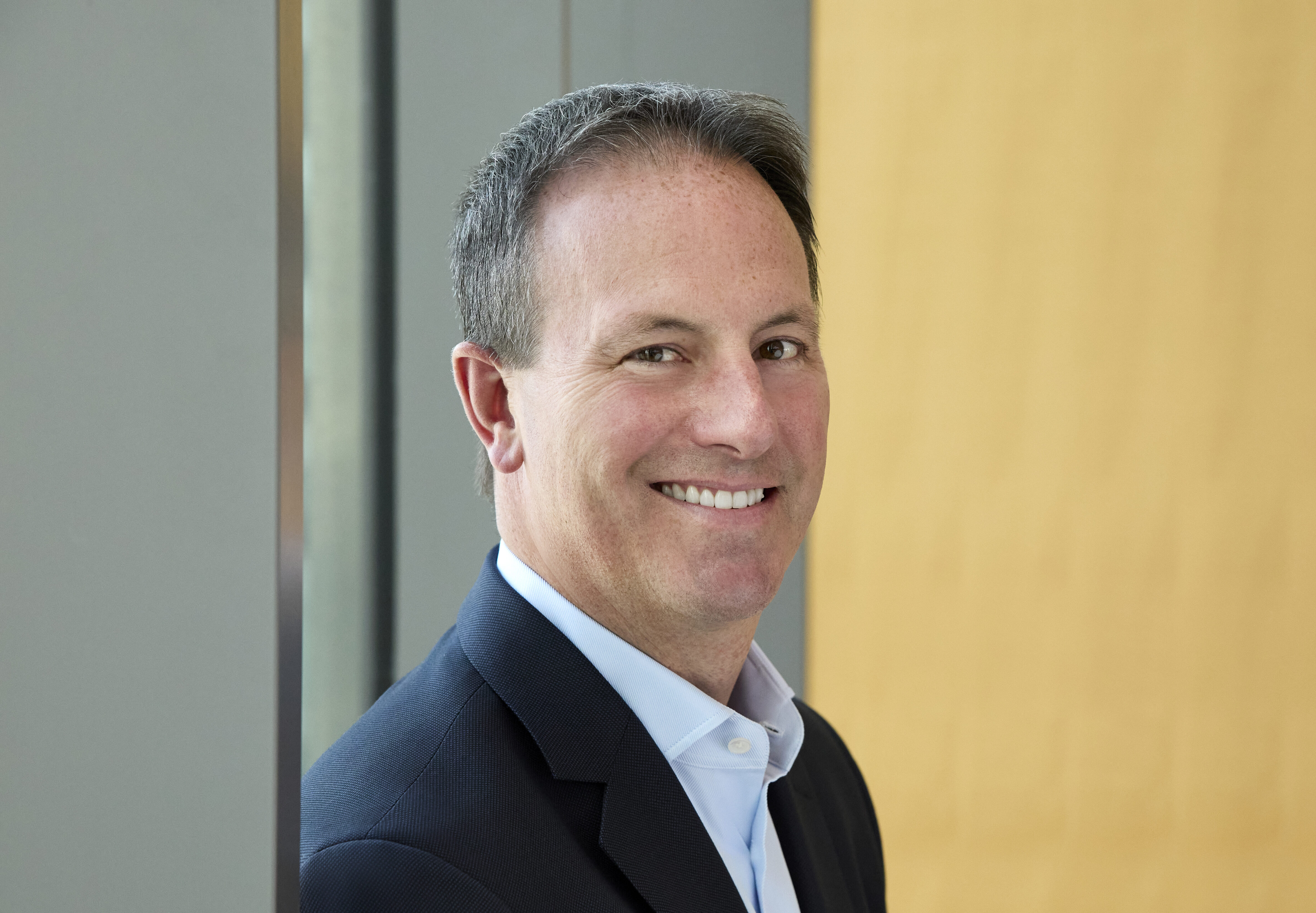
That is partly because, under the leadership of division CEO Samir Assaf, HSBC has built a diversified model in which no single business line dominates the whole. In its first-quarter revenues of $4.4 billion, markets accounted for around 40%, at $1.7 billion. Foreign exchange and rates were the biggest revenue generators, but equities made over $300 million – not bad for a bank that competitors say barely has an equities division. Securities services and cash and payments both came in around the $400 million mark.
|

|
|
Samir Assaf,HSBC |
The stand-out business line was capital financing, with revenues of close to $900 million. Put in place in 2013, capital financing aimed to bring together the financing businesses that resided in different parts of HSBC’s banking and markets operations to create a joined-up product offering for clients of both the global banking division and the commercial bank. Capital financing was folded back into global banking earlier this year, but in its three short years it has had a transformative effect on HSBC’s offering to clients, its deal output and, just as importantly, on the culture of the firm. HSBC has finally become a strong competitor in event-driven business.
That can be seen, for example, in HSBC’s growing presence in the high-yield bond markets, especially in Asia but also in Europe, where it is now taking commercial banking clients to the capital markets. It can be seen in equity capital markets, where HSBC is increasingly evident as a bookrunner on important deals.
And it is evident in M&A, where HSBC is now not just providing its balance sheet for financing but is also a core adviser on some of the biggest deals of the past year, including the $80 billion restructuring of Li Ka-shing’s Cheung Kong/Hutchison businesses and the $43 billion takeover of Syngenta by ChemChina.
HSBC is not yet where it wants to be. That is why, for example, it hired Matthew Westerman from Goldman Sachs as co-head of the revised global banking division alongside Robin Phillips earlier this year. It needs to build on its base and become more aggressive in winning event-driven deals in M&A and equities.
It also needs to take advantage of its powerful Asian business on a global scale. HSBC missed out on the US and is unlikely to go back. If Asia continues to increase its share of the global wallet, that might allow HSBC to start to close the revenue gap with the likes of Citi, BAML and JPMorgan. HSBC is about to launch its own China securities business, in which it uniquely has full management control, just as China onshore businesses are set to boom.
Get all of that right and competitors will soon be jealous of HSBC’s investment banking franchise.