|
|
Illustration: Andrew Archer |
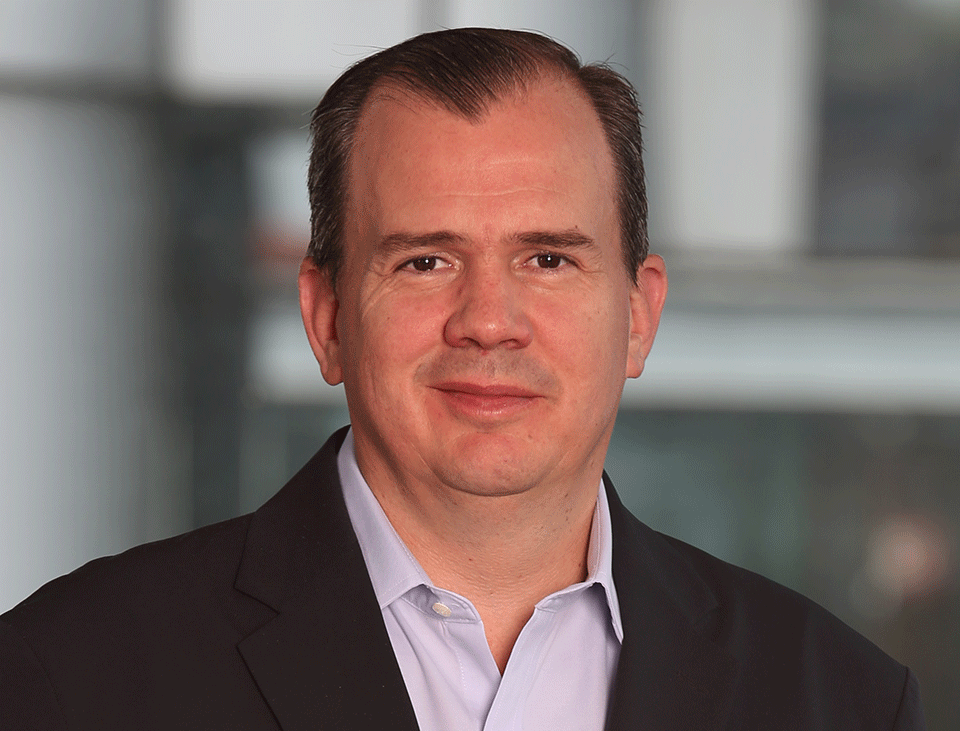
“How’s business?” Euromoney asks of Alexander Dubilet, a man with one of the most challenging jobs in international banking. He is chief executive of Ukraine’s biggest bank, PrivatBank.
The question, of course, is loaded. Ukraine is at war, its economy close to dysfunctional. Members of PrivatBank’s staff have been kidnapped and held hostage, its branches firebombed and its network is under near constant siege from hackers. Also constant is a nasty whispering campaign about the bank, some of the rumours plausible, most of them not, but any of them liable to set off panic.
If all that wasn’t enough, since 2014 PrivatBank has lost as much as 20% of its branch territory, the outlets in the seized Crimea and across Ukraine’s contested eastern flanks. And then there’s its divisive owner and Dubilet’s boss, the oligarch Igor Kolomoisky, whom Russian president Vladimir Putin has called “a unique crook” and a “scammer”.
Not one to back away from a fight with the Russians, Kolomoisky responded by describing Putin as a “schizophrenic shorty, totally out of touch, completely insane”. Putin then personally directed Russia’s seizure of Kolomoisky’s assets in Crimea and Moscow, notably a 400-strong branch network.
Against this backdrop, a pensive Dubilet ponders our question, then shrugs. “It’s complicated.”
Dubilet manages PrivatBank with a world-weary air, at one level lamenting how seriously Ukraine’s turmoil has impacted his business, while at another appearing to take each day’s dramas as business-as-usual. A Soviet-era economics graduate of Dnipropetrovsk’s Metallurgical Academy, Dubilet has been at PrivatBank since 1992 and executive chairman of its management board since 1997.
Few bankers anywhere face the issues Dubilet has in his in-tray. At times, he seems more professional crisis-manager than conventional banker.
“It can be tough,” he says. “Dnipropetrovsk is close to the war zone. For example, we had to move our data centre closer to the middle of the country, away from the vulnerable regions.”
The complication, Dubilet explains, is because PrivatBank is now separated from a considerable part of its franchise – the 6% to 7% that comprised industrial eastern Ukraine, and the 9% to 10% that was Crimea. “I have never been to these regions since they were occupied. I would be arrested. They kidnap people there,” says Dubilet.
He adds: “There is no Ukrainian banking business at all in the occupied territories. The banking system there is sustained by the Russians; it’s effectively part of the Russian network. Russia is simply closing its eyes to rogue banks operating in these territories with no regulation or supervision.”
PrivatBank politics
Igor Kolomoisky built PrivatBank from scratch to become Ukraine’s dominant post-Soviet bank. PrivatBank is now a systemic behemoth, crucial to keeping the sputtering economy functioning, helped in large part because of Kolomoisky’s irresistible proximity to power flowing from his hometown of Dnipropetrovsk to the capital, Kiev.
Dnipropetrovsk has spawned an intermingling succession of post-Soviet presidents, prime ministers and oligarchs. An industrial powerhouse where political and business careers – too often the same thing in Ukraine – are nurtured, it is home to ex-presidents Leonid Kuchma and Oleksandr Turchynov, ex-prime ministers Yulia Tymoschenko and Pavlo Lazarenko, and oligarchs like Victor Pinchuk and Gennady Bogolyubov, Kolomoisky’s partner at PrivatBank.
Former Soviet leader Leonid Brezhnev was born nearby and cut his teeth as Dnipropetrovsk’s communist party secretary in the 1940s, overseeing its war-time defence industry.
The combative Kolomoisky has been a divisive figure in Ukraine. Wielding three passports – Ukraine, Israel and Cyprus – he runs a vast banking to media to oil and petrochemicals empire from Switzerland that was one of the lightning rods that fired the Maidan uprising.
Ukrainians’ revolutionary ire at their omnipotent oligarchs in 2013 didn’t deter the transitional Turchynov government in Kiev from appointing Kolomoisky as Dnipropetrovsk governor in March 2014. After Moscow’s annexation of Crimea and the insurgency in the east, the national army was weak.
With his billions, ‘King Kolomoisky’ as he is sometimes known, raised and financed private pro-Kiev battalions to secure Ukraine’s now contracted eastern frontier and rid Russian-speaking Dnipropetrovsk of its own separatist sympathisers. He’s even offered bounties for captured rebels. Kolomoisky stepped down as governor last year.
Ukrainian President Petro Poroshenko removed Kolomoisky and his pocket armies from the gubernatorial slot last year but Kolomoisky is no less popular for the setback. That Putin taunts him also does Kolomoisky no harm at home. He’s adroitly parlayed Putin’s animus and a very public patriotism to now arguably become the most popular of Ukraine’s oligarchs.
Dubilet has exhorted PrivatBank staff to avoid politics but no one seems to have told the building management at the bank head office in Dnipropetrovsk. A massive banner demanding ‘#FreeSavchenko’ blankets an entire side of the building, dwarfing the concourse flags of Portugal, Latvia, Italy, Cyprus and Ukraine that denote PrivatBank’s international spread.
The banner campaigns for the release of pilot Nadia Savchenko, a state-decorated ‘hero of Ukraine’ captured by rebels in contested Luhansk in 2014 and put on trial in Russia. Three days later, in a town straddling the Ukrainian border, that court will find her guilty of murdering two Russian journalists and of ‘entering Russia illegally’.
Normal banks claiming to steer clear of politics don’t do things like this.
But neither PrivatBank nor Ukraine are normal, and patriotism is a big seller here. Inside, bank staff wearing FreeSavchenko badges sell PrivatBank’s popular credit cards fashioned in the blue and yellow of the national flag, with the client’s name punched in under slogans like ‘Glory to Ukraine’ and ‘Glory to Heroes’.
The Dnipropetrovsk region anchors Ukraine’s crucial buffer zone, the so-called ‘Kolomoisky line’ dividing what remains of Ukraine from the fast-expanding ‘Novorossiya’, or New Russia, as pro-Moscow separatists like to call their conquered domains.

|
|
Dubilet says of PrivatBank owner and former Dnipropetrovsk governor Igor Kolomoisky: “You can’t attract 18.5 million clients by being on the telephone with the governor” |
Says Dubilet: “We are not really fighting in financial markets right now, it’s a fight with the circumstances we are in as a nation. Our competition with other banks is secondary to our dealing with the external situation.”
Russia seized PrivatBank’s operation in Crimea but Moscow continues to press PrivatBank there. A Simferopol court recently ruled that PrivatBank owed its customers $230 million.
Dubilet rejects the ruling: “The customers that PrivatBank had are now customers of a Russian bank, which took over the responsibilities. We could’ve gone to a court here in Dnipropetrovsk, as they have done there, but it wouldn’t make sense. They are doing it by themselves, making rules for themselves. So we have filed cases with the international courts in The Hague against the Russian Federation.”
Rumors
Crimea is not the only fire PrivatBank is fighting. Not least is a widely published claim made by a leading Ukrainian NGO Nashe Groshe (Our Money) that the systemic PrivatBank moved $2 billion of Ukraine’s IMF-derived emergency economic support to a PrivatBank account in Cyprus.
When Euromoney approaches Nashe Groshe’s chief editor Oleksa Shalayskiy to elaborate, he apologises and says he would not like to discuss PrivatBank, “because I don’t want accidentally to be involved into unexpected situations. We wrote that PrivatBank transferred $2 billion abroad, but some media distorted the facts and reported that PrivatBank stole this money from state budget.”
Shalayskiy adds: “PrivatBank violated the foreign exchange legislation of Ukraine. But the bank didn’t steal state money as some media wrote. National Bank of Ukraine should have punished PrivatBank for those actions, but NBU did nothing.”
Dubilet laughs scornfully when the published allegations are quoted to him. “I would like to have $2 billion that I can move from place to place, to move in and out. To put it softly, it’s bullshit.”
Jerome Vacher, the IMF’s representative in Kiev, did not respond publicly to direct questions put to him by Euromoney but pointed out that “the IMF does not conduct transactions through or with commercial banks. When the IMF extends financial support to a member state, it only transacts with the country’s central bank as the fiscal agent of that country.”
There are also persistent rumours that PrivatBank is in need of state-led resuscitation and even nationalization. PrivatBank’s deputy chairman Oleg Gorokhovsky has cited an avalanche of anonymous texts and calls to bank clients warning that the NBU is poised to seize control of PrivatBank.
The speculation reached such a pitch that last November, Gorokhovsky moved to dispel the chatter over the bank’s social media accounts.
‘Dear friends!’ he wrote, ‘Over the last few days we received many words of support from the NBU and the State Deposit Insurance Fund, from politicians and major corporate clients, from top bloggers, writers and famous journalists, and from individual VIP clients and pensioners… I thank you all enormously!’
Gorokhovsky went on to say: ‘Of course, the NBU has not and will not introduce temporary administration. Instead we have got a huge boost due to your faith in us and the responsibility that the bank’s entire staff bears before you – our clients.’
A few days earlier, PrivatBank had solicited a statement of support from the NBU. Deputy NBU governor Aleksander Pisaruk, a former senior executive with Dutch-owned ING Bank, said publicly: “PrivatBank is systemically important for the financial system and it is the largest savings specialised bank servicing 34% of individuals’ deposits in the country. The regulator permanently monitors its operations via curators and pays special attention to all systemic banks. At present, PrivatBank observes liquidity requirements, it is operating as usual and is stably servicing clients.”
Dubilet says he too had received one of these messages on his phone. “I take this campaign as a Russian disinformation attack.”
He rejects any suggestions, oft-heard in the market, that PrivatBank is close to bankruptcy and has received secret loans from the central bank to stay afloat.
“I’ve never heard of these rumours,” he says. “There are no secret loans.”
Dubilet says the NBU has always provided support when needed.
“The last loans they gave were in the spring of 2015, and right now, we are paying back that money,” which he says amounts to around $1 billion, stressing that these arrangements are “very normal” and were provided to sustain deposit stability in the system.
“These were not loans to sustain our bank,” he says. “I want to repeat – there are no secret loans. How is even possible to receive such secret loans?” He says capital outflow has slowed and he has noticed money returning to Ukraine, enabling PrivatBank, he claims, to pay back its obligations to the centre.
Katerina Rozhkova, NBU deputy governor, tells Euromoney that the central bank has no secret agreements with PrivatBank. She says all NBU transactions and dealings are “totally transparent.”
Last November, in a wider banking market it cited as “very weak,” the ratings agency Moody’s said PrivatBank’s baseline credit assessment “remains constrained by the acute pressure on its liquidity and capitalization.
“Moody’s expectation (is) that the bank’s reliance on liquidity and funding support from the National Bank of Ukraine will remain high. Moody’s expects that the bank’s capital adequacy will be under pressure from rising loan loss charges, given the relatively low coverage of problem loans – around 35%.”
PrivatBank’s Dubilet acknowledges “difficulties” but says: “We feel quite comfortable with our capital adequacy” of 10.3%, which he claims is higher than NBU requirements. He says: “The bank is going through a ‘perestroika,’” deploying a term recognisable from the last years of the Soviet Union, the Russian for restructuring.
Money and power
That PrivatBank is big in Ukraine affords it much power. It banks the country’s soldiers and distributes many of the state pensions. Asked if he thought his bank was too big to fail, particularly given Ukraine’s parlous economic condition, Dubilet says matter-of-factly: “Probably yes we are. Many banks have disappeared and we are also more modern than the remaining state banks. But we don’t operate as if our size makes us safer.”
He runs through a list of health indicators. Agricultural is doing well, he says, thanks to recent good harvests. And staff headcount is down 10% in the last year. But corporate clients are under big pressure, he says, and bank profitability has been “dramatically cut.”
PrivatBank is audited by PwC, and its most recent filing – for Q3 2015 – indicates that profit for the first nine months of 2015 was sharply lower than the year earlier: Hrn89.86 million ($3.56 million), compared with Hrn426.95 million. PrivatBank reported profits of Hrn1.87 billion in 2014, in the wake of the Maidan revolution.
“Because of the state of the economy, it is virtually impossible to make a big loan for a big business right now,” Dubilet admits.
Dubilet says PrivatBank has responded by adjusting interest rates on some products. Higher retail rates have helped PrivatBank retain customers and attract new business as well.
He says PrivatBank has gained clients who abandoned accounts held in Russian banks that have long operated in Ukraine, such as Sberbank and VTB Bank and which were swept up in a national ‘Boycott Russian goods’ protest.
Deposits are also higher in areas close to the seized lands, which PrivatBank claims as a statement of loyalty. PrivatBank says its overall quantity of transactions is up by a fifth over the past two years.
“Its all about technology,” Dubilet says, as we walk to the sixth floor, transformed into a start-up hothouse for teams of 20-something developers to create apps and payment platforms. He says security systems are advanced by world standards, mindful of the epidemic of credit card and online fraud between here and Russia. Thanks to Ukraine’s fast and cheap broadband speeds, a by-product of 2014’s social media-led revolution, PrivatBank’s own app can connect the user by video to a personal banker.
(The bank’s management board web page takes the tech obsession almost too far by linking to 360-degree office views of board members, led by Dubilet.)
PrivatBank is also migrating its less-technology savvy customers online, by setting up ‘Magasin’, or shop, corners inside its branches, which educate clients on how to use e-commerce. Another corner has staff dressed as Superman and Supergirl, troubleshooters solving problems, like retrieving cards stuck in ATMs, or locating lost transfers.
As for his boss’s involvement in PrivatBank, Dubilet says he rarely speaks to Kolomoisky, who leaves him alone to run the bank as he sees fit, he says. He insists that Kolomoisky’s term as Dnipropetrovsk governor had no commercial bearing on PrivatBank.
“We didn’t need any governors to do business,” Dubilet says. “You can’t attract 18.5 million clients by being on the telephone with the governor.”