Best global flow house: Deutsche Bank
|
|
Also shortlisted: |
Sales and trading at the world’s biggest investment banks is facing a perfect storm. The long-term headwind is the amount of capital these firms need to hold to provide liquidity to their clients. The biggest storm of the last year has been the billions of dollars of fines handed out to many of those banks in the rates and foreign exchange markets.
Flow businesses, for so long the main driver of many investment banks’ profitability, are challenged. And if you listened to many of its competitors, the bank that faces the biggest challenge of all is Deutsche Bank. That noise intensified when the architect of its markets business, Anshu Jain, stepped down as group co-CEO in June.
But block out that noise for a moment and look at the reality of Deutsche’s flow business. With the likes of Barclays, UBS and Credit Suisse all sounding a retreat, it is the only non-US firm competing on a global scale.
“The biggest structural change for the markets is balance sheet optimization and the inability to do large risk aggregation. Our strategy is based on our ability to play a major role in the post-crisis environment – staying the course and investing in the flow business,” says Tom Humphrey, global head of credit and head of US investment banking at Deutsche. “We are 75% to 80% of the way there in optimizing the way that we deploy capital.”

|
|
The most gratifying growth has been in the US, especially in flow equity derivatives, where we’re close to a top three firm overall, and in the single-stock space
Garth Ritchie |
Deutsche took a different approach to other banks. It did not radically reduce its balance sheet, but rather redirected resources to businesses where other dealers had scaled back and clients’ need for liquidity was particularly high, such as cash bonds and cash equities and liquid equity derivatives.
As a result, Deutsche made big market share gains in key areas such as government bonds, FX options, corporate bonds, cash equities and equity and interest rate options, all of which saw activity pick up dramatically in the first quarter of 2015 as the direction of US and European interest rates diverged.
“Much of this business is about understanding the mega trends, and giving clients the right ideas and pricing in light of those,” says Ahmet Arinc, global head of foreign exchange and emerging market debt trading. “For example, dollar strength and euro weakness have clearly been the most important trend. Our understanding of both markets, but especially the euro crisis, have helped us to increase volumes and revenues significantly.”
One example of this is the currency-hedged exchange-traded fund. During Q1 2015, European equities were among the best-performing globally, with some exchanges rising by more than 20%. But most of that return would have been wiped out for international investors by a similar fall in the euro. Those that had accessed the market through one of Deutsche’s currency-hedged ETFs were able to outperform their peers by that 20%.
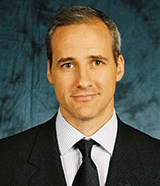
FICC may be what Deutsche is best known for, but in recent years it has been building a substantial presence in equities and 2014 was a breakthrough year. The genesis was in 2012, when the bank shut its equity prop desk, but moved much of its expertise into client business. It has since boosted its franchise across cash equities, equity derivatives and prime brokerage. Global head of equities, Garth Ritchie says: “The business is top five globally by any measure, especially in revenue per headcount and ebit terms.”
Deutsche is replicating the strength of its electronic franchise in FICC in equities, with Ritchie saying that globally e-volumes and profits have risen around 30% in the last year. But, Ritchie says, “the most gratifying growth has been in the US, especially in flow equity derivatives, where we’re close to a top-three firm overall, and in the single-stock space”.
Flow, at its heart, is about providing liquidity, and as all clients know, liquidity is increasingly hard to find from bank dealers. Deutsche’s decision in 2011 to invest in liquidity-seeking electronic trading technology systems has proved its value over the last 12 months. It allows Deutsche to execute large trades for clients at speed, and without moving markets. In credit, rather than offering tight pricing 24/7 on all contracts, it focused on areas where it could offer most value to clients, especially when issuance was weak and volatility high: for example, executing a $500 million financial single-name credit trade for a leading US institution during the high-yield market dislocation in August 2014.
Deutsche faces two big challenges. The first is its credit rating, which was cut to BBB+ in June by Standard & Poor’s and is likely to affect some counterparty relationships. The second is the narrative and questioning around whether or not the firm has the strategy and desire to remain in these markets. It seems harder to fathom when you look at the numbers.
“For 2014 our fixed income market share in the US was ahead of five US banks,” says Humphrey. “We are more relevant in the US than our US competition are in Europe.”




