Best global M&A house:
Goldman Sachs
|
|
Also shortlisted: |
In late February 2014, with the M&A business finally blooming after a long hibernation, large, strategic multi-billion deals that corporate strategy groups and their advisers had quietly talked about for years were suddenly flowering. The biggest then was Comcast’s $45 billion proposed acquisition of Time Warner Cable.
Goldman Sachs, long-time leader of the M&A rankings in the business for which the investment bank is still best known, wasn’t on the ticket. It looked like it had backed the wrong horse, working with Charter, which had also harboured designs on Time Warner Cable. Goldman found itself on the outside looking in.
“At the end of February 2014, we stood ninth in the announced M&A league tables,” recalls Gregg Lemkau, co-head of global M&A at Goldman. “We guided the team not to worry: it was only February. We ran analysis that showed we were rarely number one this early in the year yet would still end up on top. But it wasn’t just ranking ninth, it was how far behind we were – nearly $100 billion. While we put on a positive spin, we were all anxious about realistically overcoming such a large gap.”
Investment bankers always say they pay little attention to league tables. But this was gaining notice at partner meetings.
So, no pressure then.
By the end of the year something remarkable had happened. It was not so much that Goldman was indeed back on top of the M&A announced-volume league tables with over $1 trillion and a 29.7% market share, ahead of second ranked JPMorgan with $770 billion and 21.5% share, Morgan Stanley with $724 billion and 20.2% share and BAML with $718 billion and 20%. Even more noticeable was the lead in M&A revenues. While Goldman earned over $2 billion of M&A revenue with a 9.7% share, its great traditional rival Morgan Stanley brought in $1.375 billion, a 6.5% share.
Turnaround
It was a turnaround that leaves rivals struggling to comprehend. “They are just very aggressive on fees and probably do more sell-side work on which the fees are better,” says a source at another bank. “Goldman Sachs is like [US] congress. Everyone hates congress but loves their own congressman. Everyone hates Goldman, but everyone loves their own Goldman banker.”

|
|
It’s important to have a group that can offer real-world experience and insights into the usual tactics of other sponsors
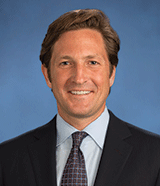
Gregg Lemkau, |
Lemkau says: “Clients find a way to reward the banks that are really helping them. When we try to measure market share, in addition to deal volume and fees earned, the metric we look at is number of transactions over $500 million in size: trying to gauge who are companies turning to on the deals that matter most to them. There too, we have a strong lead in market share.”
Lemkau sees new trends at work in M&A. “The primary trend is that the big, strategic consolidating transactions that marked the start of this recent M&A wave over the last 18 months in pharmaceuticals and TMT now seem to be spreading to sectors such as energy and power, consumer and industrials. This has been further fuelled with an increase in hostile activity brought on by an apparent decline in the stigma associated with failing to complete hostile deals. Investors are rewarding companies for trying to do something to enhance value.”
With a long-time renown for raid defence and advice on shareholder activism, Goldman should stay busy.
A key deal of the last 12 months was defending Allergan against an unsolicited approach from Valeant, which had teamed up with activist investor Pershing Square Capital Management, and on the eventual $66.4 billion sale to Actavis.
Lemkau says: “There was a lot of pressure on the target to engage, but our defence strategy was threefold: to make the case the bid undervalued Allergan and that there was more upside on a standalone basis; to debate the value of the bidder’s equity, given the meaningful component of stock in the deal; and, finally to consider using Allergan’s own balance-sheet capacity to evaluate alternative value-creating transactions. In the end, the strategy served to buy an appropriate amount of time to allow Actavis (which had just done a large deal when the Valeant bid was first made) to make its own knockout bid. Our client’s shareholders ended up getting a substantially greater value as a result.”
The edge
Having stuck by Charter, Goldman is now back representing it in a new approach from Charter for Time Warner Cable after regulators changed the rules around broadband to consider it provision of a utility service so disqualifying Comcast’s bid.
Goldman is always looking for an edge. The latest is to build a new financial sponsor group led by Stephanie Cohen to cover not just the big private equity firms themselves that are such regular buyers and sellers of corporations but also their portfolio companies in expectation of the roles they might play in consolidating their own sectors once sold.
“In many sponsor M&A situations, the bidders are other sponsors or their portfolio companies,” says Lemkau. “In addition to having bankers with industry-sector knowledge, it’s important to have a group that can offer real-world experience and insights into the usual tactics of other sponsors – ‘this firm tends to lower its bid in the second round, that firm always presses the flex on the debt, this contract term is something we have gotten from this firm on a recent deal’– those kind of things.”



