|
|
|
|

|
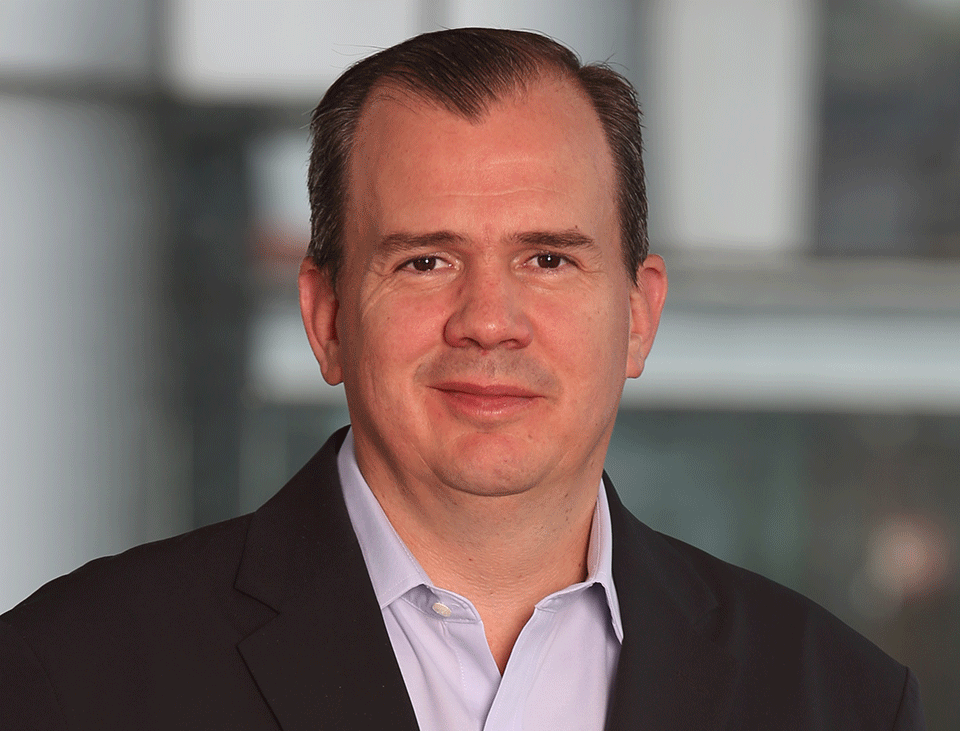
Ralph HamersING |
|
Reports last month that ING was bidding for HSBC’s Turkish unit was the latest sign that it is, once again, a bank on the rise. The news came barely a month after the group sold down its stake in its former European insurance arm, NN, to below 50%. Prior to that sale, ING was banned from making any acquisitions at all – a condition imposed by the EU’s anti-trust regulator on a €10 billion bail-out by the Dutch state in 2008.
As the switch to a focus purely on banking continues, the dark days of 2008 seem to be dropping out of view. Since NN Group’s IPO just over a year ago, ING has repaid the last instalment of its bailout money. It has given shareholders its first dividend since the crisis. And it has completed a series of divestments and rationalizations, including an exit from its former American insurance business, Voya, in March. In April, it merged its Indian bank with Kotak Mahindra Bank (ING retains a 6.5% stake).
ING’s headquarters in Amsterdam today characterise an institution that – if proud to be different – is still subdued in comparison with its pre-2008 days. Since then, the bank’s head office has returned to a building that sits opposite a branch of German discount supermarket Lidl in what seems, at first glance, nothing more than a small-town shopping centre. It could hardly be more different to its futuristic headquarters of the early and mid-2000s – a monumental structure alongside the Amsterdam ring road, known locally as The Shoe, that the bank now leases out.
Entering the lobby of ING’s present headquarters, it is evident that someone has tried to add a millennial twist to an otherwise drab 1980s atmosphere. A wall of screens shows the bank’s chief executive, Ralph Hamers, giving one of his characteristic TED Talk-style speeches – microphone on head, moving around the crowd, speaking animatedly and without prompts. At investor presentations and elsewhere, Hamers tries to get away from the image of the staid bank CEO speaking from a podium.
In a Fox Business television interview in Davos this year, anchor Maria Bartiromo introduced Hamers as “the Steve Jobs of banking”. That could be going too far, but ING’s long-standing leadership in digital banking, dating back at least to the launch of ING Direct in 1997, is without doubt a big factor in attracting investors to the bank’s shares. After its restructuring and the rebuilding of its capital base, digitalization is a distinctive driver of growth and efficiency, says Julie Legrand, banks analyst at Oddo Securities in Paris.
The proportion of ING’s revenues from pure digital banking – around 20% – far exceeds its peers, says Legrand. “ING has a strong lead over its competitors in digitalization; it’s been a pioneer in the business.”
OVER THE PAST YEAR, THE BANK’S success in digital banking has been most evident in Spain and, above all, Germany, which overtook Belgium to become ING’s second-biggest earner after the Netherlands in the first quarter of 2015, accounting for around a quarter of pre-tax retail banking profit.
ING’s retail franchise is purely online in Germany, but despite that lack of physical branches, it has around 8 million customers in the country, according to Hamers.
|
“The way we do things and the way we deliver our services to clients should make clients feel empowered to do things themselves. You should feel really in charge of how it works” |
“Now we are the third-largest bank after Deutsche and Commerzbank,” he says.
With ING on track to exit its stake in NN Group before the end of 2016 via a series of follow-on offerings, Hamers and his team are focusing on what they see as competitive advantages in digital banking, and as a digital brand, to win over more customers and sell more loans, in particular outside Benelux, where it is an incumbent.
ING’s focus on digital-only banking is already paying off in terms of far lower costs than its high-street competitors in Germany, Italy, Spain and Australia.
“The markets [in France and Italy] are a little bit different,” he says. “We know the Spanish like digital. The Spanish banks are also at the forefront of developing digital, so Spanish clients know the possibilities of digital. Maybe that’s less in other markets. That’s why you see a bit of a difference. The question is really whether clients are open to do banking online.”Hamers admits the bank has been less successful in France and Italy, where ING has won over far fewer clients, about 1 million in each country – although it does boast a lower cost base than peers in Italy. He attributes that less rapid take-up in France and Italy to the low level of openness to online banking in the population, which he says could be partly due to the groundwork (or lack of it) done by his competitors. In Germany, its pre-tax profits increased by more than a third to €866 million in 2014, in part thanks to a cost-to-income ratio that fell to 47% from 51% in 2013, and just 43% in the first quarter of 2015. In Spain, ING now has more than 3 million clients, despite only having 26 branches. That makes more than 100,000 customers per branch, compared with a Spanish overall system-wide average of just 2,000 customers per branch.

|
That does not mean, however, that the strategy is flawed, in his opinion – or that it has hit a barrier to growth in the shape of an immutable cultural difference. This is a man, after all, who has clearly breathed in some of the San Francisco Bay optimism of the possibilities for change unleashed by the internet.
“What you normally see, and what you will hear from the Silicon Valley talks, is that digital growth is generally exponential,” he says. “You don’t see the success of a venture until it’s too late. It starts small, and then business doubles every year, and then suddenly – it’s there. That is the way it happens, the moment it takes off.”
Hamers hopes the same could happen to ING’s business in France and Italy. But as reports of a bid for HSBC’s Turkish business illustrate, the bank is also looking to build market share in faster-growing markets, particularly around Europe – in Poland, Turkey and Romania, where it operates under its own brand – and in some Asian markets. As well as the stake in Kotak, it has minority interests in two other lenders seeking to grow in retail via digital channels: TMB Bank in Thailand, and Bank of Beijing.
HAMERS WON’T COMMENT ON THE Turkish bid, and recognises that integrating acquired banks can be more trouble than it is worth, especially if they were previously underperforming. However, much of the bank’s existing franchise is the result of mergers and acquisitions. Its German franchise is partly based on the acquisition of DiBa Bank in the late 1990s, and ING itself was formed from a Dutch insurance and bank merger in the early 1990s.
Yet the bigger focus outside Benelux today may remain moving away from what Hamers calls “the old ING Direct model” – taking deposits and investing in securities – by building its loan book to gain “a more diversified balance sheet”. Partly due to mortgage prepayments (a trend across the Netherlands) ING’s Dutch retail loan book shrunk by €3.7 billion in 2014. “We are over concentrated on mortgages; we want to decrease the concentration as a percentage of our assets in mortgages,” says Hamers. After the lapse of the EU’s acquisition ban, the bank has alerted shareholders that it could make new acquisitions to build up scale in a country, although the strategy is “first and foremost an organic one”, according to Hamers. “If there is consolidation happening in a market in which we are active, we have to take a look as to how we want to go about that change in that market.”
Instead, outside Benelux, ING is shifting from a savings-focused model in online retail banking, to grow its total lending by around 4% annually in the coming years, by focusing on wholesale lending to capital-intensive industries around the world. It also wants to focus on new consumer and SME businesses in Germany, Italy and Spain. While it has already launched SME lending in Spain, in Germany, customer lending jumped to €13.2 billion at the end of March, up 43% over the past 12 months, mainly due to consumer lending in Europe’s biggest economy. It is also what one rival calls “a rising star” in infrastructure financing.
|
“ING has a strong lead over its competitors in digitalization; it’s been a pioneer in the business” Julie Legrand, Oddo Securities |
“We’re moving that model to a savings bank that supports the real economy,” says Hamers.
The bank has also recognised that it is easier to sell a variety of products, including loans, to retail clients who have more frequent contact with the bank and who use the bank’s website and mobile apps to carry out day-to-day payments. Although outside Benelux the number of primary banking customers remains less than a quarter of the total, that number grew more than twice as fast as overall customer numbers in 2014, with the switch particularly evident in markets such as Germany and Spain.
Overall, Hamers says the bank is acquiring between 800 and 1,000 customers per day in Germany, and between 300 and 400 customers a day in Spain. That growth, without the cost of branches, is attracting the attention and sometimes concern of competitors, some of who are asking why their online banking divisions are lagging behind. “It’s not because we have a completely different products from our competitors,” says Hamers.
On the contrary, the secret of banking in the digital age, according to Hamers, is to accept that your products are, at base, interchangeable commodities. So the only way to stand out (apart from price) is to do as much as you can to make more customers believe your bank works better online than others – above all, so that they enjoy spending, investing and repaying money with you.
“You can’t differentiate too much in the product,” he says. “That’s old-style banking, in my view. What you can differentiate is the experience.”
According to Hamers, making what he calls a differentiating experience and a differentiating brand means properly tailoring your service to digital banking, so that customers feel happy applying for accounts – or making transactions – without the help of a salaried employee in a branch. “The way we do things and the way we deliver our services to clients should make clients feel empowered to do things themselves,” he says. “You should feel really in charge of how it works.”

|
That means making online banking easy to understand and, above all, quick, so there are relatively few steps involved in making a payment or taking out a loan, or even just opening an account.
“You have to make it really, really easy,” says Hamers. “We want to make sure that when we introduce a new service, that it fits with what clients expect from ING – which is simple and clear and available anytime, anywhere. The brand is a result of your experience; it follows.”
He says the trick is no different in commercial banking when it comes to delivering the bread and butter of corporate banking transactions, online and via mobile banking applications. “We do the same in the commercial bank,” he says. “With daily banking products, you have to make it easy, a good experience.”
One problem for many banks, according to Hamers, is that they try to make customers do much the same thing online that a salaried employee used to do for them in a branch. “You have to reinvent the process,” he says. “If you just keep that process and put it online, the experience is pretty bad, because the expectations of clients that go online as to how quickly you can deliver is completely different from clients who go to the branch.”
Hamers suggests large investments of time and effort by the bank’s staff are therefore worth it, if it saves millions of online customers only a tiny amount of time and effort in what they have to do to bank with you.
“We have people sitting in a room for a week. They are happy if, after a week, they can reduce the number of clicks in online banking by one, because we know that that will keep customers for longer with us, to choose to work with us,” he says. “Making banking simple is not simple; making banking easy is not easy.”
HAMERS’ BACKGROUND, IN FACT, is fairly standard for a bank CEO. A spell in structured lending at ING in the early 1990s gave way to posts running a variety of the bank’s core divisions, before he was appointed to the top job in 2013. But his style is sometimes more reminiscent of the CEO of a North American start-up, than a northern European bank; his speech is peppered with tech jargon.
According to Hamers, making sure the bank has the right management practices in place to be able to use new technology to rapidly redevelop the processes behind banking, to make it easier, is an essential part of staying ahead in the digital game. “You have to be very quick in developing changes to your services and products,” he says.
He says banks’ more traditional methods of launching online products – where a marketing department might make the case to management, who would send the idea to a product development department, who would send it to the IT department, before it was finally launched to the public – could take about 18 months.
|
“We are over concentrated on mortgages; we want to decrease the concentration as a percentage of our assets in mortgages” Ralph Hamers |
His characterization of ING’s more up-to-date way of working as deploying “agile scrums” and “multidisciplinary teams” might sound like the latest fashion in management wisdom, but it would be hard to argue with the idea that more closely integrating the IT staff with the marketing staff and the product development staff is an approach that is more suited to the present day, particularly for a bank like ING. “When it comes to digital, it’s that it is not about IT and it is about IT,” he says, with an air of mystery.
“It is about IT because in the end IT makes a difference,” he explains, “but you can’t just ask your IT guys to do it. It’s about how you change your way of working.”
He gives the example of fingerprint identification, which ING introduced last year for the first time in Belgium for its iPhone app. More than half of users switched to logging in with their fingertips within one week after the bank launched this new security feature, which was just six weeks after Apple made the technology available. ING introduced the same process in the Netherlands six weeks later, and again in Germany six weeks after that.
Launching biometric identification quickly was crucial, says Hamers, because it improves its customers’ online experience (as he terms it) in day-to-day banking – in other words it makes it easier, particularly in comparison with other banks, by doing away with some of the clutter of banking security.
“We have competitors whose customers still have […] to use a box to get a code to approve their payments,” says Hamers. “That’s not a good experience, but it’s the same product.”