|
Austria
|
Substantial exposure to Russia and Ukraine combined with an unorthodox decision by the Austrian government in June to bail-in subordinated bondholders in nationalized bank Hypo Alpe Adria have not exactly helped bring stability back to the country’s banking sector. Indeed, the crisis in Ukraine and the government’s intervention have brought fresh turbulence to an already challenging year for Austrian banks. The bank however, that has shown greatest resilience, growth and development amid such a difficult domestic and regional environment for banking is UniCredit Bank Austria.
Its financial performance in 2013 and so far this year has been healthy, and with a core tier-1 capital ratio of 11.3% at the end of last year it is one of the best capitalized banks in Europe, and in a stronger position than most Austrian banks to withstand the turbulence besetting the country.
Its decent performance last year – operating income was up 4.2% at €6.9 billion compared to the year before, helping to deliver a 7% rise in operating profit to just over €3 billion – has carried through to 2014, and in the first quarter the bank delivered net profit of €350 million, marking a healthy 25% increase on the same period a year earlier.
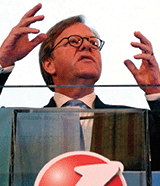 |
| CEO Willibald Cernko. UniCredit Bank Austria has had a good start to the year |
Unicredit Bank Austria’s CEO Willibald Cernko said this marked a good start to the year, particularly given some of the other challenges Austrian banks are facing as a result of low rates and restrained credit demand. In addition, net writedowns of loans fell 22.6% to €190 million in the first quarter, and the bank’s direct funding ratio further improved, underlining its strong liquidity position.
The bank that played a leading role in all the main areas of investment banking in the past year is Deutsche Bank.
Deutsche wins the award for its strong performance across markets, ranking number one in equity capital markets and equity research, and second in equities trading and all corporate finance activity, according to Dealogic. It was also ranked third in Austrian M&A and fifth in debt capital markets.
Among Deutsche’s ECM trades, the one which best highlights the strength of its Austrian franchise, was the €2.8 billion capital increase for Raiffeisen Bank International in January.
Deutsche acted as sole process bank, joint global coordinator and joint bookrunner on the deal, which was the largest accelerated offering in Austria, the third largest ECM transaction in Austria, and the largest bank accelerated offering since Deutsche’s own capital raising in April 2013.
 |
Belgium
|
BNP Paribas Fortis’ financial performance in 2013 alone provides ample evidence to support its case for winning the award this year. In the full year, the bank recorded a 10.8% increase in total revenues to €6.61 billion compared with a year earlier, which, in turn, helped drive an impressive 149.8% rise in pre-tax profits to €1.5 billion for the year.
Combine that with more than 5% growth in total deposits and more than 10% growth in total lending and the bank has had a strong year across its retail and corporate banking businesses in Belgium.
A group restructuring at the end of 2012, involving a rationalization of its branch network, helped provide some momentum, but beyond cost control the bank has grown and developed its product offering, which has had a positive impact.
In retail and private banking, for instance, BNP Paribas Fortis launched new savings and investment products, as well as the ‘bank for entrepreneurs’, which aims to provide banking expertise and solutions to the self-employed, members of the liberal professions, and small and medium-sized companies.
The bank also made considerable investments in its digital banking platforms, such as its smartphone and tablet app; a mobile payment terminal for smartphones; and an electronic wallet that makes payments on the internet much simpler and more convenient.
In its corporate and public bank, BNP Paribas Fortis adapted a number of its processes to strengthen its relationship banking model. It integrated its trade finance operations within the rest of the division, and its joint approach to cash management, global trade solutions and fixed income led to a successful campaign to promote the bank’s capabilities in renminbi with clients doing business in and with China.
In investment banking, it was a particularly close fight between BNP Paribas and Deutsche Bank this year, with both ranked number one during the awards period in investment banking market share and fee earnings.
But for Deutsche Bank’s role advising on high profile transactions and gaining lead positions on some of the largest deals across M&A, DCM and ECM, the German investment bank wins the award.
One of those deals was its advisory role on brewer AB InBev’s landmark €16.1 billion acquisition of a 50% stake in Mexican-based Grupo Modelo – the largest M&A deal in Belgium since 2008. Deutsche advised AB InBev on that side, and advised on its €2.2 billion divestment of Mexican based Compania Cervecera De Coahila. These were the two largest cross-border M&A deals over the period.
The relationship with AB InBev provided Deutsche with business in DCM too, where the bank was mandated as bookrunner on three of the company’s bond issues, amounting to €7.7 billion in aggregate across dollars and euros. Deutsche was also active for financial institutions, bookrunning covered bonds for KBC Bank and for the sovereign, leading the Kingdom of Belgium’s €2.5 billion issue.
Of three cross-border Belgian ECM deals completed in the past year, Deutsche was joint bookrunner on two – Apollo’s €237 million US IPO of speciality chemical company Taminco and its €200 million follow-on offering.
 |
France
|
With 11 million retail clients served through Credit du Nord, as well as its own-brand branches and the country’s leading online bank, Boursorama, Société Générale is the best bank in France this year. There are larger banks, but Société Générale is tilted to serve more affluent individuals as well as French corporations and that has helped it manage risk.
 |
| CEO Frédéric Oudéa has pushed Société Générale to mediate long-term funding solutions for business |
Chief executive Frédéric Oudéa has done a good job in helping smaller French companies transition away from dependence on bank lending towards raising more committed long term-funding from investors such as Axa, with which it has an arrangement to originate private placements that the insurance company will mostly provide but in which Société Générale also retains a slice of exposure. This year the bank put its renowned product innovation to use for small French corporates by devising, along with Euronext, a new index to track the performance of small-cap stocks. By creating retail investments sold to branch clients against this new index, SG embraced a government scheme supported by tax incentives to enable smaller French companies to raise more equity capital to fund their growth.
Société Générale has also been a good partner for larger French companies this year. It was a lead underwriter, arranger and bookrunner of the €3 billion revolving credit facility for Peugeot placed in March. The transaction was a strong market success: it was launched at €2.7 billion, was oversubscribed by 25% and increased to €3 billion. It gathered commitments from a large and diversified pool of 23 banks, including seven new lenders. This deal increased PSA’s liquidity and lengthened liability maturities for the B+/B1 rated borrower.
Société Générale has also played a lead role in key French infrastructure finance transactions, arranging for Barrage VNF a €300 million 30-year placement to modernize and upgrade the French waterway networks. It also arranged 30-year financing of €620 million for the L2 Marseille road bypass project.
In the debt capital markets, BNP Paribas leads the league tables of bond arrangers in France and demonstrated abilities across corporate, financial and public sector issuances, providing French borrowers with optimal funding in euros, US dollars, sterling and Swiss francs and access to diversified types of investors beyond traditional public bond markets, such as private placement, Schuldschein and hybrid capital buyers. It was joint bookrunner of Orange’s multi-tranche €2.8 billion inaugural hybrid issue in euro and sterling this January. It was global coordinator and joint bookrunner of GDF Suez’s multi-tranche €1.7 billion equivalent perpetual subordinated notes in July. It arranged Fromageries Bel’s €220 million equivalent inaugural Schuldschein issuance last June and was sole placement agent of Essilor’s $500 million US private placement.
It was joint bookrunner of the largest ever euro-denominated multi-tranche issuance in the history of the catastrophe bond market for Axa with a €350 million deal utilizing an insurance industry loss trigger weighted by geography and line of business and featuring a variable risk/adjustable coupon structure, providing Axa with the flexibility to hedge its natural catastrophe exposures dynamically while providing investors with a risk adjustable return. It also led key high-yield bond issues for French companies owned by private equity investors.
Société Générale CIB tops the league table by number of ECM deals for French issuers in the period under review, acting as bookrunner on 25 transactions, compared to 17 for its closest rival. Notable transactions include acting as sole global coordinator for Suez Environnement on its inaugural equity-linked offering, a six-year €350 million convertible bond. In January, SG CIB was sole global coordinator on a placement of 8 million Airbus shares for €452 million through an accelerated bookbuild, the second such deal it has done over the past year for the French state and a confirmation of SG’s strong equity distribution capacity.
In the global M&A market Lazard has led the advance of independent investment banks cutting into market share once commanded by the large universal banks and been the leader in French M&A. It thrives on complexity and transactions involving multiple parties.
The creation of BPI France involved no less than six parties and Lazard’s role as sole advisor to the state and CDC coordinated the resulting multiple interactions and led the parties to a successful outcome. Similarly, as sole advisor to DongFeng Motor Group, Lazard was instrumental in coordinating and elaborating the new partnership between PSA Peugeot Citroen, DongFeng, the French state and the Peugeot family.
In 2013, Lazard also continued to lead the French restructuring market, and advised on the largest restructuring transactions throughout the period under review, such as Saur, Terreal and Frans Bonhomme. It acted in the French LBO market for a range of financial sponsors, especially in the last six months, as illustrated by the disposals of Permaswage, Parex and Maisons du Monde.
 |
Germany
|
Deutsche Bank’s recent announcement of its €8 billion equity capital raising was intended by its co-CEOs Jürgen Fitschen and Anshu Jain to lay to rest persistent questions over its capital position – the kind of questions that more and more German banks are likely to face after the Europe-wide asset-quality review takes place later this year. Germany’s notoriously overpopulated banking sector may finally start to see consolidation soon after the ECB’s comprehensive assessment takes shape. HVB is understood to be looking at the sale of DAB Bank, while HRE has opted to sell its Ireland-based unit Depfa and is also understood to be looking at a disposal of Deutsche Pfandbriefebank. Deutsche Bank itself sold BHF to Kleinwort Benson and RJH in March this year. Germany’s best bank has now cut risk weighted assets from €401 billion at the end of 2012 to €373 billion in March 2014 and trimmed its cost base by 8% in 2013, from €25.1 billion to €23.2 billion. Despite the slump in investment banking revenues that the bank has suffered in the first half of 2014 it generated revenues of €30 billion over the awards period – one of its best-ever years in terms of core operating performance.
Goldman Sachs has had a stellar year across German M&A, ECM and DCM and this year takes the investment bank award in Germany from incumbent Deutsche Bank. It is also best M&A house in Germany. Goldman was the leading bank in the most prominent deals of the year – Vodafone’s takeover of Kabel Deutschland, McKesson’s takeover of Celesio and the stock-for-stock merger of GSW and Deutsche Wohnen. The latter was the largest German real estate M&A transaction in eight years. Goldman wrote $50 billion-worth of business through 24 deals in German M&A over the last year, strengthening its position not only in the public market but in private equity as well. It was behind the sale of Springer SBM by EQT to BC Partners, the largest German LBO since 2007, and the sale of Grohe to Lixil by TPG – the largest German acquisition ever by a Japanese company. In the equity markets the US bank was involved in a series of high-profile IPOs, including a spin off, two dual tracks and a re-IPO. These included the accelerated bookbuild offering and cash-settled contract structure for the €2.3 billion EADS ABO. This enabled Daimler to reduce the size of the placement to tighten the discount on the block and retain participation in an economically compelling stock.
Deutsche Bank retains both the debt house and equity house awards in Germany this year with another strong performance in its home market. In DCM it was instrumental in several landmark deals such as both inaugural Commerzbank Pfandbriefe benchmarks and the reopening of the capital markets for Sparkasse KolnBonn after five years with a €500 million mortgage-backed covered bond. It also spearheaded a new financing tool for municipalities with a combined deal for the six municipalities in North Rhine Westphalia. It was equally strong in the subordinated debt market as advisor and bookrunner to ENBW’s €1 billion hybrid in March and Deutsche also led the Allianz SE €1.5 billion Perpetual non-call 10 subordinated bonds in October 2013, the first euro insurance perpetual since 2008. Deutsche Bank’s own €3.5 billion AT1 deal – just outside the period of consideration for these awards – attracted €25 billion in orders and is expected to herald a flood of such deals from German banks over the next year. Stand out ECM deals include the €1.3 billion re-IPO for RTL – the second largest EMEA IPO in 2013 and the largest European media IPO since 2004 – and the bank’s own €2.9 billion accelerated capital increase in April 2013. Deutsche was also joint global coordinator on Commerzbank’s €2.5 billion rights issue in May 2013, which enabled the lender to repay its remaining state support.
 |
Greece
|
To date, 2014 has been an exceptionally good year for Greece’s banks. After an investor visit to Athens that Deutsche Bank organised in May, it commented that although the government had just returned to the international capital market, “the bigger story is the amount of equity capital raised by Greek banks in recent weeks”. And how. In a matter of weeks, Greece’s four largest banks raised €8.3 billion in new equity. As Deutsche remarked, this comfortably covered the banks’ stress-test requirements and took liquidity levels “meaningfully ahead” of those agreed with the Troika.
That makes each of the big four a worthy candidate for best bank in Greece. But while the Greek banks’ equity issues all helped to rehabilitate Greece’s image in the international market, it was the blow-out €500 million bond for Piraeus Bank in March that makes it Greece’s best bank this year. The three year bond issue, which generated demand of €3 billion, was the first international issue from any Greek borrower since 2010, and was credited with reopening the market for a swathe of other banks and corporates.
The bank’s €1.75 billion equity issue the same month, meanwhile, allowed Piraeus to repay the government’s €750 million preference shares. It also meant that the bank brought its core equity tier-1 (CET) ratio to 14.4%, leading Michalis Sallas, Piraeus’s chairman, to declare that Piraeus is one of the “strongest capitalized banks in Europe”. That may be an exaggeration, but Piraeus remains Greece’s strongest by a number of yardsticks: at the end of 2013 it led the Greek market for gross loans (with a 30% market share) and customer deposits (29%).
The most visible indication that the worst is over for the Greek economy came in early April, when the Public Debt Management Agency (PDMA) raked in orders of €20 billion for the €3 billion five-year bond that marked Greece’s return to the international capital market after an absence of four years.
Six international banks led the PDMA’s momentous transaction. Each of those banks has played an important role in the renaissance of Greece’s capital markets, but none can match the all-round contribution of Deutsche Bank. Building on the prominent role it played in the private-sector involvement and in the government’s €61.4 billion bond buyback in 2012, Deutsche is the only bank to feature among the top five banks in M&A, as well as in both Greek equity and debt capital markets.
In addition to supporting the return of the sovereign and other leading Greek borrowers such as Public Power Corp (PPC) to the international capital market, Deutsche has played a pivotal role in Greek privatisation and in the recapitalization of the banking sector – both of which are essential components of the country’s overall economic recovery programme. Recent highlights have included Deutsche’s role as a joint bookrunner on Piraeus Bank’s five-year €500 million transaction and in its €1.75 billion capital increase, both of which were successfully completed in March, helping to pave the way for the PDMA’s benchmark.
Deutsche has also underscored its leadership in the Greek shipping industry over the last year, helping to raise more than $680 million of equity and $1.7 billion of debt for several companies in the sector.
 |
Ireland
|
Despite the enormous improvement in investor sentiment towards Ireland over the last year, the country’s banks still face an uphill battle for profitability. Non-performing assets continue to weigh on the system and Irish banks could face additional provisions against bad loans this year as the ECB stress tests start to bite. Despite this all three domestic Irish banks tapped the market over the last year across a variety of products and Irish issuers have benefitted from the spread compression that has accompanied the return by investors to the periphery.
Morgan Stanley is Euromoney’s best investment bank in Ireland for 2014, having been at the forefront of the country’s return to the debt capital markets. It was joint bookrunner on Bank of Ireland’s three year €500 million senior unsecured deal in May last year, which reopened this part of the market for Ireland’s banks with the first fully unguaranteed issuance since the crisis.
Morgan Stanley was also the sole lead on the first publicly marketed Irish RMBS for over six years with Permanent TSB’s Fastnet 9 €500 million deal in November. The order book attracted €1.5 billion of interest and final pricing of 165 basis points over Euribor was a long way through secondary levels. The deal remains the only securitization from an Irish bank post-crisis. Another first was Ireland’s €3.75 billion bond issue in January, the first Irish debt offering since the country exited the EU/IMF programme in December 2013. The deal attracted €14 billion of orders and achieved the lowest price for Ireland since 2007. Morgan Stanley is the only bank to lead capital markets transactions for all three domestic Irish banks and has led the relaunch of covered bonds, bank senior unsecured and RMBS products.
 |
Italy
|
Announcing a €14 billion annual loss is not normally a precursor to being named Euromoney’s best bank but that is the case in Italy this year. UniCredit did just this in March, in what was effectively a wholesale clear out of its balance sheet before the Europe-wide stress tests later this year.
Increased loan provisioning and asset revaluations, together with a goodwill write-off related to a series of acquisitions in eastern Europe, led Italy’s largest bank to a €15 billion loss for the last quarter of 2013: a sobering result, but one that draws a line under its recent history.
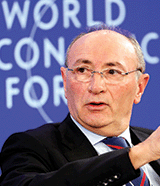 |
| Federico Ghizzoni, UniCredit CEO. The bank’s clear-out has set it in the right direction |
Indeed, first quarter profit at UniCredit was up 59% this year from €449 million in 2013 to €712 million. Chief executive Federico Ghizzoni said this result confirmed the effectiveness of UniCredit’s strategy and demonstrated that the group was heading in the right direction. Italy has 700 banks with total assets of €3.5 trillion, 225% of GDP, so UniCredit is unlikely to be the last Italian bank to undertake this kind of exercise. Indeed, Intesa Sanpaolo recently posted a €5.2 billion net loss after writing down the value of its bad loans and goodwill by almost €9 billion.
According to the Italian Banking Association, non-performing loans in the sector stood at €155 billion at the end of 2013. UniCredit has avoided the need to raise further capital in advance of the stress tests, something that cannot be said for all 15 Italian lenders that will be subject to the ECB’s review. Monte dei Paschi di Siena is looking at a €5 billion equity raise, along with five mid-sized banks that between them will raise €10 billion of new capital. Banca Popolare di Milano launched a €500 million share sale in early May and Genoa-based Banca Carige was due to launch an €800 million deal as Euromoney went to press.
UniCredit tops both Dealogic’s DCM and ECM rankings for the awards period but our investment bank award in Italy goes to Goldman Sachs again this year. The US bank has a 31% share of Italy’s M&A sector and advised on three of the five largest transactions in the country. These included Fiat’s acquisition of the remaining 41.5% stake in Chrysler, the demerger of World Duty Free from Autogrill and the sale of Exor’s stake in Swiss inspection company SGS to Groupe Bruxelles Lambert. The Fiat deal was the culmination of a process begun in 2009 and used a proprietary M&A structure involving redomiciling and double listing.
Goldman also acted as left lead joint global coordinator and joint bookrunner on the Moncler IPO – the largest Italian listing since 2010 and the largest global luxury IPO since 2011. Its strength in Italy’s IPO market was further underscored when it was global coordinator on the listing of Anima in April 2014. In the debt markets Goldman dominated both subordinated FIG and corporates, with deals for Intesa Sanpaolo, Generali, UniCredit and Telecom Italia.
 |
Luxembourg
|
The battle between western financial centres to command the largest slice of the offshore renminbi market outside of Asia has intensified in the past year, with Frankfurt, London, Luxembourg and Paris jostling for position and laying claim to be the preeminent trading hub for the currency.
That war has yet to be won but the tiny Grand Duchy of Luxembourg has arguably played the most astute game so far in positioning itself as a leading offshore financial centre for all things renminbi. What certainly helps is having the European headquarters of China’s three largest banks.
Bank of China, Industrial and Commercial Bank of China, and most recently China Construction Bank, all control their European banking operations and business from Luxembourg, helping make the country one of the main gateways through which Chinese investment flows to Europe.
Capturing offshore renminbi business is of course important for Luxembourg, providing one very big engine for growth and development. And aside from the role the Luxembourg government and the Ducal family have played in the country’s rise as an offshore renminbi centre, these three banks have been critical to it too.
But the bank which has arguably done more than any other financial institution in Luxembourg to attract renminbi denominated deposits, loans, securities and trade finance, thereby creating a solid foundation for the Grand Duchy’s pursuit of preeminence, is ICBC Europe.
It is for this reason, together with the strong financial performance of ICBC Europe during the awards period, that it wins the award this year. Indeed, with the largest renminbi denominated deposit base in Europe, and as a leader in renminbi settlement and trade finance in the region, ICBC Europe is front and centre of Luxembourg’s plans to be the dominant renminbi hub.
“We are experiencing very strong growth in different RMB products, which in total contribute about 25% of ICBC (Europe) SA’s annual revenues,” says Gao Ming, chairman of the board, ICBC (Europe), and general manager of ICBC Luxembourg Branch.
It might not be too long before renminbi products contribute 50%.
 |
The Netherlands
|
In June, ING confirmed that it was planning to float its Europe and Japan insurance arm, NN Group, in what chief executive Ralph Hamers said marked the final big transaction in its five-year restructuring.
The restructuring has been long and hard but ING has managed it with aplomb and is within reach of turning a once-sprawling international financial services group back into a pure banking institution.
For its work on the restructuring, while at the same time maintaining and growing its leading retail and corporate banking franchise in the Netherlands, ING Bank wins best bank this year.
It has almost 8 million retail and private banking customers and nearly 700,000 SME and mid-corporate customers in the Netherlands, providing it with a leading domestic market share in banking services.
Retail deposits continue to grow – €389 billion at the end of 2013 compared with €381 billion the year before – and its commercial banking business is starting to deliver solid results with pre-tax profits of €2.16 billion last year versus €1.78 billion in the full year 2012.
This positive momentum carried forward into the first quarter of this year, as the bank reported pre-tax profits of €283 million – up substantially on the €180 million a year ago. This was driven by better margins on savings and lending, the bank said, while operating expenses were stable, and risk costs fell.
ING continues to dominate in syndicated lending, and during the awards period it ranked top as mandated lead arranger of loans in the country with a 7.14% market-share.
The bank’s capital position is also strong, with a fully loaded common equity tier-1 capital ratio of 10.1% at the end of the first quarter.
Across ECM and M&A, ABN Amro has executed and advised on an impressive range of transactions for its investment banking clients in the past year, and as a result of such a strong showing is Euromoney’s best investment bank.
Its role as joint bookrunner on KPN’s €3 billion right issue, the largest ECM transaction for a Dutch corporate in 10 years, was one of its standout deals during the awards period, which also included its role as joint global coordinator and joint global bookrunner on NSI’s €300 million equity placement, the largest primary equity raise by a European Reit.
In M&A, ABN Amro has also played a lead advisory role on some of the key deals of the year, which included acting as adviser to KPN’s supervisory board in its successful defence of the unsolicited €17 billion bid from América Móvil, owned by billionaire Carlos Slim.
 |
Portugal
|
The Portuguese economy is on the mend – and so is its banking industry. Profitability remains some way off and asset quality across the sector is still poor, but the average core equity tier-1 ratio of Portuguese banks reached 12% in 2013, compared with 8.7% at the end of 2011. The sector’s loan-to-deposit ratio, meanwhile, continued to fall towards levels prescribed by the Troika, declining to below 120% in late 2013, versus a vertiginous 167% at the end of 2011.
Special mention should go to the acceleration of the recovery plan at Millennium BCP, as well as to the asset quality of BPI’s loan book, which is the strongest in Portugal. But by almost any performance yardstick, Santander Totta continues to tower above the other Portuguese banks. As well as being the only bank in the country that needed no state aid during the crisis, Santander Totta is the best-rated bank in Portugal.
Santander Totta does not seem to have been unduly distracted by a series of disputes over derivatives sales in the last year, chalking up net income in 2013 of €102 million. Although that was down on 2012’s earnings, it made Santander Totta Portugal’s most profitable bank. While return on equity of 3.1% may not pull up any trees by European standards, it is the highest in Portugal. Totta’s cost-to-income ratio of 56% is the lowest in the country, and its NPL ratio of 3.8% is well below the sector average.
Investors have recognized Totta’s relatively strong financial profile. When the bank returned to the covered bond market after a four-year absence in March, it generated orders of €2.5 billion for its €1 billion three-year issue at 88bp over swaps.
After five years of paralysis, Portugal’s IPO market reopened with a flourish in December with the €579 million sale of 70% of the mail operator, CTT-Correios de Portugal. The investment banking arm of the state-owned Caixa Geral de Depósitos (CGD), CaixaBI, acted alongside JPMorgan as joint global coordinator and bookrunner for the over-subscribed IPO, which was priced at the high end of guidance.
The CCT IPO was one of a number of landmark debt and equity transactions that have announced Portugal’s reintegration into the international capital market, earning CaixaBI this year’s award as the best investment bank in Portugal. Aside from co-leading the Republic’s syndicated €3.25 billion tap of its 2019 benchmark in January, CaixaBI has played a key role in guiding a number of Portuguese corporates – including REN, Galp Energia and Brisa Concessão – to the international market over the last year. In the 12 months to the end of March 2014, CaixaBI led 11 DCM transactions, giving it a market share of just over 10% and putting it ahead of its closest Portuguese competitor, Banco Espiríto Santo (BES), which led 16 deals over the same period with a 9% market share.
CaixaBI has also been ahead of its Portuguese rival in the M&A market over the last year, unsurprisingly advising the government on the sale of 80% of Caixa Seguros, CGD’s insurance arm, to the Chinese conglomerate Fosun. CaixaBI also advised ZON on its merger with Optimus, a landmark deal in the TMT sector in Portugal.
 |
Spain
|
A long-established leader in Spain and our best bank of the year, Santander likes to describe itself as a new bank in its home country. The retail and commercial networks of Santander, Banesto and Banif were successfully merged during 2013. The process is ahead of schedule. All the retail branches have already been incorporated technologically. The resulting costs savings have emboldened Santander to capture over 600,000 new customers in Spain in 2013 and to extend an exemption from service charges to include 800,000 customers from Banesto. Over the past two years, the bank has gained two percentage points in market share of customer funds and deposits, while cutting the cost of time deposits by 170bp. It now has more deposit than loans with an 87% loan-to-deposit ratio.
It has managed this while growing lending selectively in sectors such as SMEs and exporters, with a special credit line of €10 billion that has been taken up by 99,828 customers. It made modest market-share gains in overall lending in Spain over the last 12 months and put its credit strengths and liquidity to use for the benefit of certain customer segments.
Santander launched its first mortgage campaign since the start of the crisis, signalling the bank’s confidence in the recovery of the Spanish economy. The new Santander mortgage offers one of the cheapest deals in the market with an interest of Euribor plus 1.99% (2.95% in the first year) and a maximum tenor of 30 years.
In the Spanish bond markets, BBVA holds an unrivalled leadership across all sectors by number and volume of deals. As sentiment and the liquidity available to Spanish borrowers improved over the past 12 months BBVA led deals for all the big name issuers such as Ferrovial, Iberdrola, REE, Enagás, Telefónica and Repsol.
BBVA also brought new Spanish issuers to the corporate high-yield market and reopened the market for Spanish regions in 2014, participating in all deals launched by issuers in this segment.
BBVA acted as global coordinator on Almirall’s inaugural €350 million 2021 deal, which gathered enormous interest from investors, with an order book over €5 billion, allowing the company to price the deal at a 4.625% yield, the lowest for a Spanish high-yield corporate bond ever.
In the awards period, BBVA placed 32 deals for Spanish autonomous communities, local authorities and public corporations including the two benchmark deals launched by Comunidad de Madrid at the beginning of 2014, as well as benchmark deals launched by Aragón and Castilla y León.
Deutsche Bank wins the coveted award of best equity house in Spain in large part for its notable work for the country’s leading financial groups.
In February 2014, Deutsche sold €1.3 billion of Bankia shares as part of the government’s reprivatization process. Completed overnight, the offer drew strong demand, the book was heavily over-subscribed and the shares were priced at a tight discount. It also led Banco Sabadell’s €1.4 billion capital increase, via an accelerated bookbuild and rights issue. Against a difficult market backdrop, the deal’s innovative structure, which brought in two very wealthy cornerstone strategic investors from Latin America, reduced client risk, encouraged investor demand and minimized shareholder dilution.
Deutsche arranged several transactions for Santander: the $1.8 billion IPO for Santander Consumer USA Holdings in January 2014 and the €1.4 billion IPO for Santander Poland in 2013. As sentiment improved towards Spain, it sole-arranged Banco Popular’s €450 million capital increase in 2014.
The Spanish corporate sector also recognized Deutsche’s ECM expertise as it led the €400 million convertible for airline group IAG in May 2013 and the €700 million convertible for construction group ACS in October 2013. That transaction, exchangeable into Iberdrola shares, released value from ACS’s stake in the utility group. Many times oversubscribed, demand was such that ACS achieved a coupon of just 2.65%, at the low end of pricing guidance.
Deutsche Bank was mandated to lead the Odigeo flotation, the first Spanish IPO in three years.
BBVA is the top M&A house in Spain and advised on a number of large and complex cross-border transactions involving Spanish targets and acquirers in the 12 months under review.
It advised ONO on its sale to Vodafone for €7.2 billion, the largest transaction in the Spanish TMT sector since 2001 and the biggest investment by a foreign company in Spain also since 2001. It advised Grifols on the acquisition of the US-based Diagnostics Division of Novartis for $1.7 billion, the largest acquisition for a Spanish company in 2013. And BBVA advised Enagas on the acquisition of a 20% stake in the Peruvian gas transportation network TgP for $481 million, the largest ever investment in Peru by a Spanish corporate.
It also advised FCC on the sale of a 51% stake in FCC Energía, one of the biggest renewable energy portfolios in Spain, to Plenium Partners, a renewable energy fund. This was a landmark transaction in the Spanish energy sector, negotiated and structured in a climate of unprecedented regulatory uncertainty, and the largest transaction in the Spanish renewable sector since 2009.
 |
Switzerland
|
UBS is considered a proxy for the Swiss nation, and the bank’s position on its home turf goes from strength to strength under country chief executive Lukas Gähwiler.
For a bank so clearly focused on providing returns while minimising the capital it applies, UBS Switzerland is a beacon. It contributed around 40% of group profits, while accounting for just 13% of risk-weighted assets. That helped UBS, despite running the highest capital levels of its peer group with a Basle III CET1 ratio of 12.8%, to generate a return on equity of 41%.
UBS’s franchise in Switzerland is unmatched and growing. It has 2.5 million retail customers, 150,000 wealth management clients and banks 130,000 corporates. It provides one in five Swiss mortgages, and manages SFr1 ($1.12) in every SFr6 saved. Its striking deposit margin management strategy stabilized margins within a target band of 35bp to 40bp, allowing the bank to maintain a healthy interest income level despite historically low interest rates.
Net new asset inflow at its core Swiss private client business reached 25%, the highest levels since the 2008 crisis. The corporate franchise was strengthened by an enhancement in its transaction banking offering, with companies now able to clear through a network of 3,000 correspondent banks. The Swiss investment bank also performed well under its new capital-lite model, generating about 20% of profits in Switzerland and around 30% of global investment banking income.
That said, it is Credit Suisse that is the stand-out investment bank in Switzerland over the past 12 months. The firm topped the league tables in both M&A and debt capital markets, and was a close second to Goldman Sachs in the equity league tables, while executing more ECM transactions for Swiss clients than any other firm.
In M&A, for its 11 deals over the review period, Credit Suisse advised blue-chip Swiss clients such as ABB, Sulzer and Nestlé, the latter as one of two advisers on a transaction that allowed the Swiss consumer company to offload an 8% stake in L’Oreal for 100% ownership of Galderama in a deal valued at €6 billion.
In ECM, its most notable deal was the $1.1 billion IPO of Cembra Money Bank, GE’s Swiss consumer finance subsidiary.
And Credit Suisse dominated the Swiss franc debt markets, with an overall market share of more than 30% compared to second-placed UBS with 23%, according to Dealogic. It introduced more borrowers to the Swiss franc debt markets than any other house, and was the leader for emerging market, SSA and financial issuers. It also led the way in the growing Swiss franc hybrid capital sector, with deals for corporates such as Valora and Alpiq, as well as for foreign banks such as Gazprombank and Danske Bank.
 |
UK
|
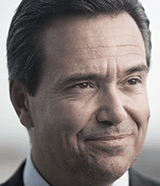 |
| Lloyds Banking Group CEO António Horta-Osório wants to build a dominant domestic bank |
The reinvention of Lloyds Banking Group under chief executive António Horta-Osório from pariah to paragon continues to go from strength to strength. The successful flotation of TSB, the banking business that Lloyds was forced by regulators to dispose of, valued the business at £1.3 billion, twice the level at which the bank had intended to sell the branch network to the new pariah, Co-Op Bank. That shows that luck can play its part in any recovery story, but the most important thing for Lloyds is that it continues not just to stick to its clearly defined strategy, but executes it successfully and often ahead of target as well.
Underlying profit for 2013 more than doubled to £6.2 billion, and continued into the first quarter of 2014, where underlying profit rose by 22% on Q1 2013. The group returned to statutory profit before tax in 2013 despite taking a further £3 billion-plus hit on PPI, which showed the bank can now deal with legacy issues from a position of strength.
The biggest legacy of the financial crisis remains the stake owned by the UK government, but this continues to decline, falling from 39% to just under 25%. Further sell-downs of UKFI’s stake are likely to follow before the end of the year.
This performance should enable Lloyds soon to apply to begin paying dividends to shareholders. That would be another step on the ladder towards Horta-Osório’s aim, which is to create the UK’s version of Wells Fargo in the US: a dominant domestic franchise with low capital costs and high profitability.
Many commentators may be reading the last rites over the old Barclays Capital business, but no one told its UK investment bankers. Of course, one could argue that if Barclays can’t be a leader in capital markets and M&A on its own turf, there would be something seriously amiss. But Barclays has had a highly successful 12 months of deal-making in the UK markets.
The jewel in Barclays’ UK crown remains the bond markets, and the firm wins our award for best UK debt house as well as best UK investment bank. It is top of the UK debt league tables and has an overwhelmingly strong position in the key corporate bond markets, with a 41% market share that included deals for 53 companies accessing the market. These included a roster of some of the UK’s top brands, such as Shell, Diageo, BP and BT. The bank also cleaned up in capital deals for UK insurance companies, bookrunning all the trades in the review period for the likes of Scottish Widows, Aviva and Prudential.
M&A and equity capital markets remain works in progress but Barclays is now a real competitor. In the former, it took key advisory roles on deals for Invensys and BG Group. In ECM, it was joint global coordinator on the largest sponsor IPO in the UK since 2006 for Merlin Entertainments.
The bank’s work for travel company Thomas Cook will be a template for how it wants to do business in the future. The company’s rights issue was part of a £1.6 billion capital refinancing, in which Barclays acted in a lead capacity across three inter-dependent financing elements of the share placement, bridge and new facilities.
Bank of America Merrill Lynch is making important strides in its European investment banking franchise and nowhere more so than in the UK. It had a stellar year in 2013 in equity capital markets volume terms, topping the league tables.
The biggest names in the UK are starting to pick BAML as a bookrunner of choice. From the Royal Mail privatization to Barclays’ £6.1 billion rights issue in October 2013, along with a joint bookrunner position on a £4.2 billion secondary placing of Lloyds Bank shares by the UK government in March this year, the US bank was on many of the deals that mattered. It is the clear momentum house in UK equity markets.
Goldman Sachs’s great year globally extended to the UK markets, where the firm once again demonstrated it is the adviser of choice for executing complex transactions in challenging market conditions. Goldman advised on seven of the top 10 announced M&A transactions over the review period, which included key roles on the leading sell-side deals such as Liberty Global/Virgin Media, and on the buy side for transactions such as Vodafone’s acquisition of Kabel Deutschland.
Sometimes prowess in M&A is not about making a deal, but preventing one. Goldman’s unrivalled capabilities in the art of defence were amply demonstrated on two bids that failed: seeing off CVC’s unsolicited approach for Betfair; and more recently advising AstraZeneca on its rebuttal of Pfizer’s $115 billion bid.