Country Awards for Excellence 2014: Nordics & Baltics

Last autumn, Danske Bank would have been an improbable candidate for best bank in Denmark. In September, new CEO Thomas Borgen replaced Eivind Kolding, who was shown the door after an unhappy tenure that had lasted only 19 months. One of Borgen’s first priorities was to inject a healthy dose of realism into Danske’s ambitions, cutting the bank’s ROE target for 2015 from 12% to 9%.

Denmark
Estonia
Finland
Iceland
Latvia
Lithuania
Norway
Sweden
Awards for Excellence 2014: Nordic and Baltic regional awards
Awards for Excellence 2014: Results index
denmark

Denmark

Best bank: Danske Bank
Best investment bank: Nordea 

Last autumn, Danske Bank would have been an improbable candidate for best bank in Denmark. In September, new CEO Thomas Borgen replaced Eivind Kolding, who was shown the door after an unhappy tenure that had lasted only 19 months. One of Borgen’s first priorities was to inject a healthy dose of realism into Danske’s ambitions, cutting the bank’s ROE target for 2015 from 12% to 9%.

Borgen, a Danske man since 1997 and who previously headed up the bank’s corporate and institutional banking division, has since taken his axe to a range of risky businesses, reduced short-term mortgage lending and wound down much of the bank’s Irish operation. Danske has denied reports that it is considering pulling out of Sweden and Norway, but one analyst says that the focus is now clearly on areas where the bank has critical mass – the most obvious of which is Denmark.

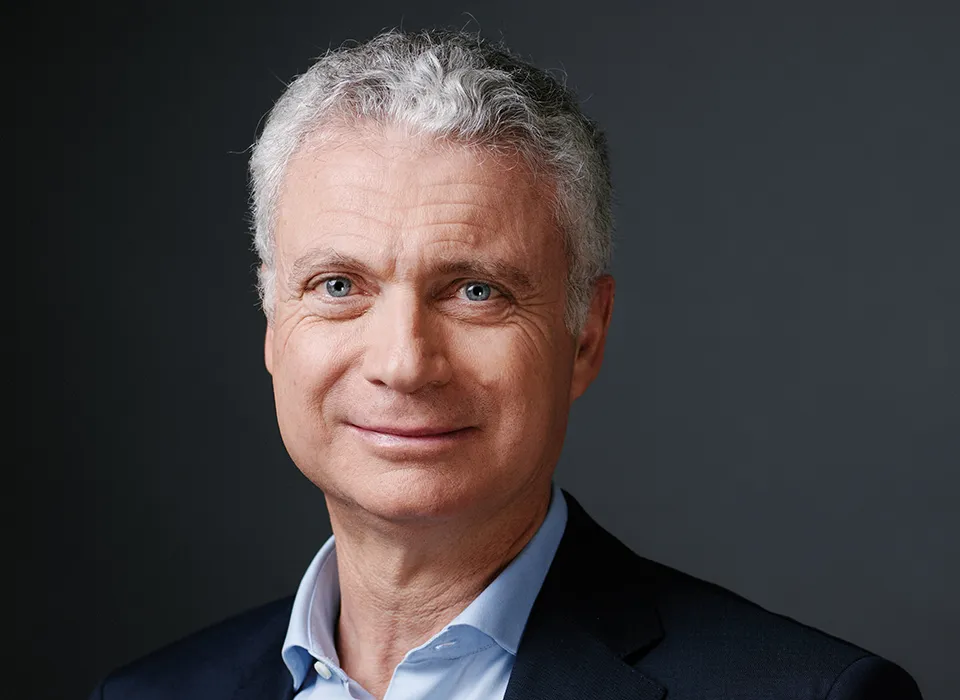
Danske Bank New CEO Thomas Borgen
New CEO Thomas Borgen has put realism back into Danske Bank

Net profit in 2013 rose by 51%, to DKr7.1 billion ($1.3 billion), and Danske has indicated that it expects to see a further advance up to DKr12 billion, assuming that economic growth remains fragile and interest rates stay low. ROE in 2013, meanwhile, rose from 3.6% to 5%, suggesting that the medium-term target of 9% should be attainable. Loan impairments declined 45%, falling across all businesses. Although these results were described by a hard-to-please Borgen as unsatisfactory, they were a sight better than what Danske was delivering under his predecessor and are clearly heading in the right direction.

Equity and debt investors appear to like what they have seen too. The share price rose by 50% in the year to June, while shareholders have recently been told they will be paid a dividend for the first time since 2007. On the debt side, Danske’s high and above-target CET1 and total capital ratios – which stood at 14.7% and 21.4% respectively at the end of December – supported its successful €750 million additional tier 1 (AT1) transaction in March, which generated demand of €13 billion.Net profit in 2013 rose by 51%, to DKr7.1 billion ($1.3 billion), and Danske has indicated that it expects to see a further advance up to DKr12 billion, assuming that economic growth remains fragile and interest rates stay low. ROE in 2013, meanwhile, rose from 3.6% to 5%, suggesting that the medium-term target of 9% should be attainable. Loan impairments declined 45%, falling across all businesses. Although these results were described by a hard-to-please Borgen as unsatisfactory, they were a sight better than what Danske was delivering under his predecessor and are clearly heading in the right direction. The Danish capital markets continue to be dominated by Denmark’s second largest bank, Nordea, which edges out Danske Bank and SEB in the league tables for corporate bonds, leveraged loans, M&A and equity advice in the year to the end of March.

Nordea’s dominance has been especially striking in M&A as well as in the Danish equity market, where it advised on nine deals worth €3.875 billion between April 2013 and March 2014, three times as many as second-placed Goldman Sachs. The most significant of these was the DKr1.8 billion IPO in March of facilities company ISS, which was the largest primary equity offering in Denmark since 2010 and at the time the second-largest IPO in Europe. In a busy year for Danish equities, Nordea also co-led the sale in January of CVC Capital Partners’ 19.4% holding in Denmark’s biggest health and beauty retailer Matas, the DKr2.8 billion IPO of which was also joint led by Nordea in June 2013.

Nordea also advised on the private placement in October of DKr13 billion of shares in Dong Energy to Goldman Sachs and two Danish pension funds, ATP and PFA, which helped dilute the government’s stake in the utility from 81% to 60%. For Dong, the new equity supports the company’s investment in offshore wind that would otherwise have been funded by new debt.

estonia

Estonia

Best bank: SEB Pank

Swedbank remains the dominant force in Estonian banking, but its lead over smaller rival SEB Pank narrowed in 2013 as the latter recorded strong lending growth across all segments. Overall, SEB Pank expanded its loan portfolio by 6.1% year-on-year – compared with just 1.6% for Swedbank – taking the total to €3.81 billion. Corporate business was the main driver, increasing by 10%, but the Swedish subsidiary also saw a return of growth in retail lending for the first time since 2008. SME demand remained muted, but a drop in SEB Pank’s non-performing loan ratio for the segment to below 2% for the first time in six years augurs well for future growth, and the bank reaffirmed its support for the sector with the revival of a nationwide counselling project for smaller enterprises in the autumn.

Asset quality in SEB Pank’s other portfolios also continues to improve, with overall NPL levels falling to a sector-beating 0.8% by end-December. Meanwhile, a 2.1% increase in net income in 2013 to €72.8 million looks likely to be bettered again this year, following a first quarter result of €20 million that boosted the bank’s return on equity back above the 10% mark.

 finland

Finland

Best bank: Nordea
Best investment bank: Nordea

The Finnish banking sector is highly concentrated. As Moody’s comments in its most recent review, the intensely competitive banking market in Finland – dominated by two players, OP-Pohjola Group and Nordea Bank – continues to exert pressure on profitability. Finland’s longest economic downturn in 150 years, declining private consumption and asset quality that is weak by Nordic standards are also weighing on the operating environment for Finnish banks.

Against this background, Nordea has continued to perform well, with its Finnish operating profit rising by 55% in Q1 2014 compared with Q1 2013, and net loan losses falling by 68% over the same period. ROE at the end of Q1 2014 was 15.6% (excluding wealth management and private banking).

In a tough macroeconomic environment, Nordea has strengthened its dominant position in the Finnish market over the last year, increasing its share of corporate lending and deposits from 30% to 35% and from 34% to 43% respectively. Its market share in household mortgages, deposits and lending all remained stable at around 30% in 2013.

The continued expansion of Nordea’s loan book in Finland was not made at the expense of asset quality. Nordea reports that in spite of increased volumes, risk-weighted assets continued to fall, which in part reflected the volumes of lending to highly rated corporates. Costs were also down, with Nordea’s cost-to-income ratio reaching 54% at the end of Q1 2014, compared with 62% in Q1 2013.

Another area where Nordea has enjoyed striking success in Finland over the last year is in wealth management and savings, with net sales of investment products almost doubling in 2013 from €1.4 billion to €2.6 billion.

In a thin market, Bank of America Merrill Lynch comfortably tops the league table for Finnish equities thanks to its role as sole bookrunner and lead manager on the €800 million combined accelerated book-build and exchangeable bond for state-owned investment company Solidium in February.

Although this means that Nordea came a distant second in Finnish equities – with a 15% market share, according to Dealogic’s data – its all-round strength in the domestic capital market means it retains its position as the best investment bank in Finland.

Nordea was involved in six M&A and three equity transactions last year, with combined announced deal values of €2.5 billion and €745 million respectively. M&A mandates included Nordea’s role as advisor to Rautaruukki in its €1.9 billion merger with SSAB, one of the biggest ever in Finland.

It was in the debt market for Finnish borrowers, however, that Nordea opened a wide gap over its closest competitors, leading 26 transactions worth just over $5 billion, giving it a market share of 12.3%. Much of that total was accounted for by Nordea’s bookrunning role on two of the Republic of Finland’s three syndicated benchmarks in the year to the end of March. Nordea was also a clear leader in the market for Finnish leveraged loans and corporate bonds. For example, when nuclear power generator Teollisuuden Voima (TVO) came to the market in March, the transaction – led by a quartet of banks including Nordea – generated demand of about €4.25 billion.

Iceland

Iceland

Best bank: Islandsbanki
Best investment bank: Islandsbanki

When the IMF visited Iceland in May, it came away encouraged by the continued recovery in the economy. “Domestic demand is recovering gradually and is expected to support lower unemployment,” it reported.

The IMF is expecting medium-term growth to average around 3%, driven by healthier private-sector balance sheets and rising confidence.

The solid results of Iceland’s large banks in 2013 mirrored the performance of the economy. Combined profits reached more than IKr64 billion ($561 million), while their balance sheets expanded by just over 5%, to IKr150 billion. The combined ROE of the three largest commercial banks was 12%, and although ROA slipped to 2.2%, the central bank reports that this remains high relative to the Nordic average of 0.5% to 0.6%.

According to the central bank’s most recent analysis, “scenarios for their core operations indicate that the banks’ combined operations improved in 2013.” New corporate lending accelerated in the second half of 2013, while defaults on corporate debt continued to fall and bankruptcies declined “markedly”, according to the central bank.

This all-round performance leaves little to choose between the two largest Icelandic banks, but Islandsbanki continues to hold off the increasingly strong challenge from Landsbanki. Profits before tax rose by a healthy 13.5% in 2013, and although ROE slipped from 17.2% to 14.7%, this is still comfortably the highest in Iceland and compares very favourably with other Nordic banks.

Islandsbanki’s asset quality continues to improve. Loans past due for more than 90 days fell from 7.5% to 3.5% at the end of 2013. Its Iceland-specific loan portfolio analysis (LPA) ratio, which measures progress made in restructuring, fell from 13.7% to 8.3% – well below the national average.

Like its counterparts elsewhere in the Nordic region, Islandsbanki is also very strongly capitalised. Its tier-1 ratio reached 25.1% in FY2013, while its total capital ratio rose 11% to 28.4%.

Iceland’s capital markets continued to recover in 2013. Turnover in the equity market rose from IKr88 billion in 2012 to IKr251 billion in 2013, with three new companies listing on the main list. The OMX16 index rose by 18.9% in 2013 following a 16.5% increase in 2012, lifting the market capitalization of the main list companies by IKr133 billion.

Corporate bond issuance, meanwhile, amounted to IKr79 billion in 2013, an increase of IKr11 billion compared with 2012. On an annualized basis, issuance continued to expand in the first two months of 2014, reaching IKr16 billion.

Islandsbanki has maintained a narrow lead over its main competitors in the domestic equity and fixed income markets, with market shares of 23.7% and 21.4% respectively. In the primary market, it led or co-led three of the five equity listings on Nasdaq OMX Iceland, while in fixed income Islandsbanki led the largest corporate bond of the year for real estate company Reginn.

Although Arion Bank was the first Icelandic bank to issue an international bond since 2008, Islandsbanki has also been at the forefront of Iceland’s return to the international capital markets – this time using Swedish krona – issuing a SKr500 million ($74 million) four year bond in 2013 and tapping it for an additional SKr300 million in March 2014 at 70bp below the pricing on the original issue. In May, Islandsbanki followed up by issuing its inaugural euro-denominated transaction, a €100 million two-year private placement described by CEO, Birna Einarsdottir, as “a clear milestone” for the bank.

latvia

Latvia

Best bank: Swedbank

Latvia’s operating environment remained challenging for banks last year. Despite another strong GDP growth spurt of 4.1%, credit demand remained muted, while January’s changeover to the euro impacted lenders’ bottom line through both changeover costs and a subsequent reduction in foreign exchange business.

Under these circumstances, market leader Swedbank’s achievement in increasing its net income by 5.6% in 2013 and maintaining a double-digit return on equity into the first quarter of this year looked all the more impressive, particularly when compared with lacklustre profitability at closest rival SEB.

A rise in total expenses of 9.7% at the former was more than offset by increases of 14.5% in net interest income and 18.2% in net commissions, boosting the bank’s bottom line number to Lats79.3 million ($153 million) and its contribution to Swedbank group income by one percentage point to 5%. By contrast, SEB’s Latvian operation saw net income for 2013 fall by a quarter to Lats16.7 million, equating to a return on equity of just 6%. Balance sheet growth was better at the smaller of the two Swedish bank subsidiaries, at 8.6% against Swedbank’s 5%.

This was primarily driven by an 18.1% surge in deposits in the run-up to euro adoption, however, raising the question of how sticky such flows will prove to be in the aftermath of the changeover. It also failed to make much of a dent in Swedbank Latvia’s domination of the retail deposit market, of which the bank still accounted for 29% by end-2013.

lithuania

Lithuania

Best bank: Swedbank

The local subsidiaries of regional giants Swedbank and SEB continued to dominate the Lithuanian banking market last year, achieving strong profitability and near-identical balance sheet expansion. It is Swedbank that gets the nod this time, however, by virtue of its superior bottom line result and loan portfolio growth. Even after adjusting for a one-off boost from the transfer of its life insurance subsidiary to Swedbank Estonia, the number two lender’s net income of Lit353 million ($139 million) for 2013 is well ahead of the Lit212 million recorded by SEB. Combined with an efficiency drive, this helped keep Swedbank’s cost-income ratio down to just 47.2%, 6.5 percentage points below that of its larger rival. Swedbank was also the clear winner in terms of lending growth, expanding its loan portfolio by 4.6% to Lit13.4 billion by end-December, compared with a 4.9% year-on-year shrinkage at SEB. Other notable achievements last year included a 114% increase in Swedbank’s mobile banking customer base, reflecting the lender’s continuing focus on developing multichannel platforms. Swedbank also made a strong start to 2014, posting a net profit of Lit80.8 million for the first quarter that was 42.5% higher than SEB’s Lit56.7 million.

norway

Norway

Best bank: DNB
Best investment bank: Morgan Stanley

In common with banks throughout the Nordic region, Norway’s leading banks are subject to rising regulatory capital requirements comfortably above the Basle III/CRD IV minimums. By July 2016, Norway’s three largest banks will be required to have a minimum CET1 and combined buffer ratio of 12%.

Norway’s largest bank, DNB, which accounts for more than 30% of the domestic lending and deposit markets, looks like it will surpass this target with room to spare. At the end of Q1 2014, CET1 calculated according to transitional rules had risen to 11.9%, compared with 10.6% in March 2013, and the bank has publicly declared that it expects this to reach between 13.5% to 14% by 2016.

DNB’s recent performance vindicates the bank’s confidence that it will stand up to the challenge of steep regulatory capital requirements. While the sale of DNB’s holding in Nordic payments services company Nets will boost CET1 by approximately 0.1%, a number of performance yardsticks are also pointing in the right direction.

Pre-tax profits rose to NKr7.4 billion ($1.26 billion) in Q1 2014, compared with NKr5.1 billion in Q1 2013. Return on equity reached 15.5% at the end of Q1 2014, well ahead of DNB’s 2016 target of at least 12%. The cost-to-income ratio declined steeply, from 52% in Q1 2013 to 41.3% in Q1 2014.

Deposit growth at DNB continues to outpace loan growth, and non-performing and doubtful loans fell to 1.19% of the net total at the end of Q1 2014, compared with 1.7% in September 2013 and 1.38% at year-end, underpinned chiefly by the recovery in the shipping sector. DNB reports that it expects credit quality to improve further, mirroring the projected 2% growth in Norwegian GDP in 2014.

Morgan Stanley has a strong franchise across the Nordic region, but it has had a particularly good year in Norway, especially in equities. In a market traditionally controlled by domestic banks, Morgan Stanley topped the ECM league table in the year to the end of March, capturing a 21.5% market share.

Perhaps the most striking feature of Morgan Stanley’s success in Norway over the last year has been its role in a series of landmark cross-border deals involving Norwegian clients, several of which were shipping and offshore energy companies raising funding in the US. Three deals stand out.

The first was Morgan Stanley’s role in November as a bookrunner on the jumbo block sale of the 21.9% holding in Norsk Hydro previously owned by Brazilian company Vale. Vale originally intended to sell about half of its stake in the Norwegian company, but oversubscription allowed for the sale of the entire holding in a block trade arranged by Morgan Stanley and DNB Markets, with 45% of the shares placed domestically.

The second was the sale by KKR and HgCapital of their stakes in Norwegian technology company Visma to Cinven. Morgan Stanley advised KKR and HgCapital on this transaction, which was the largest buyout in the Nordic region since 1997 and the largest deal in the European technology sector year to date.

The third was Statoil’s $4 billion five-tranche issue in November. Having bookrun Statoil’s four-tranche $3 billion transaction in May, Morgan Stanley was a bookrunner on November’s issue, which was the largest ever dollar-denominated bond from any Nordic corporate borrower.

 sweden

Sweden

Best bank: SEB
Best investment bank: SEB

While some Swedish banks have chosen to concentrate on their international operations over the last 12 months, the focus of CEO Annika Falkengren and her management team at SEB has clearly been prioritizing the growth of its Swedish retail and Nordic corporate franchises, which it believes generate more stable income.

The equity market seems to agree. Over the last year, SEB’s share price has risen by about 40% – not bad, in a market where very heavy minimum regulatory capital requirements are seen as dampening growth opportunities.

In 2013, SEB posted its highest-ever operating profit of SKr18.1 billion ($2.7 billion), up from SKr14.2 billion in 2012, underpinned by a rising share in the bank’s core markets. Over the last year, SEB has added 108 new large corporate and institutional clients, 16,700 SMEs and almost 40,000 new private customers.

Swedish retail banking now accounts for 30% of SEB’s total income, versus 20% at the end of 2007, and it continues to expand. SEB’s domestic retail franchise posted income growth of 10% in 2013, comfortably in line with its target compound annual growth rate between 2013 and 2015 of 6%. In large corporates and institutions, growth was 6% in 2013, versus a CAGR target over the same period of 5%.

SEB CEO Annika Falkengren
Annika Falkengren has helped drive a 40% rise in SEB’s share price

Market-share growth has not come at the expense of asset quality. SEB’s NPL ratio has declined consistently, from 1% at the end of 2012 to 0.7% at the end of 2013 and 0.6% at the end of Q1 2014. SEB’s CET1 ratio, meanwhile, is among the strongest in the business, reaching 17.6% by the end of Q1 2014 across the group, compared with 15.3% at the end of 2012. Its total capital ratio rose over the same period, from 16.7% to 18.7%. This puts the bank on track to meet the high regulatory thresholds recently imposed by the Swedish financial services authority.

SEB does not top any of Dealogic’s main investment banking league tables for the Swedish market in the year to the end of March. It is, however, the only bank – Swedish or international – to appear in the top three for equities, debt and M&A, which testifies to SEB’s all-round investment banking capabilities in Sweden.

Dealogic’s data puts SEB third in Swedish debt and equity capital markets, and second in the domestic M&A market. Tellingly, however, in each ranking SEB led more deals than its table-topping international investment banking competitors. In the year to the end of March, SEB led 93 Swedish debt deals (compared with 33 at Goldman Sachs, which ranked first by volume), nine M&A transactions (compared with JPMorgan’s four) and three equity offerings (compared with Morgan Stanley’s two).

Although its all-round performance in investment banking has impressed, SEB has enjoyed especially striking success in the krona corporate bond market, where it carved out a 21% share last year, arranging issues for a number of regular and first-time borrowers.

A notable feather in SEB’s cap over the last year has been the transactions it has arranged for a cluster of borrowers in the market for green bonds, which it pioneered alongside the World Bank in 2007.

As well as arranging issues this year for unrated borrowers such as SCA and Skanska, SEB arranged the first green bond for a Swedish municipal borrower, with the City of Gothenburg issuing an SKr500 million transaction in September 2013.