 |
Second in the Dealogic global DCM revenue ranking for the first half of 2014 behind JPMorgan; third in the global announced M&A rankings behind Goldman Sachs and Morgan Stanley; second in the global ECM bookrunner rankings behind Goldman; second in the syndicated loan arranger rankings. Bank of America Merrill Lynch is top of precisely none of the volume arranger or revenue rankings in the key investment banking businesses.
And yet it is in the top two or three in almost every single one of them, and for that reason is Euromoney’s best investment bank of the year. No other firm is so strong or so well balanced across all the capital raising and advisory businesses. So while JPMorgan beat its chest about its fortress balance sheet and ability to keep lending in the immediate aftermath of the financial crisis and made headway in investment banking, now that the equity capital markets and M&A businesses are picking up strongly, BAML is now the big balance sheet bank that is riding to the front in those markets. Goldman and Morgan Stanley as are as strong as ever in M&A and ECM but well behind BAML in financing.
Just a sample of its key deals over the past 12 months:
Bank of America Merrill Lynch acted as financial adviser to Liberty Global plc on its announced €10 billion ($13.7 billion) stock and cash offer for the 71.5% of Ziggo that it did not already own. During 2013, Liberty Global built up its stake of 28.5% through a series of transactions on which BAML advised. The firm acted as global coordinator, joint bookrunner and mandated lead arranger on Liberty Global’s cross-border €3.7 billion equivalent term loan financing supporting the acquisition. The €2 billion euro-tranche of the cross-border term loan represents the largest post-crisis term loan-B raised in Europe to date. BAML also acted as a co-dealer manager on the exchange offer and was the only investment bank acting in both lead M&A and financing roles.
|
Building and maintaining a strategic M&A capability at a time when there was relatively little activity was a central component of our strategy and a critical investment for us to make. In addition we had to reorient our culture around providing high-level, sustained strategic advice versus solely going after the next transaction fee
Christian Meissner
|

|
The firm advised Silver Lake Partners and Michael Dell on the acquisition of Dell Inc. for around $24.4 billion, the largest leveraged buyout since 2008 and the second-largest technology transaction since 2001. BAML also acted as a joint lead arranger and bookrunner on $13.75 billion of committed debt financing for the transaction.
And BAML was one of the advisers to Verizon Communications on its $130 billion acquisition of Vodafone Group’s 45% stake in Verizon Wireless. The transaction provides Verizon with 100% ownership of the industry-leading wireless carrier in the US. Verizon entered into a $61 billion bridge financing commitment to support the transaction to which BAML committed one quarter, or $15.25 billion. BAML was an active bookrunner on the $49 billion bond, which is the largest bond in history.
Of course the bank is in a position to take lead roes in such high-profile transactions in part because it was lucky. It is stronger in the US than elsewhere in the world and stronger in debt than in equity and M&A and during the period of interest rate repression and booming bond markets was able to boost revenues, manage down bad assets, attract talented bankers and steady itself during the years of trauma that followed Bank of America’s acquisition of Merrill Lynch in 2008. With economic recovery most pronounced in the US, also the biggest investment banking fee pool, the firm has benefited from the strength of its home market.
‘What’s bad about being good?’
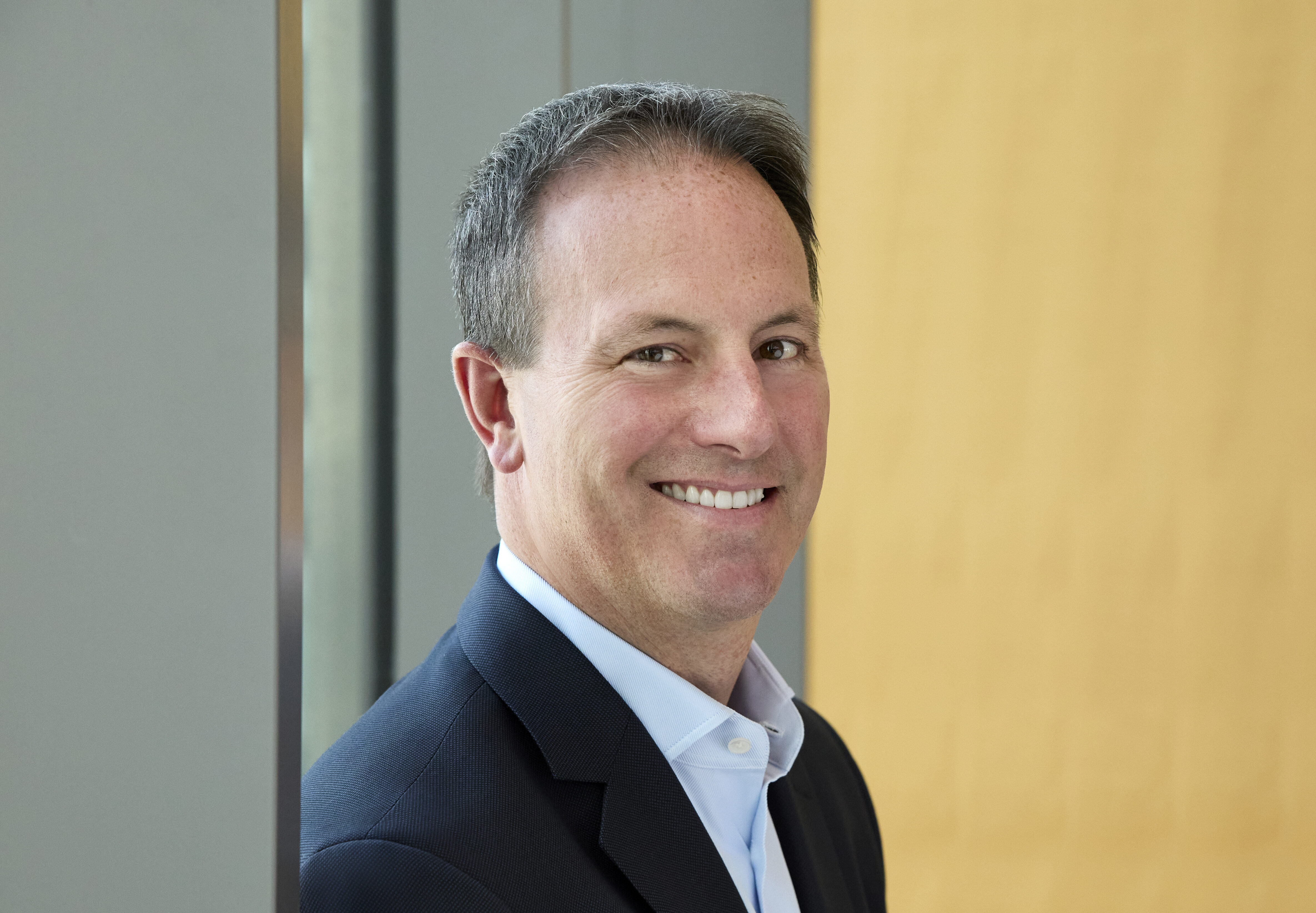
Critics say that the bank owes its appointments on many of the big M&A deals and rise up the associated advisory league tables to its position as a lead arranger and provider of finance. Euromoney puts this to Tom Montag, co-chief operating officer of Bank of America and head of all the firm’s global markets and banking businesses that deal with corporates and institutional investors.
“I don’t agree with that, but what’s so bad about being good at financing?” he asks. “Are our critics saying that M&A advisory is a skill but that financing is not? Trust me, you can be bad at financing. You can read the markets wrong, be too quick to commit or not commit fast enough. Having the best read on where your clients can raise the money to get a strategic transaction done, how quickly, in what amounts and with what degree of certainty is vital. Now, it can sometimes hurt you to be pigeon holed as the debt provider, so that when certain clients want M&A advice or equity raising they may think ‘well, we already pay these guys for lending or for cash-management’. But more often it is extraordinarily helpful to be doing a lot of debt business with a client because, aside from the credit insights, it helps build relationships at all levels.”
Montag continues: “It’s actually much more interesting to work at a firm that has an investment bank and a commercial bank, even though there are cultural differences which don’t exist at a boutique that has just one product. We’re all doing pitches now for cash management business. It’s hugely important to clients and if you build relationships at various levels of the client’s treasury then as those treasury people get more senior roles, those relationships can play out over a long period of time. A lot of our investment bankers absolutely love that business.”
He laughs happily. Montag has not spoken to the press for almost four years. Euromoney last sat down with him formally in the spring of 2010, two years after he had arrived with a big reputation from Goldman Sachs to head the old Merrill Lynch markets businesses under John Thain. But after Montag’s name cropped up later that year during investigations into Goldman Sachs’s construction of sub-prime mortgage CDOs as author of an email describing the infamous Timberwolf CDO as “one shitty deal,” he decided to stop talking to the press.
It’s a shame for journalists. He’s engaging company. He talks with equal enthusiasm about sports and the investment banking business, the two subjects dearest to Euromoney’s heart, in his offices overlooking Bryant Park in a New York in thrall to the football world cup. He opines on why Luis Suarez’s deliberate handball four years previously to deny Ghana a match-winning goal should have been punished by the awarding of that score, which would have put his Uruguay side out of the competition, rather than by a penalty kick.
 |
| The key to delivering those different capabilities is to have one coverage team, product agnostic, with an ability to cross-sell extensively. That is what we have built here and our financial results benefit from this versus more product specialized firms Diego De Giorgi |
Later, when Suarez is expelled from the 2014 tournament, it seems almost prescient.
Thinking back to 2010 is perhaps a reminder how tough much of the past four years has been at Bank of America and what a luxury it is now to be debating whether its top positions across the investment banking league tables denote more than strength as a lender and bond underwriter. Montag spent 22 years at Goldman Sachs, was made partner long before the IPO and had risen to head its markets businesses when, sensing that he was not destined to head the firm, he resigned in mid 2007. He spent the obligatory time with his family and perhaps glimpsed a world beyond Broad Street.
He took a call in April 2008 from John Thain, who Montag had known for 20 years at Goldman Sachs and, while seeing problems emerging all across Wall Street, agreed to join Thain, now chief executive at Merrill Lynch, starting in August 2008 to see what he could do to help re-invigorate and rebuild a damaged firm.
Montag had no idea what he had let himself in for. Within weeks of his start date, Merrill had almost collapsed and had to be rescued by Bank of America. One Merrill veteran says: “It wasn’t so much a shotgun wedding as Merrill Lynch being given away. This was a broken firm thrown into a big bank that barely knew where Europe was.” He adds: “To get where we are now from there is remarkable.”
Within months, Thain had had to disclose new losses that raised questions about the provenance of the whole takeover deal and the man who had sold the job to Montag – and induced him to transfer a large portion of his personal net worth from Goldman stock into Merrill’s – was gone. In January 2009, Montag’s wife was watching the TV news saying that, along with Thain, her husband had been sacked too.
In fact, Montag got a call from Ken Lewis, then chief executive of Bank of America, to say that the board wanted him to stay. By that time, just a few months into his role, Montag felt a sense of obligation to the people at Merrill Lynch to stay and see if he could help stabilize the firm.
Big changes
If that felt like the worst moment, it wasn’t. There was relentless turnover. Ken Lewis himself was soon ousted. There were big changes to the Bank of America board and departures of many senior Merrill bankers such as Greg Fleming and later Andrea Orcel.
Relief was short-lived as central banks cut rates and asset prices recovered in 2009. For a while, the investment banking business thrived as overleveraged companies refinanced. In the markets businesses, which Montag now ran, volumes rose as investors overhauled their exposures and margins widened. But it proved to be a false dawn. While asset values were doing better, there were still problems managing the new firm’s combined risks on its predecessor firms’ systems. As a pre-IPO partner at Goldman Sachs, Montag had been confident of his ability to move things along quickly at his old shop. But now there were issues between the commercial bank and the investment bank, between Charlotte and New York.
Little things took on an apparently disproportionate importance. At least moving into the new head office building on Bryant Park helped integrate some of the old Merrill staff. Merrill veterans recall the relief when the famous Merrill Lynch bull was allowed to remain on new Bank of America Merrill Lynch business cards, and pleasingly large too, if on the reverse side from a banker’s name and details.
But charge-offs, litigation costs, reparations mostly relating to the mortgage business and goodwill impairments threatened to overwhelm the whole institution. Less than three years ago, in mid 2011, Bank of America five-year CDS rose over 400bp and was heading to 500bp by the end of the year. And while Greece imposed losses on its private sector creditors, it began to look almost like a Greece-style crisis unfolding at Bank of America. It suffered over $20 billion of charge-offs in 2011 and eked out just $1.4 billion of earnings or one single cent per share. The stock price ended the year at $5.56.
“It was very stressful. It’s very easy for people to stop dealing with you at such a point,” says Montag. “But actually the business was in much better shape by then than it had been back in 2009 and we showed a resiliency and ability to get through.”
The good news was that Warren Buffett had spotted the potential for recovery and invested $5 billion in the bank. It turned out to be one of his best investments. The bank strove to manage the crisis, cutting non-interest expenses, selling $70 billion of non-core assets from 2011 to the end of 2013, and boosting earnings to $11.4 billion for 2013, allowing it to rebuild its capital base. The shares recovered to $15.57 at the end of last year.
|
Are our critics saying that M&A advisory is a skill but that financing is not? Trust me, you can be bad at financing. You can read the markets wrong, be too quick to commit or not commit fast enough. Having the best read on where your clients can raise the money to get a strategic transaction done, how quickly, in what amounts and with what degree of certainty is vital
Tom Montag
|
|

In the investment bank and markets businesses, Montag’s ambition was to grow the firm outside its home market. “Merrill Lynch had a lot of strong international relationships but Bank of America had not done so much international lending,” he says. “In the last three years, we have done a lot of new lending outside the US. We’ve hired a lot of good people internationally in the businesses and to run countries and we’ve built a governance and process infrastructure behind them. We now have a sense of continuity among senior people that have proved their commitment to this institution over many years, through bad times and good, and we have a team in place that can move forward with a clear sense of purpose.”
The firm has shown an ability to attract talented high profile bankers. In 2010, it recruited Christian Meissner, who had previously been co-head of ECM at Goldman Sachs before joining Lehman, rising to co-chief executive of Emea and ending up at Nomura before taking Montag’s call. Meissner now runs global corporate and investment banking at BAML. In 2012, BAML recruited Diego De Giorgi, then chief operating officer of Goldman Sachs’s investment banking division, to work alongside former Lehman and Credit Suisse banker Bob Elfring, who joined in 2011, as co-heads of corporate and investment banking in Europe. When legendary M&A dealmaker Andrea Orcel quit the bank for UBS, BAML was able to hit back by recruiting Alex Wilmot-Sitwell to be president of Emea.
The bank was recruiting M&A dealmakers and investment bankers when the M&A markets were frozen and the pressure was on to cut expenses. Meissner says: “We’ve been putting all of the critical pieces together – financing, M&A advisory and treasury – during a period of monumental change in the banking industry. Building and maintaining a strategic M&A capability at a time when there was relatively little activity was a central component of our strategy and a critical investment for us to make. In addition we had to reorient our culture around providing high-level, sustained strategic advice versus solely going after the next transaction fee. We have built relationships in the boardroom and at the C-suite level, knowing that without a robust and competitive M&A capability, we wouldn’t have a seat at those tables.
“Now, as M&A activity has picked up significantly, these pieces are really coming together. This has been reflected in the quality of the business we are doing, our league table position and, importantly, also the amount of related financing and risk management activity we are seeing.”
De Giorgi points to the example of Liberty Global’s full acquisition of Ziggo. “Liberty is an example of an extremely successful company that we have long had a strong relationship with and that has engaged with us as an M&A adviser and a financier in the last few years. It is an acquisitive company that uses a mix of equity and debt to enhance returns on their acquisitions. As an adviser inside a big balance sheet bank with strong capital markets businesses in leveraged finance, corporate banking and derivatives, we can provide every element that such a client needs. The key to delivering those different capabilities is to have one coverage team, product agnostic, with an ability to cross-sell extensively. That is what we have built here and our financial results benefit from this versus more product specialized firms.”
Riding against the herd
Perhaps the single most intriguing aspect of the BAML success story in investment banking over the past 12 months is how far it seems to be riding against the herd. The core proposition is that to be useful for clients and provide returns to shareholders the ideal bank combines financing muscle and smart people. It’s the argument almost every big universal bank made 15 years ago, when Citigroup and Salomon merged together, Chemical Bank hoovered up Chase and JPMorgan and Credit Suisse folded in DLJ. Today it sounds like an echo from a past age. The new consensus holds that banks must, under regulatory and shareholder pressure, shrink back to core specialities.
Ken Moelis, chief executive of the eponymous independent investment bank that he floated earlier this year and Euromoney’s banker of the year, gives voice to the new consensus. “The big banks are in real difficulty. Regulators would like deposit taking institutions to go back to being almost utilities and will continue to push them on capital and leverage ratios, on compensation, on business model, on operational risk. The banking industry is still on a long march to a very different structure in which financing and advice is likely to be further separated.”
 |
| Our strategy of increasing our market share by focusing on our largest strategic accounts has paid out well through, for example, our UK corporate broking business, where we recently won significant new broking mandates from FTSE 100 companies like Lloyds, BHP Billiton, Diageo and RSA Bob Elfring |
BAML does not, of course, have the luxury of choosing a different starting point and must endeavour to make the best of what it has. It seems to be doing a good job and joining now is much less a leap of faith than it was a couple of years ago. Wilmot-Sitwell says: “Most of the senior management team have been here two to five years. We all have one thing in common: we want to be here and believe in the direction and the opportunity of the business.”
Meissner takes up the example of Verizon’s acquisition of the remaining stake in Verizon Wireless from Vodafone, a deal financed by the largest bridge loan ever and swiftly refinanced with the largest ever corporate bond. “To be a key partner in one of the year’s largest and industry-defining transactions is a testament to our firm’s capabilities. We came to Verizon with strategic advisory and an innovative and comprehensive suite of solutions that helped our client fulfil its objectives. From advising to structuring the financial package to underwriting and de-risking it, we were able to deliver everything our client needed. There are only a few global banks with the balance sheet or scale of platform to successfully execute across the spectrum. This is what our clients have come to expect from us and we work as one team across product sectors and geographies to deliver on their behalf.”
While the bank has had to rebuild its M&A capabilities during the tumultuous aftermath of the financial crisis, it benefits now that the IPO and equity raising businesses are thriving once more from having a top ECM business of long-standing and great stability. This has racked up any number of highlight deals in the past 12 months. And the bank is not just making progress in the primary markets. It also boasts a corporate equity derivatives group that can generate revenues anywhere between 35%-60% of total ECM business revenues. This finances corporate clients’ acquisitions of equity stakes through collateralized lending – the group is so strong, it sometimes finances purchases by cornerstone, strategic investors in other banks’ new issues – and hedges and monetizes large equity stakes for clients.
The bank is also strong in equity research and specialist equity sales and this has helped cement relations with large corporate clients.
Bob Elfring, co-head of Emea corporate and investment banking, says: “Our strategy of increasing our market share by focusing on our largest strategic accounts has paid out well through, for example, our UK corporate broking business, where we recently won significant new broking mandates from FTSE 100 companies like Lloyds, BHP Billiton, Diageo and RSA.”
Jars and jolts
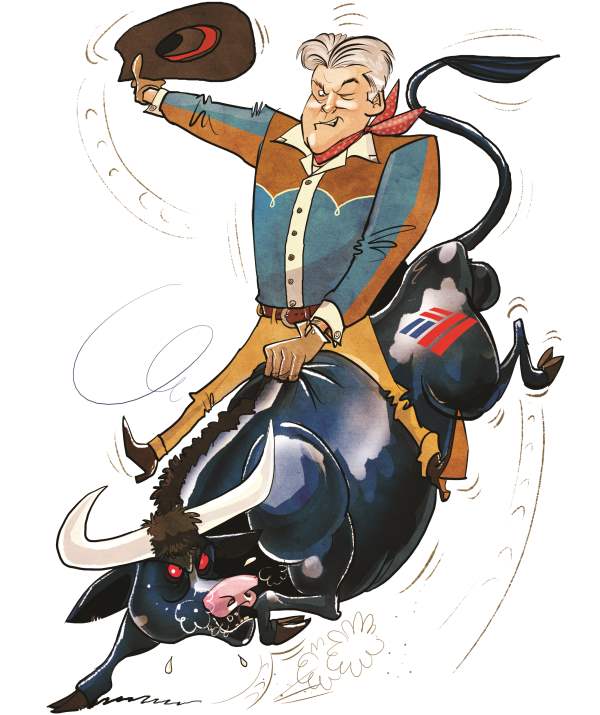
Back in his office overlooking Bryant Park, Montag has remained in the saddle through enough jars and jolts in the six years since joining the firm to keep a steady grip on ambitions in the investment banking and markets businesses. “In a lot of these businesses you can be number one in the league tables one year and number three the next. So I’m not desperate that we should be top in every business in every geography. To continue being a respected and highly credible firm probably requires being in the top five in each business – to be in our share of the big deals and to feel that we’re always bringing clients the best ideas.”
He has a responsibility to shareholders as well as to clients. “In the past, banks always used to focus on revenues and then increasingly on return on assets and return on tangible equity by region and industry group. Our metrics are much more robust and are largely around the client. As a broad measure, we look at the RWA and leverage ratio implications of each commitment in light of what we’re likely to generate in returns.”
Even at BAML, balance sheet capacity is not unlimited. “We don’t anticipate growth in the markets division’s balance sheet relative to the rest of the firm,” says Montag. “We want to continue to be in the flows and while we are doing well in the US we am to develop internationally such as in our markets business in Asia. We’ve reduced certain businesses and we are turning our inventory over more actively and efficiently.”
The bank has had a good run muscling in on the biggest strategic transactions for blue chip corporations in the US and beyond. But the sense remains that the real prize for Bank of America shareholders will come from generating greater returns from its mid-market corporate clients in the US and somehow replicating that enviable mid-market corporate franchise beyond its home territory. It’s mention of the cash management business that has Montag bouncing in his seat.
“We’ve reduced the number of people in some businesses but it’s corporate bankers and cash management people we’ve been hiring more of,” he says. “In markets, credit is still a very good business and may consume less RWAs then you think. But it’s businesses like FX where our expertise in helping companies move and manage their cash that can give us a big benefit.” He says: “I’m very proud of the big wins we’ve had in cash management globally.”