Best bank in Asia
In 1999 this magazine described the fight for best bank in Asia as a battle royal between HSBC and Citi.
That year, HSBC won for a third year in a row. Domination for the Noughties looked assured. But in fact it was its main rival Citi that forged ahead, going on a winning streak in Asia that lasted 10 years. Citi then lost out to Standard Chartered in 2010 before winning back the title in 2011 and keeping it until last year when it did the double of best bank and best investment bank. That run comes to an end this year as a resurgent HSBC nudges Citi from its perch to take the award as the best bank in Asia. That the award has been a long time coming makes it no less well earned.
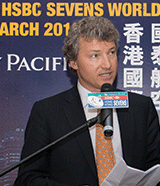 |
| Gordon French. HSBC is building on the rapid development of Asia’s corporates |
The win is a vindication of HSBC’s strategy, which it has been tinkering with almost constantly since that last big win 15 years ago. And for a bank with such scale in the Asia-Pacific region, the award is recognition of achievement on several fronts. Hong Kong and the rest of Apac contribute about 70% of group profit-before-tax to HSBC, so getting it right in the region is the driver of its global performance. It also means that bankers in the region are under pressure to perform. Gordon French assumed the role of head of global banking and markets for Asia-Pacific in August last year, having previously been head of global markets for the region. In this new role he is responsible for all GBM businesses in Asia-Pacific, including banking, markets, securities services, capital financing, balance sheet management, payments and cash management.
For many years, HSBC was viewed as no more than a second-tier player in investment banking, but the gains this year have been particularly eye-catching. The DCM franchise in the region, now under the leadership of Alexi Chan, continues to go from strength to strength, and continues to dominate the G3 government bond space in particular. Stephen Williams, Chan’s predecessor as head of DCM, is now in charge of all capital financing for the region. HSBC is also now making big strides in M&A and ECM, not only in Hong Kong, where it has always been strong, but across the Asia-Pacific region.
One of the key achievements of French and his team has been to foster a climate of closer co-operation both within the GBM business and between GBM and commercial banking (CMB), run in Asia-Pacific by Noel Quinn. This collaboration started and is still most noticeable between FX and DCM; it is starting to show results in ECM and M&A.
“Over the last few years, we have been determined to ensure that our commercial banking clients worked with HSBC for all their risk management, capital markets and advisory needs, as well as lending and cash management,” says French. “This is no longer an initiative; it’s just how we do business with corporate clients in Asia, whether they’re from CMB or GBM.”
He adds: “We started out doing a lot of foreign exchange business and then debt capital markets for commercial banking clients. That will remain the bedrock of what we do together, but Asian corporates are developing fast, and we are now mandated for a lot more equity capital markets and mergers and acquisitions work by these clients. You can already see the evidence of this in our league table rankings, but this kind of investment-banking business is still where we can really develop this collaboration.”
Global banking and markets was HSBC’s most profitable business in 2013, with reported profit-before-tax at $9.4 billion, up 11% on 2012 full year. Hong Kong and the rest of Asia Pacific unsurprisingly made the biggest contribution to GBM profits, with an underlying profit before tax of $4.7 billion, a 7% rise from 2012.
Commercial banking revenues also grew strongly, as did those in retail banking, wealth management and global private banking.
The bank also scores well for its success in winning a bigger share of wallet from multinational corporations. During the awards period it participated in all seven MNC dim sum bond issues: from Renault, Caterpillar, Total, SK Global Chemicals, BP, Mitsubishi UFJ Lease and Finance and Intesa Sanpaolo. It also worked on several M&A financing-related transactions for multinationals in the region.
In trade finance, a traditionally strong area for the bank, it continues to make strides, expanding its RMB offering to Latin America as trade with mainland China grows. It also opened the first China desk in Argentina. Balance-sheet lending is also an area of strength for HSBC, and examples of this include a $4.8 billion loan for Power Assets Holdings’s spin-off Hong Kong Electric business and underwriting a $3 billion bridge loan to finance the privatization of Alibaba.com. For an awards period when all the pieces of a previously often jumbled puzzle clicked and a business that is firing on all cylinders, HSBC is this year’s best bank in Asia.
Best investment bank in Asia
The best investment bank category was less clear cut this year. Broadly speaking, in markets that continue to be tough, particularly in the first half of this year, it was difficult for investment banks to distinguish themselves from peers. Arguments could be made by a number of banks that they should win the award. Citi, last year’s winner, continues to punch well and heavily, but was hurt slightly by a fall away in equities business. UBS continues to be the outstanding investment bank in China and Australia and is a formidable competitor on a pan-Asian basis. JPMorgan and Morgan Stanley also mounted impressive campaigns. But Goldman Sachs is Euromoney’s pick as the best investment bank in Asia largely because it was on almost all of the defining roles of the awards period. And when it is on a deal, it almost never simply makes up the numbers. It plays a leading role. This is not a small point in a market that has become out of control in terms of the numbers of banks working on some transactions. The most farcical manifestation of this was when 28 banks were appointed by WH Group for an IPO that, perhaps unsurprisingly given how many snouts were in the trough, ended up not working out. Goldman wins for a variety of reasons, not least its geographic diversity. Not only is its Chinese franchise snapping at the heels of market leader UBS, it was also involved in all government privatization deals in India during the awards period and was ranked number one in Japan, Australia, Singapore, Indonesia and Korea for M&A advisory.
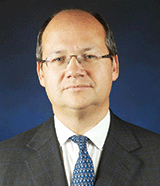 |
| Matthew Westerman says Goldman Sachs has diversity in products and services |
Matthew Westerman, head of Asia-Pacific investment banking at Goldman, points out also that the bank is now not overly reliant on any one business line but has true diversity in terms of products and sectors.
Deal highlights for Goldman include its role in a series of financings for Sinopec, including a $1.8 billion IPO for Sinopec Engineering; a $2.75 billion and €550 million senior note deal for Sinopec Group; and $3.5 billion inaugural bonds for Sinopec Corp, raising a total of $11.5 billion for the company during the awards period. Goldman also led Hutchison Whampoa’s €1.75 billion hybrid issuance, the largest-ever hybrid deal from Asia ex-Japan. In M&A, Goldman has a 19% market share and advised on eight of the top 20 completed deals in the region during the review period, including the largest US-Asia cross-border deal of 2013: Softbank’s $32.1 billion acquisition of Sprint Nextel.
Goldman is also strong in equities and successfully executed 98 deals during the review period. These included the $4.2 billion convertible bond for Ping An insurance, the largest convertible bond transaction globally since 2011, and the largest-ever IPO in New Zealand, Meridian Energy’s $1.6 billion dual listing.
Best equity house in Asia
Goldman, however, is pipped to the post as the best equity capital markets house in Asia by UBS. In Asia ECM, UBS is the undisputed number one in terms of deal value and the number of deals executed. It is also number one in ECM revenue, follow-on offerings, Asia IPOs, China international IPOs and almost any other metric you care to examine. It played a key role in several landmark deals during the review period, including the IPO of China Everbright and the float of Huishang Bank, two of the largest Hong Kong IPOs of recent years. UBS narrowly missed out on the best investment bank title to Goldman Sachs this year, but remains a formidable presence at or close to the top of the pile in all the investment banking businesses it seeks to play in. The bank recently moved to shore up its advisory business, promoting Matt Hanning to the role of head of corporate client solutions in Asia Pacific, the bank’s top advisory and financing role for the region. Competitors try to point to an over-reliance at UBS on China, but in fact the geographic spread of deals during the awards period was impressive and UBS remains the equity house to beat.
Best debt house in Asia
In debt capital markets, HSBC in many ways remains the yardstick and its best bank award is in no small part down to the power of its DCM business. But this year, Euromoney’s best debt house is Citi due largely due to it rising to the top of the league tables for many of the important DCM categories for the period under review. It was top in Asia-Pacific international G3 bonds, with a 10% market share. It also has a truly diverse regional franchise, with 213 deals done in 11 countries. Deal highlights that demonstrate the breadth of the Citi franchise include AIA Group’s $500 million notes, the Republic of Sri Lanka’s $1 billion notes, Exim bank of India’s $500 million notes and the $800 million credit enhanced notes for Citic Securities.
Best M&A house in Asia
The strength of Goldman Sachs’ M&A franchise alongside its powerful equity business were key in winning the best investment bank award this year. An argument can certainly be made for it also to be the best M&A house. But our choice this year is Morgan Stanley. It ran Goldman close in the league tables – taking second place with a market share just 1 percentage point lower than Goldman’s – but it is for the quality of the deals it worked on and its role as a trusted adviser that it wins the award.
In announced M&A, Morgan Stanley was top for the awards period. It worked on most of the defining transactions of the period. Notably it served as the exclusive M&A advisor to Shuanghui on the $7.1 billion acquisition of Smithfield Foods, the largest ever cross border M&A transaction between China and the US. It also acted as the sole financial advisor to GE Capital on its divestiture of a 25.3% stake in Bank of Ayudhya to Bank of Tokyo Mitsubishi UFJ. Morgan Stanley also stood out because of the variety of M&A transactions it worked on, feeding into some of the most important trends in the wider market. For example it was more active in Asia consumer M&A, in MNCs deleveraging their Asia exposure, in Asia outbound M&A and FIG consolidation, all of which were key themes that characterized the awards period.
Best transaction services house in Asia
The transactions services business has gone through a complete transformation in recent years. The most obvious symptom of this is that everyone wants to talk about it. No longer a boring back-office after-thought, transaction services now employs some of the smartest minds in the business and is home to some of the edgiest of cutting-edge technology. In this category, one bank stood out. Citi displayed the required combination of scale and innovation. The business at Citi has been going for 30 years and the numbers do not lie. More than 90% of Fortune 500 companies operating in Asia use Citi for transactional banking. The scale of the Citi business is also important. Last year, the bank processed on average $3 trillion in payments value per day. Transaction services revenues increased 2% from the awards period last year and transaction services average deposits and other customer liability balances grew 4% in the year to over $432 billion. Notable developments include executing the world’s first automated cross-border sweeping structure from north America to South Korea for Hyundai Glovis and implementing an ambitious payments system for Asia for Eli Lilly. It also set up automated RMB cross-border pooling for Roche in the Shanghai Free Trade Zone.
And in RMB cash management, Citi also separated itself from the growing crowd of banks providing transaction services, for example working with Ford to combine opportunities for cross-border capital flows with cross-border trade settlement to unlock trapped cash in China. For a transaction services provider, innovation is the lifeblood of success. Citi noticeably did not rest on its laurels during the review period, designing and building, for example, an interactive trade-financing system that allows companies to visualize their supply chain, benchmark their working capital levels against competitors and quantify the financial benefit of their supply-chain financing strategy.
Best flow house in Asia
For HSBC the flow business – the sales and trading of the range of asset classes from foreign exchange to rates, credit to commodities and equities – forms the foundation to the markets business and accounts for more than 90% of its sales franchise. Due to its presence in markets across Asia, the strength of its balance sheet and developed and emerging market expertise, the bank is Euromoney’s best flow house in Asia this year. In FX, new initiatives in the past year have included overlay products such as passive, share-class and dynamic-hedging strategies for asset managers. In rates, the bank achieved notable revenue growth in rates products for clients including central banks, hedge funds and insurance companies. In credit, HSBC remains the leading house for G3 bonds. In commodities it plays through its link with Total Oil Trading and has a big presence in precious and base metals. Equities sales outperformed the wider market and its success in broadening the reach of the RMB has been well documented. This broad spectrum of successful areas is why HSBC is Euromoney’s pick as the best flow house in Asia.
Best risk adviser in Asia
In the best risk category, once again, there were several contenders, but HSBC wins through the volume and variety of transactions through which it can demonstrate its commitment to risk management. Trades showcasing risk span all asset classes; several examples shared with Euromoney neatly demonstrate the bank’s awareness of, commitment to and deftness at risk management. In RMB hedging, for example, HSBC developed, in response to heightened volatility, a product for clients who need to put on a hedge to buy CNH but who are also wary of possible spot retracement or further volatility later in the year.
Also in China – and demonstrating the need to be a consultant as well as service provider for many clients in this area – HSBC provided a China-based telecoms company with the means to evaluate and monitor its FX exposure globally. An HSBC team provided training on various analytical methods, including the application of VaR analysis, technical analysis, forward market and fundamental research to model the client’s risk profile. And with its presence in some of the less-developed markets in Asia, HSBC alongside other banks with global know-how, is playing an important role in ensuring that some of the risk-management failures that have characterised the past 20 years in developed markets do not repeat themselves in the developing world. For its demonstrable commitment to managing risk on behalf of its clients, HSBC is Euromoney’s best risk management house in Asia.



