 |
|
|
Best Commodities house: Deutsche Bank |
|
|
Also shortlisted: Goldman Sachs and Société Générale CIB |
Investment banks’ commodities businesses were caught in a perfect storm in the past year as new financial regulations, falling commodity prices and low volatility conspired against them, adversely affecting revenues and accelerating change.
Basle III, Dodd-Frank, European Market Infrastructure Regulation and the Volcker Rule form the regulatory onslaught forcing a fundamental shift in commodities trading, and at a time when the commodities supercycle has hit the skids.
Banks including Citi and Goldman Sachs have already called an end to the decade-long supercycle, primarily because the economy in China, the largest importer of raw materials, has slowed and the country is shifting to consumer-driven growth.
The benchmark Standard & Poor’s GSCI Index of 24 raw materials fell 2.5% this year after almost quadrupling in value since 2001.
Banks have therefore had to be swift to adapt to this new regulatory and market environment, forcing many to re-engineer their businesses, cut proprietary trading and refocus on providing financing, hedging and investment solutions to clients.
Deutsche Bank has been swifter than most in making tough decisions on reshaping its commodities business, enabling it to stay ahead of some of the competition and increase its client-based revenues to record levels.
In the past year, Deutsche has scaled back its commodities business, selling off parts of its European gas and power books and reducing its trading operations in Europe and the US to maintain profitability in the business.
The most senior departure was David Silbert, Deutsche’s global head of commodities, who left the bank last year to set up his own investment firm focused on the energy and natural resources sectors.
However, the bank has expanded in some areas, hiring in listed derivatives in its Asia business, and in metal sales in the US, as well as deploying more resources to precious metals, bulk commodities and electronic trading.
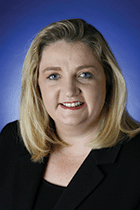 |
| Louise Kitchen, global co-head of commodities at Deutsche alongside Richard Jefferson |
“We were pretty quick off the mark in recognizing the way the industry was changing and restructuring our business in the best possible way to meet the challenges we all face,” says Louise Kitchen, global co-head of commodities at Deutsche alongside Richard Jefferson. “Ensuring that the clients are at the centre of what we do is something that has driven the business model since 2006, and we haven’t come off that path.”
Jefferson adds: “We’ve always had the goal of generating sustainable revenues, and the best way to do that is engaging with clients and ensuring there is a repeatability to the business we do with them.”
Repeat business is all about the quality of hedging, financing and investment solutions an investment bank can engineer and execute for clients, and there Deutsche Bank excelled.
For example, it was the first bank to provide inventory monetization on a wide range of non-LME-grade metals, such as iron ore, enabling clients to use these assets as collateral for the first time. As part of this, Deutsche is completing the first-ever syndication of allocated precious metals leases, a pioneering move that makes it easier for producers to secure long-term finance.
Deutsche was also the first bank to launch a gold-linked investment product for retail investors and to offer a short-term deposit collateralized by physical aluminium and electronic trading on long-dated metals contracts, enabling clients to trade out to six months for the first time and solving a common challenge in the metal markets.
Deutsche began making markets on six-month contracts on copper, zinc and lead last year via its electronic platform, Autobahn Metals – the first and to date only such service of its kind.
On the financing side, Deutsche Bank completed landmark transactions in the commodities sector, such as the $3.6 billion financing for Cheniere Energy and Blackstone Capital Partners, which was the first LNG export financing in the US.
It also helped execute the largest emerging market commodity financing – Glencore and Vitol’s $7.5 billion financing backing their crude-oil purchase deal with Rosneft – and completed the first reserve-based lending in Ukraine, a $165 million five-year rouble facility for Kuwait Energy.
Deutsche Bank’s commodity derivatives business also a had a strong year, executing trades for clients, and particularly on three-year or four-year options. For example, the bank executed 21,600 tonnes of nickel options for a client, equivalent to 30% of the total open interest in nickel.
The bank also structured and executed the first derivative on the increasingly important C3 capesize freight route between Brazil and China.



